


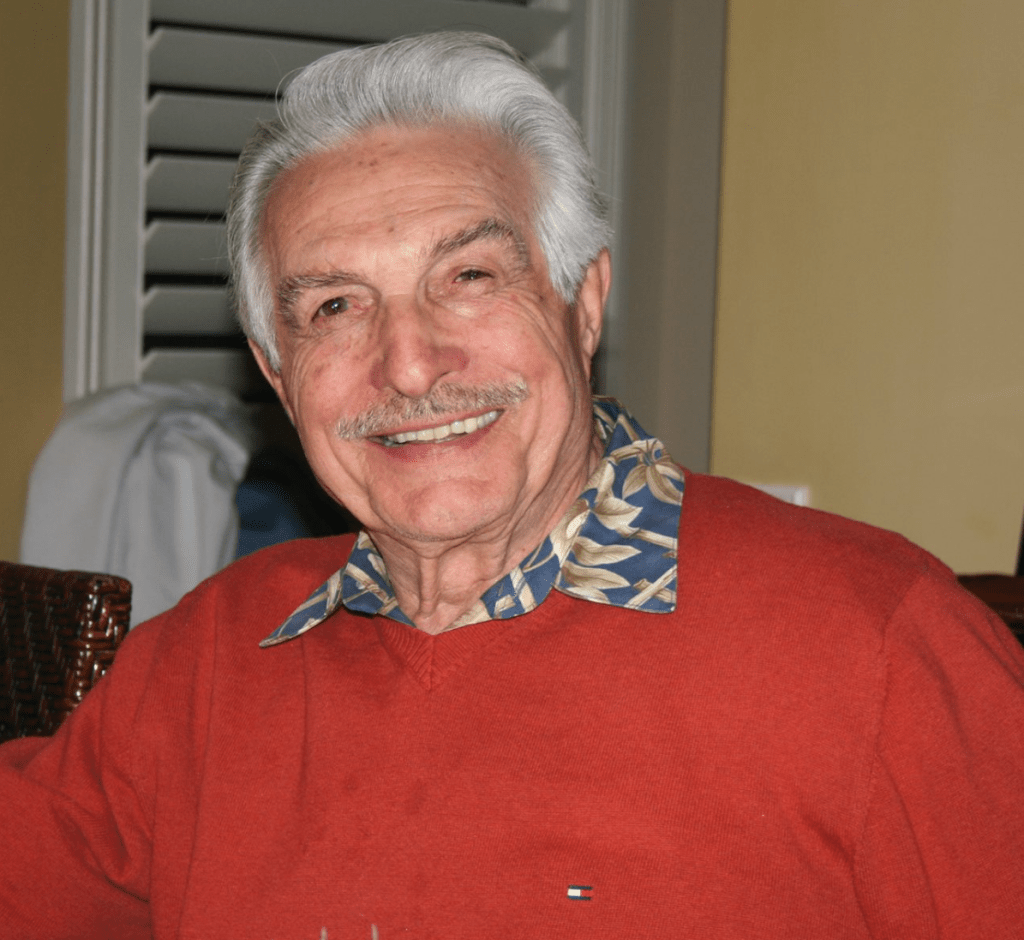
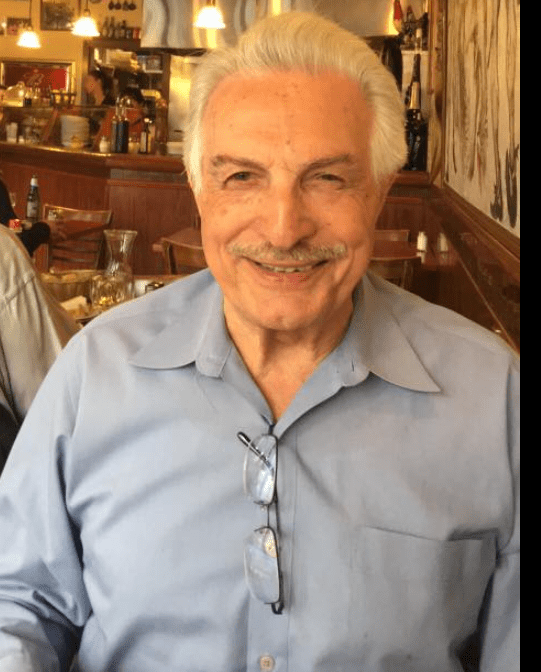
My name is Manuel do Bem Barroca. I was born in Ílhavo, Portugal, in 1926.
I grew up in Portugal. My mother maintained the family business, ran a local store in Ílhavo, and was active in the community. Like many at the time, my father pursued opportunities in the United States and partnered in a restaurant in San Francisco, later becoming a longshoreman during the Depression.
Why I emigrated:
After high school (“liceu”), I planned to pursue a nautical career at the elite Escola Náutica. However, after completing the admission test, I was rejected, although a friend who made a mess of the exam was admitted! Frustrated and angry, I confronted the Secretary of Admissions, accusing him of corruption, including using “luvas” (bribes) and favoritism. I demanded a re-evaluation of my test. That interaction did not go well…after being threatened by the Secretary, I made a life-changing revelation and decision: “In this country of injustice and cronyism, I am not able to control my destiny. I am going to emigrate to America.”
In November 1944, at 18, I joined my father, who was living and working in San Francisco, against my mother’s wishes.
Career and Education:
World War II was still going on, and workers were needed. A week after my arrival, I started working for PABCO, a roofing paper manufacturer in Emeryville.
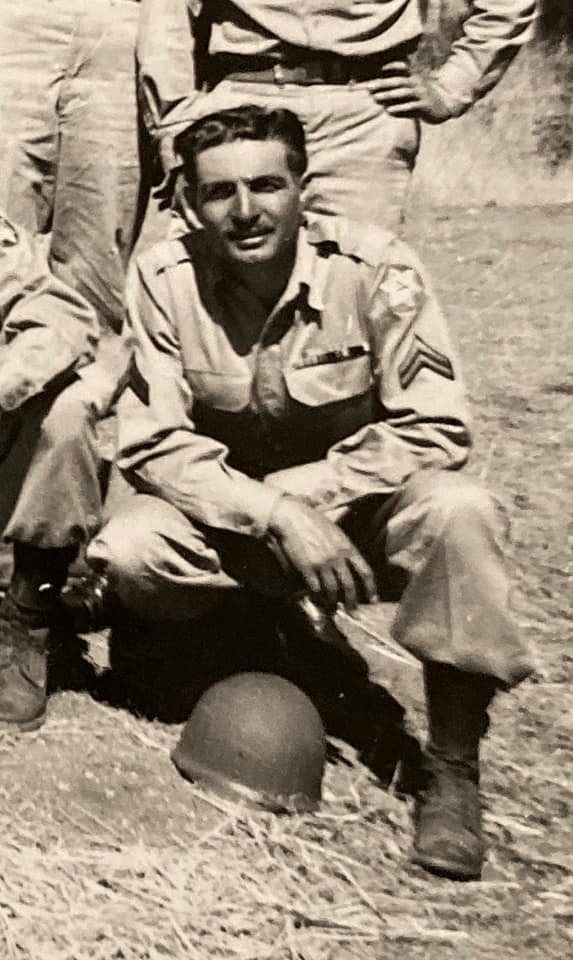
As the son of a citizen who, although Portuguese, also had American nationality, I could, although not compulsorily, serve in one of the three military branches; when approached by the recruiter, I agreed to enter the U.S. Army in April 1945, and I became a U.S. Citizen. I served in Korea as Supply Sergeant of Company B, 32nd Infantry, Seventh Division. I received an honorable discharge in December 1946 and started a warehouse position at Hills Brothers Coffee, becoming a coffee tester until June 1948.
After registering for admission to the University of California, Berkeley, for the Spring 1949 admission, I returned to Portugal to visit my family.
Although I initially pursued a major in Economics and foreign trade, the counselor for Veterans redirected me to a foreign language curriculum, which satisfies the need for teachers and is a more successful career path after graduation.
Unfortunately, there was no demand for Portuguese in the local California high schools. However, there was a need for Spanish and French teachers. I completed my Bachelor’s Degree in 1951, specializing in Latin American Studies, with an emphasis in Spanish and Latin American History.
I was recruited by Bank of America in their International Banking Department to be the General Manager in Brazil, São Paulo, as the Bank was establishing a presence in Brazil. Bureaucratic problems delayed Bank of America’s intention to set up in Brazil. In the interim, I was offered a comparable yet temporary assignment in Nicaragua, but I declined. I returned to UC Berkeley for my Master’s in Arts, graduating in 1953 in Spanish literature.
I taught Latin, Spanish, and Latin American culture at Hanford Union High School. A few months later, Oakland Junior College requested my assistance in organizing its Department of Foreign Languages, of which I eventually assumed the role of Chairman.
While at Hanford, I met many community members, including Doctor Raul de Campo and his family. I volunteered to teach the City’s Catholic Priest Portuguese as a second language. I also helped our fellow Portuguese countrymen prepare for their American Citizenship Test.
When I returned to the San Francisco Bay Area, I taught Spanish and later Portuguese language and culture at the University of California Extension, San Francisco. I was Supervisor of Teacher Training School at the UC Berkeley Dept of Education.
I raised my family in San Francisco.
In early 1967, I defended my PhD Thesis with honors at the University of Seville, Spain, on the subject of D. Cristóbal de Monroy y Silva, a Spanish historian, playwright, and poet during the early 1600s.
Teaching Opportunities:
I began a career as a Spanish and Spanish Literature Professor at Merritt College in Oakland, where I headed the Department of Foreign Languages.
1968 I was invited to teach the Summer Session at the University of Hawaii, Honolulu. Between 1972 and 1974, as a guest of the University of Auckland, New Zealand, I held the position of Professor of Spanish Literature and Head of the Department. I enjoyed two years of excellent relations with my students and colleagues.
1973, I participated in the AULLA (Australian Universities Language and Literature Assoc) XV Congress at the University of New South Wales. I gave a paper on D. Cristóbal de Monroy y Silva, entitled “Monroy, Uno De Los Olvidados.”
I also led active discussions at the Lion’s Club in New Zealand on Portuguese history and culture, which coincided with the Portuguese Guerra Colonial (the independence of the former Portuguese colonies).
I returned to Merrit College in 1974 and retired in 1988.
- How did you get involved in the Luso-American Education Foundation, and what has been your trajectory in this organization?
Led by my father, one of the original founders of the União Portuguesa Continental do Estado da California, I joined this organization, which, years later, merged with the Benevolent Society of California (BSC) – the “parents” of Luso AmericanFraternal Federation (LAFF) and United National Life Insurance Society (UNLIS).
After the consolidation at San José was approved in 1957, Resolution # 3-57 was introduced and adopted. This resolution directed the Board of Directors to study a program for the exchange of students, ages 18 to 23, between the U.S. and Portugal.
An educational committee was appointed, and following the annual convention at Long Beach in August 1957, the committee recommended that the BSC finance the program. The Resolution was amended to extend these benefits to any qualified person, whether a member of the Society or not.
The program proved to be extremely popular and of far-reaching importance since many students were given the opportunity to visit Portugal and absorb the language, customs, and historical background of the Portuguese people.
With the complete financing of these programs by the newly formed United National Life Insurance, with its “surplus funds”, and thanks to the persuasion of Mr. Manuel Reis, who was the CEO, Vice President of the newly formed organization, the Education Programbegan to prosper as early as the summer of 1958. By 1959, with such excellent results in our two years of existence, it was recommended that we accept and encourage voluntary contributions to the program and study the feasibility of an entity to encompass said EDUCATION PROGRAM. The new Organization was to be called the Luso American Education Foundation (LAEF)And so…on July 12th, 1963, the LAEF was born, a non-profit, charitable education corporation. The first meeting of the Board of Directors took place on August 13th, 1963, in Hanford, California.
Appointed directors were:
Manuel Bem Barroca, Dr. Raul de Campos, Manuel Minhoto, Manuel Reis,
Manuel Roque, Honorable William Silveira and Antonio Simas
Therefore, as one can deduce, I have been involved with the LAEF since its inception, going from an original director to a president and Director Emeritus of our dear organization!
What is your vision for LAEF? How do you see the organization’s relevance today compared to a half-century ago?
LAEF has been very successful thanks to the hard work, commitment, devotion, and sacrifices of many of its members, the generosity of Luso American Financial, and the generous donations by some of its fellow associates and followers. I see its continued success in promoting the Portuguese language and culture, helping Portuguese students and anyone interested in propagating our culture. We are well aware and thankful to those officers and board members who often use a lot of their family time to serve our organization.
With the decrease in emigrants, more time and energy must be put into bringing the present generation into the Foundation. Additionally, we need to work closer with other organizations to promote the continuous teaching of our culture by helping to instill in the younger minds the pride of being Portuguese Americans and Americans of Portuguese descent. By working together, with the cooperation of other organizations, a more effective and stronger diaspora will result.
4. What would you like to see as the organization’s short—and long-range goals? Are there any changes you would like to see come to fruition at LAEF?
Considering present-day inflation, tuition fee increases, and the cost of living in general, the Foundation should increase the dollar value of the scholarships, taking into consideration the total fund reserves, even if it means reducing the number of scholarships issued.
We need more folks joining the organization and more robust participation from former scholarship beneficiaries. We want to hear their experiences and suggestions.
I would like to see a more significant effort to work with other organizations in the diaspora who believe in the same principles as LAEF: helping maintain and promote our culture and language by keeping our traditions alive in our adopted country.

5. Can you briefly summarize your thoughts on the significant numbers of Portuguese and Lusophone Diasporas who ended immigration, at least for our Portuguese and Lusophone diasporas in California?
With the number of Portuguese emigrants – particularly from the Azores, Madeira, and Continent – dropping to a low level in California and other areas, it is essential that more recruiting be done, primarily among our younger generation. Additionally, it is important to maintain active advisers, former officers, and older community members who believe in our Foundation’s goals. The commitment and involvement of the younger generation and former community members in board positions and other jobs of their choice is critical.
I trust the leaders and am confident they will take care of this matter for the well-being of our diaspora and the preservation of Luso—the Luso-American Education Foundation.
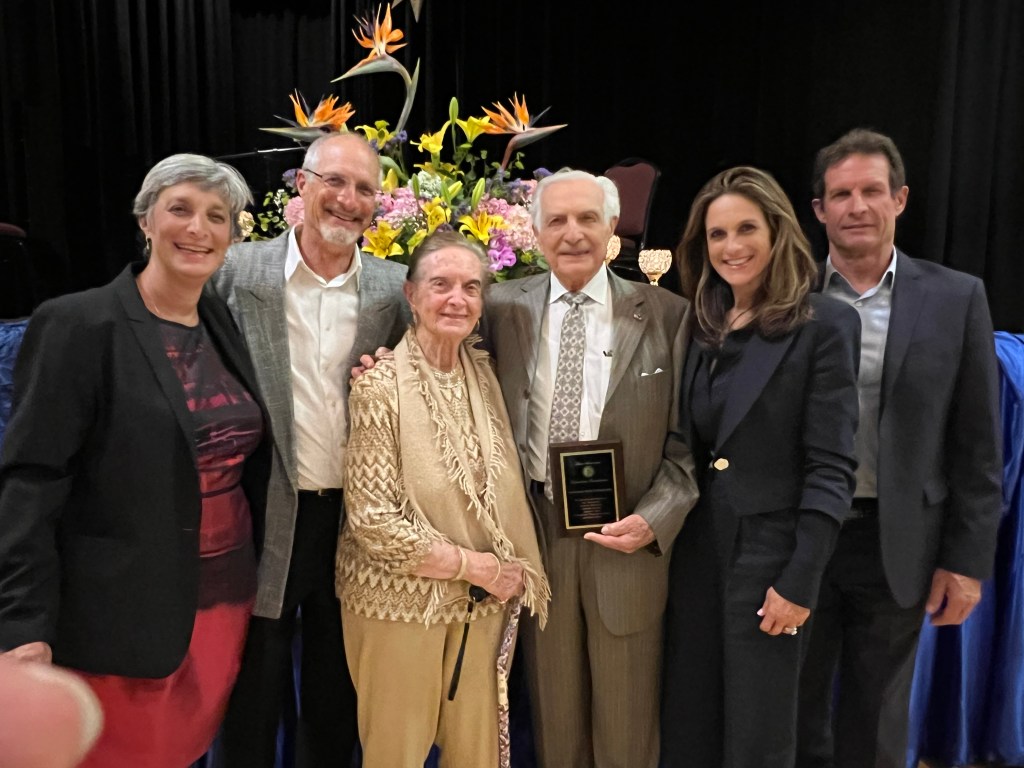
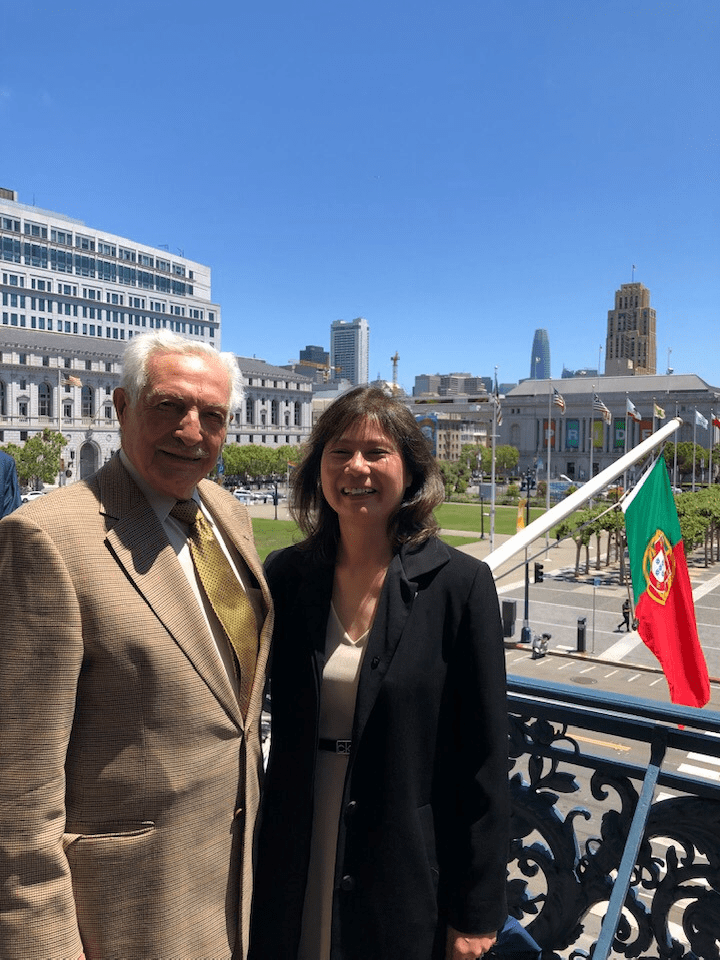
As you have seen, Dr. Manuel Barroca is 98 years young and continues to be a vital member of the LAEF and of the Portuguese-American experience in California. The community and LAEF are forever grateful for all that he has done.
 Novidades - The Islands and the Diaspora