


Eduardo Brito de Azevedo, a professor of climatology at the University of the Azores, argues that rising seawater temperatures may already reflect climate change’s effects.
The IPMA (Portuguese Institute for the Sea and Atmosphere) forecast for this week in the archipelago was for the temperature to reach 26 degrees. Eduardo Brito de Azevedo confirms the situation and its specific aspects but stresses that this trend has been consistent over the last few years.
“Since last year, the waters have had an anomaly of around one and a half degrees above normal. The thermal anomaly in the Atlantic is not just for this year, it has been progressive and consistent. We can already suspect, at least, that it’s due to climate change, especially something this big,” he says.
Specific circumstances have led to the current scenario. “Our anticyclone is to the southwest and is weaker than normal, which means it doesn’t generate enough wind to mix the surface water of the sea. The water is heated on the surface and is not mixed with deeper waters,” he says.
It also reduces dust transport from the Sahara desert, leading to a cleaner atmosphere and more energy from solar radiation.
“We have a network of ondograph buoys measuring temperatures. The IPMA predicted temperatures above 26 degrees. In Flores, we’ve practically reached that value and also in the Central group, particularly in Graciosa, the sea water is well above normal,” he points out.
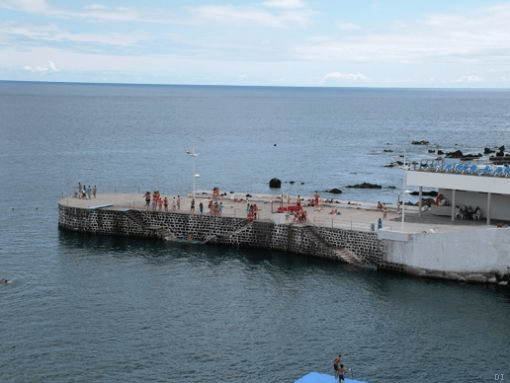
The professor and researcher from the Azorean Academy adds that, in the Pacific, the El Nino phenomenon has been replaced by La Nina, which seems distant but could have implications for the Azores, with more and more violent storms in the Atlantic.
“There is a relationship between the alternation of El Nino and La Nina. El Nino reduces storms in the Atlantic and La Nina increases storms in the Atlantic. These are relatively consistent studies, which means that if we combine the high temperature of sea water, which is one of the reasons why tropical storms form, with the occurrence of La Nina, we could have a more intense hurricane season,” he explains.
The researcher points out that “the second hurricane of this season, Hurricane Beryl, was already force five, the maximum force.” This was the earliest force-five hurricane in Atlantic hurricane history.
Another aspect that should be of concern, he says, is the possible implications for marine fauna and flora. “We could be talking about a greater presence of gelatinous elements, such as jellyfish or caravels, etc. Then there’s the acidification of the oceans, which is a consequence of global warming. The ocean acquires a higher concentration of carbonic acid and, in more acidic conditions, gelatinous animals are more likely than animals that need carbon for their skeletons. So there is this tendency,” says Eduardo Brito de Azevedo.
This could harm krill, for example, at the base of the food chain. “These are imbalances that have everything to do with each other,” he points out.
In Diário Insular, José Lourenço-director
Translated to English as a community outreach program from the Portuguese Beyond Borders Institute (PBBI) and the Modern and Classical Languages and Literatures Department (MCLL) as part of Bruma Publication and ADMA (Azores-Diaspora Media Alliance) at California State University, Fresno, PBBI thanks Luso Financial for sponsoring NOVIDADES.

 Novidades - The Islands and the Diaspora