


“Operation Mentor,” which hit what is considered to be the largest drug trafficking organization between South America and Europe, has once again shown that the Azores are a support base for cocaine crossing the Atlantic.
This operation in the Azores resulted in the arrest of two foreign nationals, ages 55 and 37, one resident in São Miguel and the other on the island of Faial. The Polícia Judiciária (PJ-one of the police forces in Portugal) also arrested a 42-year-old Portuguese citizen in the Lisbon area.
“The three detainees were brought before the Lisbon Court of Appeal, which decided to maintain the detentions of the defendants resident in the Azores for delivery to the issuing state and applied the coercive measure of periodic presentations to the defendant detained in Lisbon,” said a statement from the PJ at the end of last week.
The coordinator of the Judicial Police in the Azores, Renato Furtado, spoke to DI about the operation. He explains that the archipelago’s geostrategic location “is crucial for this fight because it allows us to intervene in the middle of the Atlantic, at the crucial moment of the criminal project.”
“It makes it possible to intervene and search these vessels before they have other chances to dissipate the drugs, when they approach the European coast,” he adds.
The passage of cocaine through the Azores is not new. It is, for example, at the heart of the story that inspired the Netflix series “Rabo de Peixe.”
Renato Furtado confirms that “this situation of the Azores playing a central role in international drug trafficking, particularly cocaine, is not new” and that it “goes back many years.”
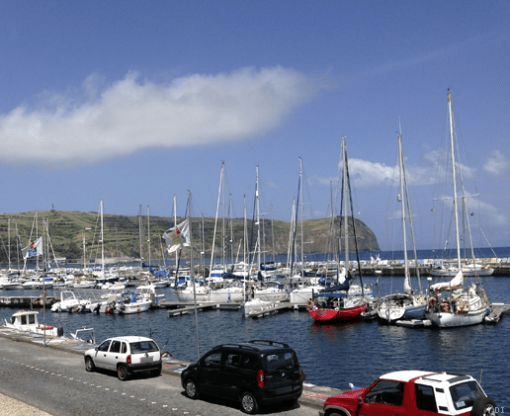
The mode of operation of the trafficking networks, he specifies, is the transportation of “large quantities of this narcotic on pleasure boats, namely sailboats from South America or the Caribbean, which make the crossing from that continent to Europe, usually entering via the Iberian Peninsula and passing through the Azores.”
The authorities know that they sometimes call at some marinas in the Azores, “especially the marina in Horta,” says the PJ coordinator in the region.
“It’s a way of working for criminal organizations that are dedicated to this way of introducing these quantities of drugs into Europe, which is already well known, although it has changed over time. At one point, it was usual for vessels to stop off at marinas, at others they didn’t and carried out a direct route from the Caribbean or South America directly to the European continent. It varies from situation to situation,” he explains.
Another factor is the presence of some members of the criminal organizations on the islands themselves. “We have sometimes seen that the organizations place people who facilitate all the logistics of the operation in strategic places and the Azores are also one of those places. There are people who come to perform certain functions for these organizations here in the region,” says Renato Furtado.
Operation Mentor
The investigation into Operation Mentor was centered on the Spanish national police in partnership with Norway.
According to the PJ coordinator in the archipelago, the Norwegian authorities played “an important role, precisely because many of the individuals were linked to that country.”
“In any case, it’s a very wide-ranging organization, active in at least 11 countries. These are the countries that contributed to the investigation led by the Spanish police,” says Renato Furtado.
According to the PJ coordinator, many of the organization’s vessels operated from Spain to the Caribbean or South America. “They began to see signs that these vessels were transporting drugs, particularly cocaine. These prospects were fully confirmed in 2023 with an intervention in the Caribbean, in which a sailboat was found with around a ton and a half of cocaine. From then on, this investigation developed significantly,” he says.
Based on the information obtained from this seizure, several people were identified and associated with other “suspicious” situations.
About a month ago, an operation was launched in different countries, which led to the arrest of 50 people.
The coordination of the investigation involved Europol, the UK’s National Crime Agency, and the US DEA (Drug Enforcement Administration). “The Maritime Narcotics Analysis and Operations Center, which has its headquarters in Lisbon, Portugal, also contributes greatly to the smooth coordination of these investigations into international drug trafficking using pleasure boats,” he says.
In the Portuguese case, the PJ, through the National Unit for Combating Drug Trafficking and the Criminal Investigation Department of the Azores, has contributed by exchanging information over time. “On the operational side, the three arrests were also made in compliance with European arrest warrants issued by the Spanish judicial authorities, which we complied with,” he says.
Renato Furtado stresses this is an “international approach” since this drug rarely reaches the Azorean domestic market.
“There are some known situations in which the drug is sent to sea and then appears on the coastline of the different islands. Situations where sailboats break down and need to get in and hide the drugs in certain places and then the sea manages to unravel the package and it also appears on the coast. There’s a well-known case from 2021, where a large quantity of drugs appeared on the north coast of São Miguel. Just by chance, this drug has an impact on domestic consumption. The project, in fact, was always destined for the European continent,” he says.
The coordinator of the PJ in the Azores stresses that this international fight “is very necessary, given the brutal quantities of cocaine that enter Europe every year”.
In Diário Insular-José Lourenço, director
Translated to English as a community outreach program from the Portuguese Beyond Borders Institute (PBBI) and the Modern and Classical Languages and Literatures Department (MCLL) as part of Bruma Publication and ADMA (Azores-Diaspora Media Alliance) at California State University, Fresno, PBBI thanks Luso Financial for sponsoring NOVIDADES.

 Novidades - The Islands and the Diaspora