

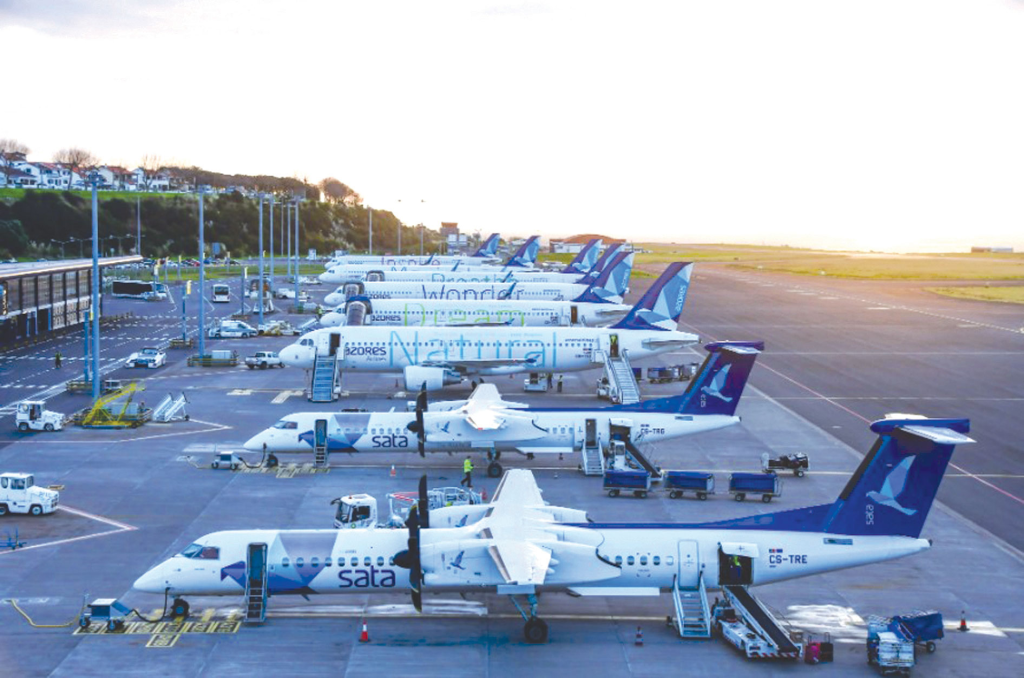
The Chamber of Commerce and Industry of the Azores (CCIA) criticized the transport sector in the Azores in a statement yesterday.
“This area, which is of vital importance to businesses and the population, continues to lack the quality of service that is required, given the volume of financial resources allocated to it, particularly about the airline component, which requires continuous monitoring due to its potential impact on the economy,” reads the final communiqué from the meeting between the three Azorean Chambers of Commerce.
“Ryanair’s recent expression of interest in restarting its operation in the Azores and its positive effects, especially in winter, was considered positive” and, concerning maritime transport, the Board “once again reiterated its position on the maritime freight transport model, which it considered to be inefficient and very costly for companies and consumers”.
According to the entrepreneurs, passenger land transport “continues to follow an outdated model that has led to poor results for the sector, reflected in low investment in fleet qualification and an insufficient and inefficient service to users. This is an area that will continue to merit ongoing monitoring and intervention by the Board.”
It was decided to schedule the CCIA Forum for September 13 of this year, to continue the reflection and debate on issues relevant to regional business activities and the challenges facing Azorean society and, in particular, companies, in good time to contribute to shaping the Plan and Budget for 2025.
The guidelines for the possible revision of the Strategic Partnership Agreement 2023/2028 – Income, Sustainability, and Growth, of which the Chamber is one of the signatories, signed within the framework of the Standing Committee on Social Dialogue of the Economic and Social Council, were also outlined.
Relevant aspects to be maintained in this agreement include the current tax differential in VAT, IRS, and IRC, the current regional increase to the national minimum wage, and maintaining the relationship between productivity gains and wage updates within the scope of collective bargaining.

Concern about delays in the PRR
Azorean entrepreneurs express “concern about the low execution rate of some programs, such as the company recapitalization line, but also satisfaction with the financial commitments/execution of others, such as Solenerge”.
“The program aimed at the capitalization of regional companies is a particular cause for concern, not only because of the delay in structuring new instruments but also because of what is already available, which has not received significant support from companies,” the document adds.
The Board believes that “it is necessary to find feasible instruments, even if they are not ideal, that can help companies, such as risk capital, the strengthening of mutual guarantees and credit lines”.
It was also considered that “the possible possibility of reprogramming the PRR should begin to be considered now, which, if it occurs, cannot mean transferring funds intended for companies to other entities”.
The Board maintained its position on “the imperative need to create an institution for the external promotion of the Azores which, in a coordinated, dedicated and professional manner, is responsible for promoting regional products in foreign markets, as well as attracting foreign investment. These functions have been drifting between different government departments and political leaders, without a coherent and effective strategy.”
in Diário dos Açores-Osvaldo Cabral, director
Translated to English as a community outreach program from the Portuguese Beyond Borders Institute (PBBI) and the Modern and Classical Languages and Literatures Department (MCLL) as part of Bruma Publication and ADMA (Azores-Diaspora Media Alliance) at California State University, Fresno, PBBI thanks Luso Financial for sponsoring NOVIDADES.
 Novidades - The Islands and the Diaspora