

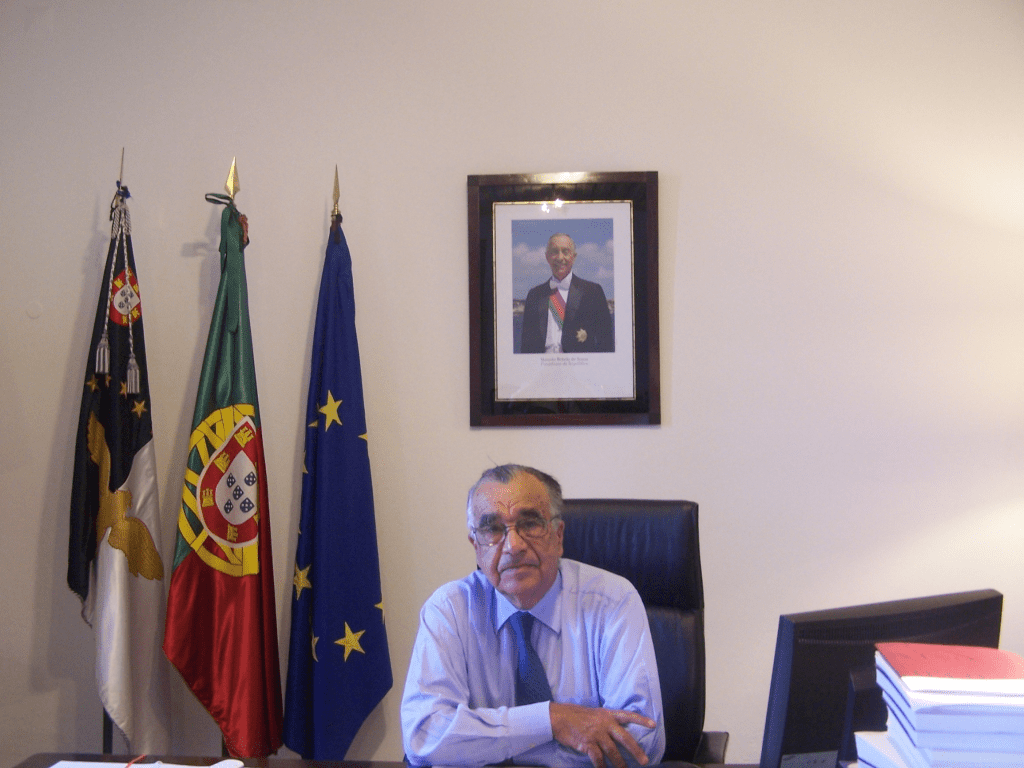
A delegation of three signatories of the ‘Manifesto for Human Development and for an Idea of the Future in the Autonomous Region of the Azores’, published in January of this year, will meet today with the Representative of the Republic for the Azores, at Solar da Madre de Deus, in Angra do Heroísmo, Terceira Island. As well as presenting this document to Pedro Catarino, they intend to send it to the President of the Republic, Marcelo Rebelo de Sousa.
The group made up of José Henrique Ornelas, Maria João Vargas-Moniz and Joel Neto aims to “raise awareness of the devastating human development indices in force in the region”.
“What we want above all is to alert the institutions, namely the Presidency of the Republic and the political office holders,” explains Joel Neto, one of the authors of the manifesto, along with José Henrique Ornelas and João de Melo, in a statement to the newspaper Açoriano Oriental.
For the Azorean writer, the reason for the alert is related to the “human emergency that we are currently experiencing in the Azores” “which has not ceased to exist as a result of the fact that we issued a manifesto and that it displeased so many people last January”, he points out.
Despite admitting that there has been some “positive news” from the point of view of education, Joel Neto points out that “even so”, the Azores “is still a long way from the national indicators for early school leaving” and that in the “more than 40 human development indices in which the Azores lead”, the “situation remains exactly the same” or is even “worse” in some cases.
For this reason, he points out that there is an “absolute indifference on the part of the Azorean elites to the principles of equity and justice, and to the value of social mobility, personal autonomy, and individual freedom, which must be promoted in the Azores”.
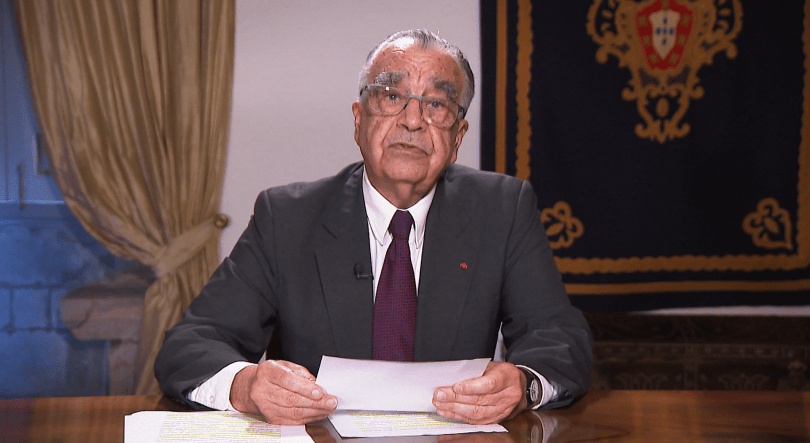
Asked what he wants to achieve with those in power to effectively change this situation, the co-author of the manifesto says that, more than raising awareness, “we need to shock those in power”.
“As long as those in political office are not shocked by this situation and are not ashamed of their absolute indifference to this situation for so many years, and indeed for so many decades, they will not change their conduct concerning this situation,” said the Azorean writer.
There are many problems “that are structural” and others that “are on their way to being structural, but which are even reinforced by cyclical decisions”, he says.
In this sense, he gives a particular example of the number of institutionalized people “in the Azores like nowhere else in the country or even in Europe”.
Referring to the island of Terceira in particular, he says that there are more people hospitalized “due to mental illness”, or due to a “lack of family carers”, than in any “other territory at European level: It’s absolutely shocking”, he stresses.
“These are people who are doomed from the start because they are institutionalized, they have no chance of finding their way back to individual freedom and autonomy,” adds Joel Neto.
It should be remembered that the ‘Manifesto for Human Development and for an Idea of the Future in the Autonomous Region of the Azores’ was signed by 21 personalities, from a list of writers, journalists, university professors, doctors, and artists, most of whom are Azorean and live in the islands, in mainland Portugal, or in the Azorean diaspora.
Rafael Dutra, Journalist for the Açoriano Oriental newspaper–Paula Gouveia, director
You can take a look at the entire manifesto on our Filamentos platform. We published it in English also on January of 2024.
Translated to English as a community outreach program from the Portuguese Beyond Borders Institute (PBBI) and the Modern and Classical Languages and Literatures Department (MCLL) as part of Bruma Publication and ADMA (Azores-Diaspora Media Alliance) at California State University, Fresno, PBBI thanks Luso Financial for sponsoring NOVIDADES.

 Novidades - The Islands and the Diaspora