

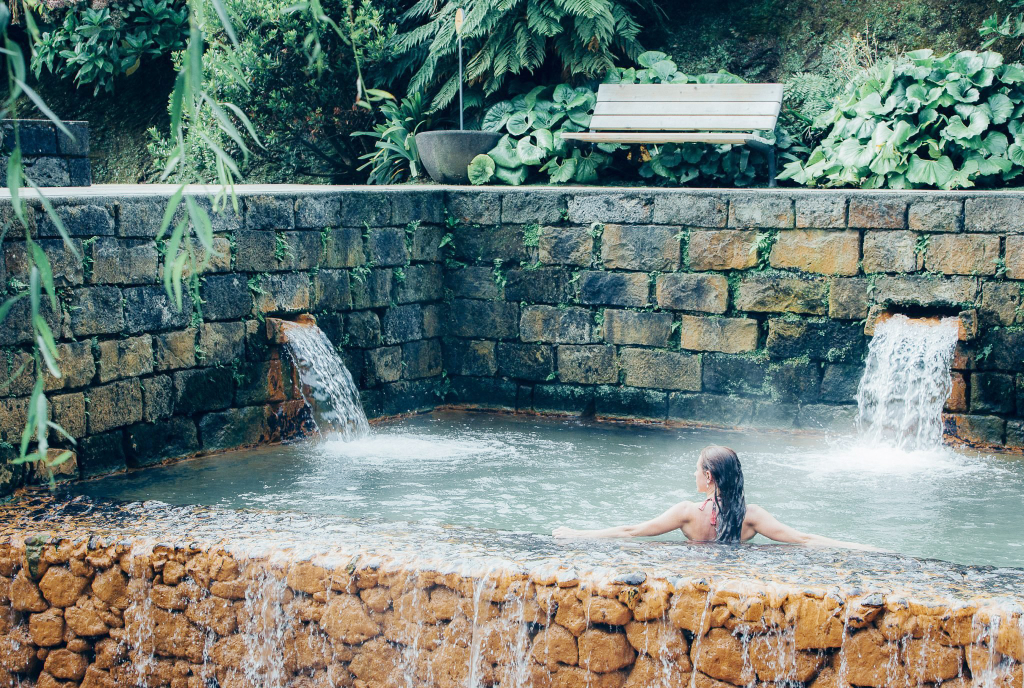
Caldeira Velha, in Ribeira Grande, Poça da Dona Beija, and the hot water pool at Parque Terra Nostra are still closed to the public. However, the latest analyses showed a “significant decrease in the concentration of the microbiological agent previously identified (over 95% reduction).”
According to the Regional Directorate of Health, “as the results continue on a downward trajectory, it will be possible to reopen these spaces, respecting the rules for their use.”
The Regional Health Directorate, in conjunction with the health authorities of Ribeira Grande and Povoação and the São Miguel Island Health Unit (USISM), carried out an environmental investigation using water samples from Caldeira Velha, Poça da Dona Beija, and Terra Nostra Park.
INSA carried out the initial laboratory analysis of the samples taken, and the results were released on July 24. The samples from the pools at Caldeira Velha, Poça da Dona Beija, and Parque Terra Nostra tested positive for microbiological contamination.
Samples from the Caldeira Velha, Poça da Dona Beija and Parque Terra Nostra springs showed negative results.
According to the Regional Health Directorate, these water systems “offer ideal conditions for the colonization, multiplication and dissemination of some microbiological agents, namely bacteria.”
Under the ‘Precautionary Principle’, the health authorities decided to “order the immediate closure” of the three hot water bathing areas, exclude the public from the tanks and carry out shock disinfection.
It was also decided to drain, clean and disinfect the tanks and accessories and to “review the control measures and risk assessment”.
After filling the tanks, a new analysis was carried out the following day and after two to four weeks.
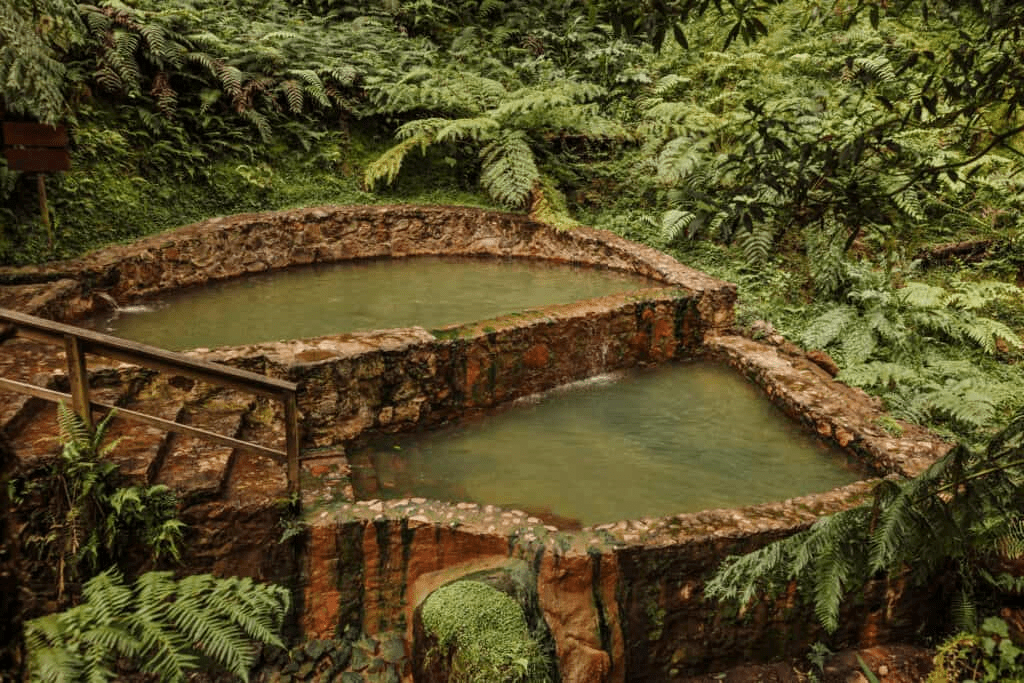
It was decided to “maintain the closure until the risk assessment had given satisfactory results”.
“Once these procedures had been completed,” samples were taken again at the three sites between July 29 and 30. INSA carried out the laboratory analysis of the samples, with the results known between August 1 and 5.
This second analysis showed that the samples from the pools at Poça da Dona Beija, Parque Terra Nostra, and Caldeira Velha still had “positive results, but with a significant decrease in the concentration of the microbiological agent previously identified (above 95% reduction).”
Given these results, it was decided to “maintain the closure and exclusion of the public from the tank area; carry out new shock disinfection; carry out new drainage, cleaning, and disinfection of the tanks and accessories. And to review the control measures and risk assessment.
After filling the tanks, a new analysis was carried out the following day and after two weeks.
In the meantime, it was decided to “maintain the closure until the risk assessment has given satisfactory results.”
Regarding the results already received, and after a meeting involving various technical entities in the sector, the strategy presented by the Regional Health Directorate “was unanimously accepted, so the tanks were drained, cleaned, and disinfected, and the third analysis carried out on August 6 and 7.”
It was also agreed that “as the results continue on a downward trajectory, it will be possible to reopen these spaces, respecting the rules for their use. The results are expected to be received next week.”
Translated to English as a community outreach program from the Portuguese Beyond Borders Institute (PBBI) and the Modern and Classical Languages and Literatures Department (MCLL) as part of Bruma Publication and ADMA (Azores-Diaspora Media Alliance) at California State University, Fresno, PBBI thanks Luso Financial for sponsoring NOVIDADES.

 Novidades - The Islands and the Diaspora