


António Simas Santos, a well-known businessman in the tourism sector on the island of Pico, a doctor, and political activist, and a regular contributor to our newspaper is concerned about the direction of some sectors of activity in our region and warns of the dangers and challenges, especially in the area of tourism. In this interview, he points out that if we opt for quality tourism, we will have to prepare the region for an adequate global response to this type of tourism.
In many parts of the world, tourism is being challenged by local populations and even by the authorities, with analyses by economists, sociologists, and others drawing attention to the social and economic problems caused by intense tourism. Was this reaction to be expected?
In a recent article, a well-known local economist quoted an OECD report in which this international organization draws attention to the unbalanced impacts of tourism, which do not always benefit local communities.
The exponential tourism growth that is taking place in Portugal and in the region is causing great concern, especially in a delicate microcosm such as ours.
Of course, most politicians love to show statistics of vigorous economic growth, but rarely worry about the medium and long-term negative impacts on the population. It’s in areas like Malaga and Barcelona that the high tourist intensity proves that over-tourism is already a tangible and undeniable reality, with a whole range of negative impacts.
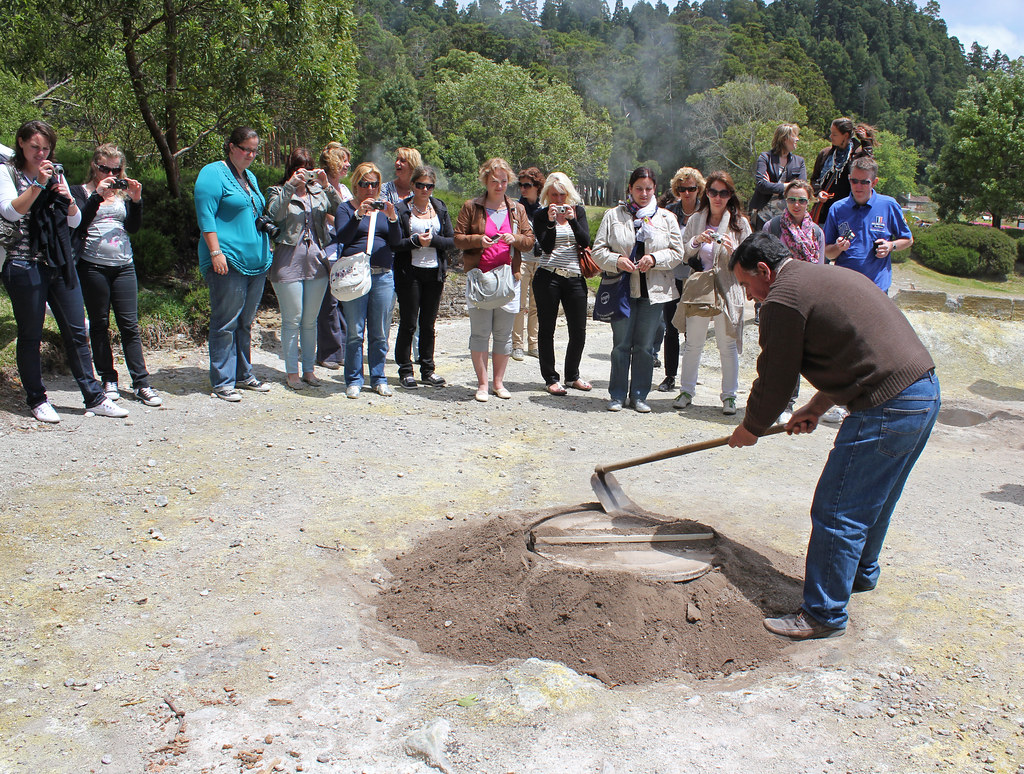
Where are we in the Azores in terms of the tourism industry and its impact on our islands? Are we already seeing any negative reactions to this activity?
Fortunately, we are still a long way from the examples I mentioned, but there are islands where the intensity is already being felt. We are therefore at a point where we must decide whether we are facing yet another economic cycle, almost monopolistic, with feet of clay, or whether we have already objectively entered into an excess of tourists which, in the short term, will have very negative impacts on our population.
I think it is imperative – and this will be our silver bullet – to decide whether tourism is our great future or just an important economic sector, but one that must be contained so as not to cannibalize the other sectors.
Right now, we must calculate, as objectively and scientifically as possible, the tourist load that the Azores can handle without devastating impacts on the diversification of the rest of the economy and, above all, on people’s quality of life. Deciding, at the same time and definitively, which of our tourism products actually generates the most added value.
What kind of tourism should we look for in the Azores and what promotion should we do to attract these tourists? Is the current promotion geared towards any segment that might be of particular interest to us or is it a kind of tightly knit net that catches everything that comes along?
I think we’re still in the new-riquism phase of tourism, where everything that comes into the net is fish.
Our promotion is still very tightly knit because the in-depth debate on what we want for tourism has yet to take place. Only once this debate has taken place will it be possible to decide which tourists we want and only then will it be possible to define the promotion we want to do, as well as the type of facilities we should promote and support.

Bhutan, for example, wants to get rid of tourists to remain Bhutan and has started charging 200 euros per day to each visitor. Could this be a way forward if the Azores want to preserve their identity or do you prefer other options?
The case of Bhutan will never serve as an example for the Azores.
It’s an extreme case that has nothing to do with our reality and our people. Our choice should be one of small steps, after defining what we want. If we opt, for example, for quality tourism, we will have to prepare the region for an adequate global response to this type of tourism, putting an end to the policy of everything that comes to the net is fish and preparing our public and private infrastructures for a much higher level of demand than the one we have.

What should we do with the jewels we have, such as natural structures or Angra do Heroísmo, to preserve what is ours, which is a World Heritage Site, and at the same time set up a tourism industry that respects natural and human habitats and the built structures themselves? Is there any effective way that you know of?
I think the example of Angra do Heroísmo is paradigmatic.
Having twice been the capital of the kingdom, a champion of European liberalism and an entrepôt for West and East Indian caravels, the island of Terceira has an Angra do Heroísmo and a Praia da Vitória. An unparalleled record throughout the archipelago. Not forgetting the presence/exile of King Afonso VI for five years.
In the 21st century, Terceira could have its head held high and be ready to use all these many valuable resources to its advantage, which could easily form the basis of a brand that could well be: Terceira – the Island of Kings.
Of the kings who had their capital there or of those who lived there.
The island could become a great theme park: recreating – by way of example – the arrivals and departures of the caravels from the Indies, life at the royal court, the exile of Afonso VI, the resistance of Praia da Vitória, or the Heroism of Angra and so many other situations from those unforgettable historical times.
All this could turn Angra do Heroísmo and Terceira Island into an unparalleled high-quality tourist product.
The Azorean economy historically has cycles and the next one only emerges when the previous one runs out, and so on. We may be on our way out of the cow cycle (the transitions are sometimes barely perceptible at certain stages) and into the tourism cycle. Can you see this transition or at least an appetite for it?
The way things are going, unfortunately, everything points to it. While it’s not too late, it’s not too soon to reverse this ancient trend.
There is, however, one shining example: the resurgence of wine-growing on the island of Pico, which has become a diversification with a major impact on the island’s economy.
There are many other special opportunities, such as geothermal energy and our endless sea, for example.
In my opinion, we are far from being faced with the dilemma between the cow and tourism. All it takes is a little imagination, creativity, and political will.
Exclusive Diário Insular/Diário dos Açores
Translated to English as a community outreach program from the Portuguese Beyond Borders Institute (PBBI) and the Modern and Classical Languages and Literatures Department (MCLL) as part of Bruma Publication and ADMA (Azores-Diaspora Media Alliance) at California State University, Fresno, PBBI thanks Luso Financial for sponsoring NOVIDADES.


 Novidades - The Islands and the Diaspora