

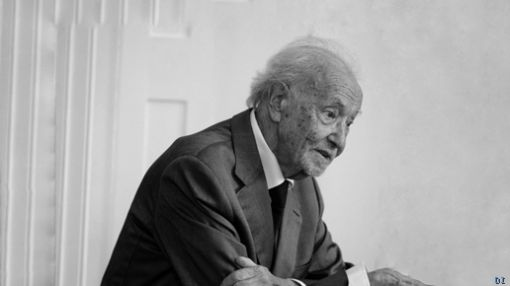
Álvaro Monjardino died last Friday (August 16, 2024) in his home in Angra do Heroísmo. He was 93 years old.
He was the first president of the Regional Legislative Assembly of the Azores (1976-84). With a degree in Law and a specialization in Legal Sciences, he was Minister of State to Prime Minister Carlos Alberto da Mota Pinto between 1978 and 1979.Álvaro Monjardino died last Friday at his home in Angra do Heroísmo. He was 93 years old.
He was the first president of the Regional Legislative Assembly of the Azores (1976-84). With a degree in Law and a specialization in Legal Sciences, he was Minister of State under Prime Minister Carlos Alberto da Mota Pinto between 1978 and 1979.

Affiliated with the PSD (center-right) political party, he was a regional deputy elected for Graciosa in two legislative elections and elected for Terceira during one legislative term.
As a member of the Regional Assembly, he was a member of the committees for Political and Administrative Affairs, Economic and Financial Affairs, and International Affairs.
He was also a member of the Eventual Committee for the Study of the Facilities of the Regional Legislative Assembly of the Azores and the Special Committee for the Revision of the Political-Administrative Statute of the Azores.
As President of Parliament, he also served as Chairman of the parliamentary committees on Economic and Financial Affairs and International Affairs.
He was also a member of the Azores Regional Council, particularly in the area of Economic Coordination and Finance.
Álvaro Monjardino was a brilliant lawyer in the words of many of his colleagues, with an office in Angra do Heroísmo. He also held senior positions in various companies.
He was chairman of the board of the Historical Institute of Terceira Island (1984-1999) and a corresponding member of the Portuguese Academy of History.
He played an important role in the process that led to the classification of the historic center of the city of Angra do Heroísmo as a World Heritage Site (UNESCO).
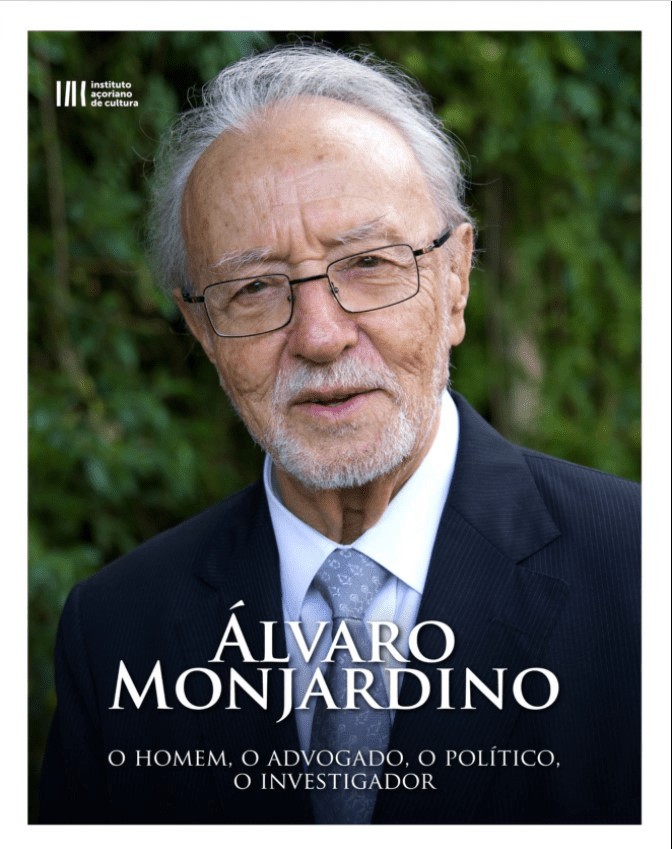
In September 2021, on the occasion of the celebrations of the 45th anniversary of regional autonomy, he was honored by parliament with the attribution of his name to the library inaugurated at the time. The ceremony was presided over by the President of the Republic. “A Quinta Região” and ‘Problemas de Educação numa Região Insular’ (Separata do Boletim do Instituto Histórico da Ilha Terceira) are some of the works he published. He also contributes to “Scientia Jurídica” (three separate issues), the magazine “Atlântida” (IAC – Instituto Açoriano de Cultura), and the regional press, especially the now defunct newspaper “A União” (Angra do Heroísmo), of which he was director.
PAYING TRIBUTE
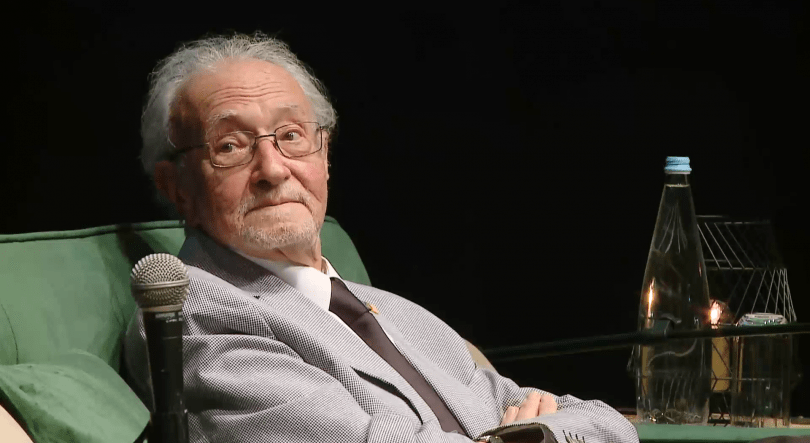
Among the many tributes paid to Álvaro Monjardino, the words of the President of the Republic stand out, as he expressed “national gratitude” for his role in Portuguese democracy. After considering Monjardino one of the founders of regional Autonomy, the President considered him a “remarkable personality at a political and cultural level”.
Marcelo Rebelo de Sousa expressed “national gratitude for the historic role that Álvaro Monjardino played, from the 1970s to the 21st century, at the service of the Azorean people and Portugal”.
Prime Minister Luís Montenegro also paid tribute “to his distinguished political and civic legacy, throughout a life of service to Portugal, and in particular to the Azores”.
Both the president of the Azorean parliament and his counterpart from Madeira paid tribute to Álvaro Monjardino, as did various political forces, especially his party (PSD), but also the PS (both the regional leader and the national president), as well as other forces. The Bishop of Angra also paid tribute to Monjardino.
The leader of the regional government, José Manuel Bolieiro, said that Monjardino was “one of the architects of the consolidation of Azorean autonomy”
in Diário Insular, José Lourenço-director
Editor’s Note (NOVIDADES)-I had the pleasure of meeting and having about half a dozen conversations with Álvaro Monjardino, one of the most cultured human beings I have ever met. Both in Angra, in Ponta Delgada, and here in Tulare (Angra’s Sister City) I learned immensely from the few conversations we had. He never got tired of my questions and from those questions, I learned much about the Azorean Autonomy.
Translated to English as a community outreach program from the Portuguese Beyond Borders Institute (PBBI) and the Modern and Classical Languages and Literatures Department (MCLL) as part of Bruma Publication and ADMA (Azores-Diaspora Media Alliance) at California State University, Fresno, PBBI thanks Luso Financial for sponsoring NOVIDADES.


 Novidades - The Islands and the Diaspora