

The Azorean summer has been magnificent for vacationers, whether they are from abroad or not. During extended periods of drought, air, and sea temperatures are slightly higher than usual. If it hadn’t been for the relative humidity causing some discomfort and the closure of the iron water pools on S. Miguel, it would have been a perfect summer for those who chose the Azores as their vacation destination and for the tourist industry. An increase in the number of overnight stays and passengers transported are indicators of growth. Everything seems to be going well for the sector and new investments are being announced, some megalomaniacal, others more modest, the latter more suited to the reality and sustainability of the destination.
In a period of growth, in which all the players are happy and content, it’s fair to say that some entrepreneurs have come out to express their concern about the way the sector has been growing, but as I said, in the current context, any attempt to deconstruct this paradigm is not advisable, otherwise, anyone who does so will be accused of being an “old man of Restelo”. This may not be as bad as it sounds, because this figure is no longer a symbol of pessimism, but a complex figure that, according to some authors, can represent critical awareness, resistance to imperial and colonial power, environmental protection, and traditional wisdom, and it can also be added that the “elderly” are holders of wisdom that only time can confer, although the elderly are currently looked down on and devalued, and some have even called them the “gray plague” in the recent past. But even considering that the “old man of Restelo” is not a retrograde figure, I’m still going to refrain from any consideration of the model designed for the tourism sector, if there is one, and the dangers it entails for preserving the singularities that characterize the destination and which are being called into question.
The Azorean summer has been magnificent for vacationers, both foreign and foreign. In extended periods of drought, air, and sea temperatures are slightly higher than usual. If it hadn’t been for the relative humidity causing some discomfort and the closure of the iron water pools on S. Miguel, it would have been a perfect summer for those who chose the Azores as their vacation destination and for the tourist industry. An increase in the number of overnight stays and passengers transported are indicators of growth. Everything seems to be going well for the sector and new investments are being announced, some megalomaniacal, others more modest, the latter more suited to the reality and sustainability of the destination.
In a period of growth, in which all the players are happy and content, it’s fair to say that some entrepreneurs have come out to express their concern about the way the sector has been growing, but as I said, in the current context, any attempt to deconstruct this paradigm is not advisable, otherwise, anyone who does so will be accused of being an “old man of Restelo*”. This may not be as bad as it sounds, because this figure is no longer a symbol of pessimism, but a complex figure that, according to some authors, can represent critical awareness, resistance to imperial and colonial power, environmental protection, and traditional wisdom, and it can also be added that the “elderly” are holders of wisdom that only time can confer, although the elderly are currently looked down on and devalued, and some have even called them the “gray plague” in the recent past. But even considering that the “old man of Restelo” is not a retrograde figure, I’m still going to refrain from any consideration of the model designed for the tourism sector, if there is one, and the dangers it poses to preserving the singularities that characterize the destination and which are being called into question.
Not everything is going as well as it seems and, despite the visit to the archipelago by the family that rules Qatar, which has been widely reported and has piqued the curiosity of residents, some less well-off tourists are complaining about the high costs associated with restaurants, accommodation, and car rental – this concept of low-cost travel and high-cost everything else has its contradictions, But it’s not just the exorbitant costs that have caused some complaints; the queues for restaurants, for “natural monuments” and for viewing the idyllic landscapes that distinguish us from other places, are also beginning to cause some discontent for those looking for the quietness of island life in the Azores, tinged with the greens and blues that characterize us. The hues remain, but not the quietness.
If tourists no longer find the charm that attracted them to this archipelago of dreams and nostalgia, nor the well-being that the destination used to give them, residents who don’t benefit from tourism also express some annoyance at the high number of visitors and the negative effects this has on their daily lives, but also some concern about the environmental impacts that, at this rate, could jeopardize the uniqueness that sets us apart. And when this is the case, the sustainability and attractiveness of the destination becomes volatile. In the long run, the ruins of yet another economic cycle will be left to join the Monte Palace and, perhaps, to be museum-like places and offered to other audiences.
The imbalances in the regional economy, its neoliberal nature, and the mediocrity of regional governance are worrying signs for the future of these islands and these people. According to some reputable opinions, constitutional autonomy itself is at stake.
Making the economy dependent on a single activity is, as history teaches us, a costly mistake; making the economy dependent on the functioning of the market, as history teaches us, is increasing poverty and exclusion, giving social and political support to a politically inept government that depends on the moods of its coalition partners and spurious parliamentary support, This is in addition to the lack of a political development project that takes due account of the social, cultural, economic and political aspects and specificities of each of the nine islands. In other words, we are moving at a rapid pace toward economic unsustainability, towards accentuating social asymmetries, and towards the political failure of constitutional Autonomy.
Not only the voters, the abstainers also have a responsibility in designing the parliamentary frameworks that led to the agreements of 2020 and 2024, but the voters will be primarily responsible for scrutinizing parliamentary activity and tripartite governance. In the first instance, and this should be the case if there is sufficient political literacy, voters are responsible for rigorous scrutiny of governance and for expressing criticism of choices that only aim to satisfy electoral patronage, which is also tripartite, since the opposition (PS and BE), particularly the PS, seems satisfied with the course of governance and is acquiescing rather than opposing it.

Democratic legitimacy does not depend solely on electoral results, which means that this government, due to its ineptitude, non-compliance, and breach of the social contract that the “coalition” signed with the voters, should be urgently removed from power, otherwise public finances will collapse in the short term and we will be subject to undesirable external impositions, in addition to those that already exist, particularly those that come from Brussels. Yes, there is some money coming from the European Union, but above all, there are restrictive guidelines for public and private investment, and directives that determine the shape of the regional economy.
Regional governance under the PSD/CDS/PPM coalition has been limited to the “political” management of its survival, first and foremost among the alliance partners, but also with potential voters and pressure groups, as well as with the parliamentary parties on which its political survival depends. The costs of this “political management” are very high and the public purse is showing signs of stress – one wonders where the dogma of “zero debt” has gone.
As for the idea of rigor and transparency in regional governance, it’s just that, an image built up with a speech “for the English to see”, but the permeability of public opinion, tired as it was of a long and worn-out cycle of power, easily absorbed as a precious attribute of the political change that took place in 2020 and was renewed in 2024. Representation is, however, being called into question and voters are concluding, albeit at a slow pace, that regional power has never been as imprecise and opaque as it is now.
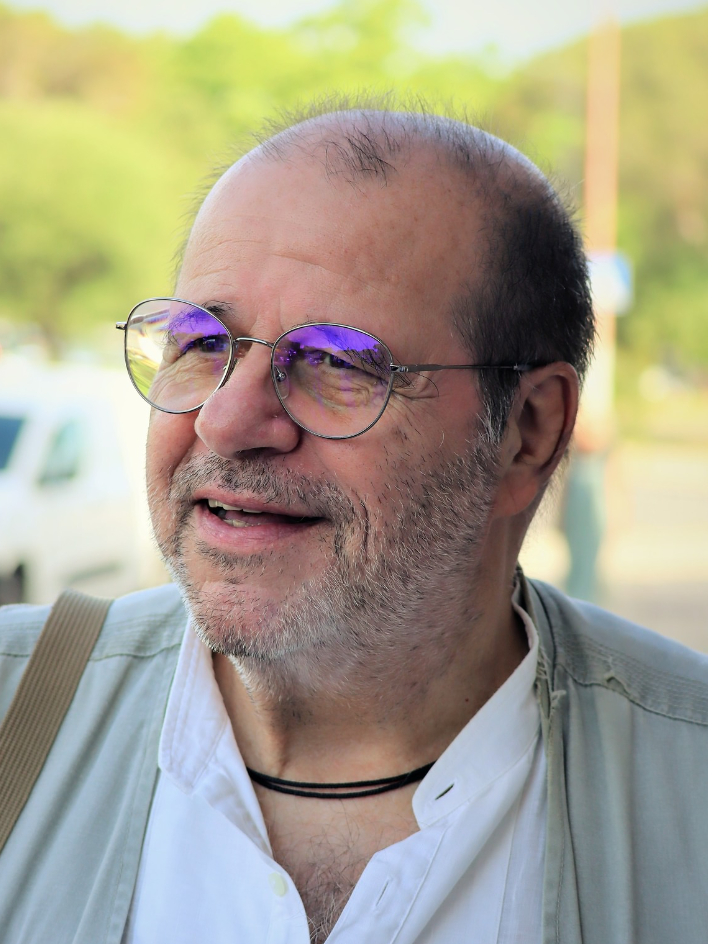
Aníbal C. Pires, In Diário Insular, August 21, 2024
*velho do Restelo (the old man from Freselo) is a saying used to express a return to the past that never was as idyllic as it is remembered.
NOVIDADES will feature occasional opinion pieces from various leading thinkers and writers from the Azores to give the diaspora and those interested in the current Azores a sense of the major opinions on some of the archipelago’s issues.
Translated to English as a community outreach program from the Portuguese Beyond Borders Institute (PBBI) and the Modern and Classical Languages and Literatures Department (MCLL).
 Novidades - The Islands and the Diaspora