

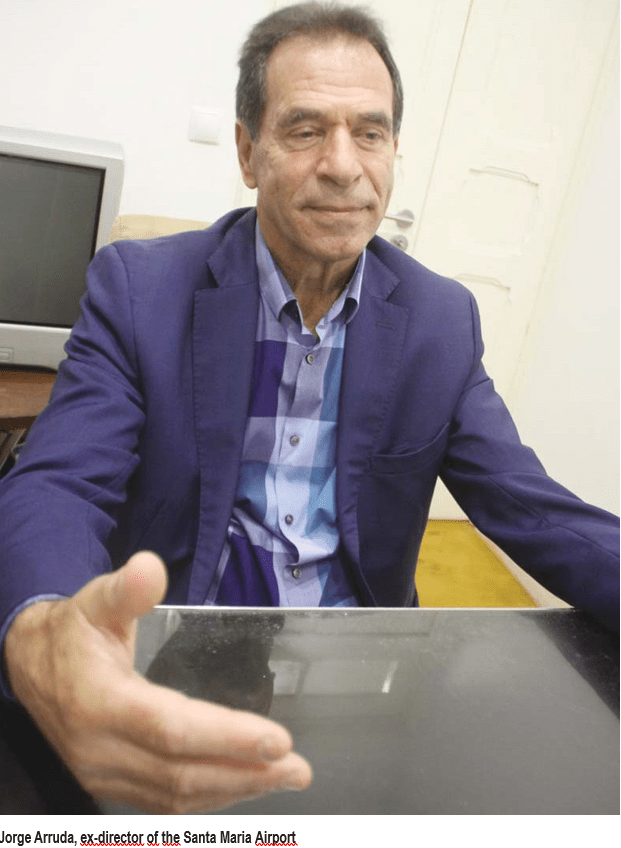
Jorge Arruda, former Director of the Airports of São Miguel and Santa Maria, will be launching a new book entitled “Santa Maria – past, present and Future” on September 3 at the Natália Correia Cultural Center in Fajã de Baixo, at 18h00. On the 27th, the book will be presented in Canada and will also be shown on the island of Santa Maria, with no date yet set.
The book, as the author tells us, which covers various areas, also from a scientific point of view, such as morphology and geology, highlights the social aspects that have marked the island with the passage of various national personalities, such as Marcelo Rebelo de Sousa, and international ones like Ximes Belo, without forgetting the passage of Christopher Columbus in more remote times, as well as the occupation of the island by other peoples before the Portuguese.
The various economic cycles in the archipelagic context, as he mentions, are also highlighted, including the pertinent issue of aeronautics, going back as far as World War II, when powers and competencies were transferred from civil aviation to São Miguel and then the transformation of Santa Maria from a military base into a civil airport. The book is a collection of social and economic memories of what Santa Maria airport was, its importance today, and its potential for the future. “This is important for the island, for the Azores, for the country, and for the international community, because from now on the island can be an impetus in this development. In fact, the Azorean government itself has already admitted that it supports and wants these new technologies installed and applied in the Azores. This adds a lot of value to the region and allows us to foresee a future with advantages not only for the Azores but also for aerospace tourism. San Ta Maria has been and will continue to be a priority base and one that provides more guarantees for this development in aerospace flights.”
Since he was a teenager, Jorge Arruda says that he realized the impact that Santa Maria had – and should continue to have – on commercial aviation and technical stopovers – as well as the island that he believes was a milestone in Azoreans leaving for America and Canada in search of a better life.
Santa Maria, as he says, is linked to Azorean emigration because it was the gateway to and from North America, and was later replaced by Ponta Delgada, in São Miguel.

Born in São Miguel, he has always lived with emigration for family reasons. “My uncles left the old Santana airport (commonly known as aerovacas–aerocows) in São Miguel and took a SATA plane to Santa Maria airport, from where another plane left for Canada and the USA.
As my professional career evolved, I ended up working in Santa Maria when ANA was created and I provided support in the organization of services, both in the financial and quality areas. And after an invitation, I went on to manage the airport itself. At the time, Santa Maria was the subject of vacation trips, networking, and student relations.”
As Director, he recalls the accident at Pico Alto which “shook up the airline industry, but above all shocked the technicians who unfortunately were unable to save lives because there were no survivors. It was an accident that caught the world’s attention (…). It was a huge shock because the plane crashed, was completely destroyed and there were no survivors. (…) It was a Boeing 707 that crashed into Pico Alto, causing the death of its 144 occupants, making it the biggest air disaster recorded on Portuguese soil. “These were indeed days of great intensity and great stress, but Santa Maria has had and will continue to have to be an operationally safe airport, with the capacity and availability to accommodate people. Even at a time when technical stopovers have been reduced and planes have more autonomy, it continues to be privileged to welcome international personalities, who continue to rely on the infrastructure to make their technical stopovers.”
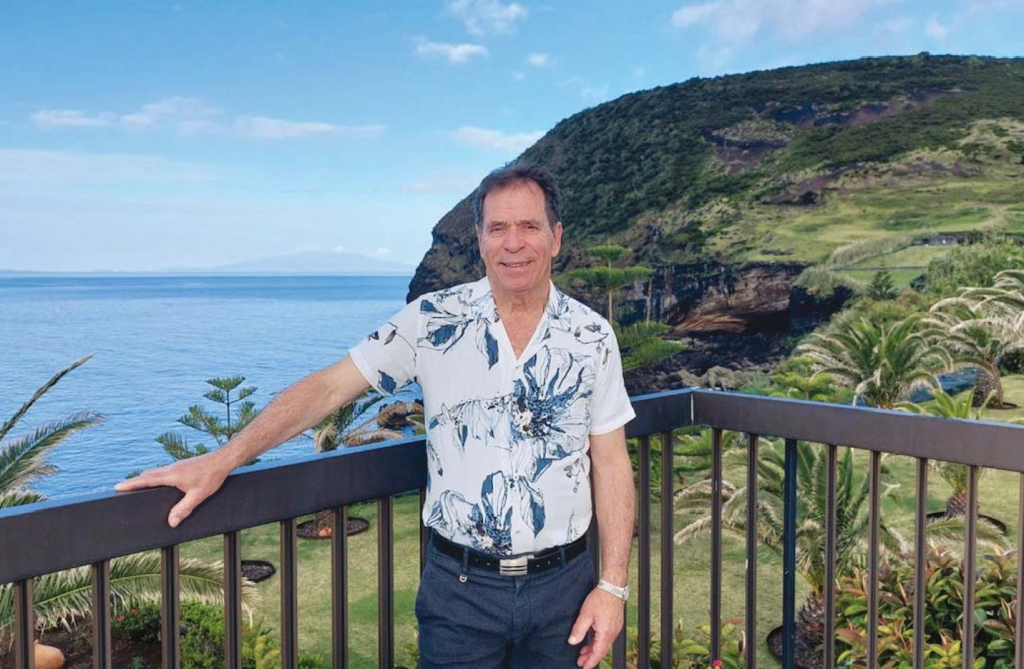
Going back in time, Jorge Arruda highlights the fact that the airport was very important during World War II due to the support it gave to the US armed forces in Santa Maria, first as a military base and then when it was converted into a civilian airport of international level, the importance of which it still has.
“The airport was built by the American armed forces for military reasons, with all the features it still has today and available for both humanitarian and national security evacuations. It stands like a sentinel in the middle of the Atlantic” and ”has welcomed American presidents who have made stopovers there and who have always received great attention. They were always well received and left a record in the protocol book. We were very happy to transform the Director’s office into a dignified reception room since the wooden facilities were not very well built. The best rooms were always reserved for reception. As we didn’t have a room to receive VIPs, the Director’s room was made available to the international personalities who visited us, and there were many of them,” he says.
Among the personalities he recalls was Marshal Tito (Foreign Minister of the Federal People’s Republic of Yugoslavia and later President of the Government). “Marshal Tito didn’t believe in the security that the airport was preparing. There was a time when a reception had been set up in a room with a chair decorated with vegetables and flowers and he refused to sit down because he had no confidence in the security he was being given.
He came by quite often, even while I was running the airport, and demanded that before he entered the room there had to be a general clean-up and everything suspicious removed, including the vases of flowers and boxes containing some souvenirs. He wouldn’t sit down until his security detail had inspected the place.”

Going back in time, Jorge Arruda wants to make it clear that Santa Maria was fundamentally a technical airport, it wasn’t a center that generated its own traffic, and the most diverse international personalities passed through there.
This also applies to what is happening today from the island with the spaceport and the possible strategies for an unknown future that “only God knows”, as Jorge Arruda told our newspaper.
For the former director of Santa Maria Airport, the island’s potential exists and it continues to be an eligible platform of great reference for space planes and also has great capacity for maintenance and support for technical stopovers between Europe and America.
Santa Maria continues to have its value and Portugal cannot afford not to use and promote that infrastructure, just as the space area can play a role in this sector. The political area of society is evaluating Santa Maria’s potential in aerospace exploration and other areas that science will show us can be important, and the will of governments in this matter will be a deciding factor,
Returning to the book, Jorge Arruda assumes that it is a collection of social and economic memories of what Santa Maria Airport was, its importance yesterday and today, and its potential for the future. “I tried to trace the history of the beginnings of Santa Maria, the first island to be discovered, and all its evolution. Basically, I tried to frame the time when the island was useful for the discoveries and for the development of the archipelago, but also the various cycles that the island has had, now highlighting the importance, in addition to traditional aviation, of aerospace flights, which are believed to be of great technical value.”
Nélia Câmara is a journalist for Correio dos Açores and Atlântico Expressso- Natalino Viveiros, director
Translated to English as a community outreach program from the Portuguese Beyond Borders Institute (PBBI) and the Modern and Classical Languages and Literatures Department (MCLL) as part of Bruma Publication and ADMA (Azores-Diaspora Media Alliance) at California State University, Fresno, PBBI thanks Luso Financial for sponsoring NOVIDADES.

 Novidades - The Islands and the Diaspora