

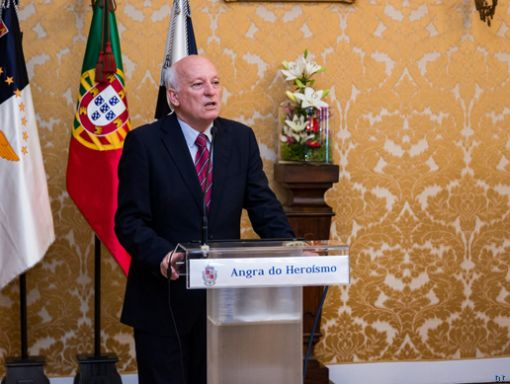
Angra do Heroísmo has been recognized in a report by the European Commission’s Joint Research Centre as a success story in promoting entrepreneurship. The only municipality analyzed is already in the “demonstration” phase of results. Were you expecting this assessment?
No, I didn’t even know this study was being carried out. I only saw the results, and I was as surprised as anyone. The document has excellent conclusions for Angra, which show that we have been following the right policies from this point of view. We mustn’t forget that when the process that led to the creation of TERINOV began, many people thought it wasn’t worth it and that it was a waste of money. Everyone remembers that story.
It was thought it would be a white elephant?
It turned out to be a massive generator of employment, with excellent results for all of us. This process has clearly gone well.
What is Angra’s “secret” in this field of entrepreneurship?
I believe consistent policies to support everything, including innovation and entrepreneurship, need to be done. This is the key to economic growth, particularly to something significant for us: to keep new people here. One of the big problems we have is demographics, which can’t be solved with birth subsidies, pharmacy vouchers, or other things like that, which can even negatively distort demographic issues. The only profound way to solve the demographic problem is to create conditions for good, stable, and well-paid employment, allowing young couples to settle on the island. This is what has been done successfully.
What are the main elements of these policies? Are we talking about tax issues or mentoring programs?
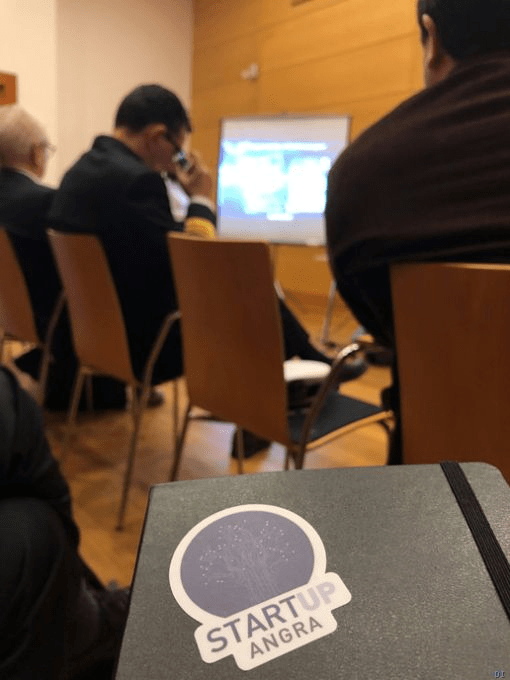
The tax issues are resolved; the region already has a very high tax differential. The main thing is to create an environment conducive to innovation, which is the case with TERINOV and StartUp Angra. Creating spaces where people can have their initiatives and make them grow. In more recent language, these are innovation ecosystems. Then, you must be persistent and not go back and forth with these processes. Take the case of Praia da Vitória, where, unfortunately, things ended up not going the same way due to a lack of persistence.
Is it essential to adopt this consistency from the start, not to change policies before measuring their results?
That’s true. In this area, stability and coherence in policies are fundamental, and fortunately, Angra has had that. We already have a few hundred jobs created, and more than that, a few hundred young people have settled here and are making their lives here, which has repercussions in various aspects of our society.
Does Angra do Heroísmo need a more robust “arm” of entrepreneurship in Praia?
It makes a massive difference because Terceira is an island with a completely integrated economy. What’s good for Praia is good for Angra and vice versa. We have to realize that there is no Praia and Angra economy; there is a Terceira island economy. That’s what we have to strengthen, and that can only be achieved by balancing the economic development of both municipalities.
Whose word should this be, the municipality’s or the government’s?
This issue must involve all of us. The Regional Government has an obligation to support the municipalities in this matter, and it’s good that it does so consistently, without swings and moods, which sometimes happen.
Despite the positive picture outlined in the study, distance, transportation, and low salaries, a general trend in the country, are identified as obstacles to the development of startups on the island. How can they be overcome?
There is one aspect that time has to resolve and the evolution of the economy itself, which is the issue of wages, which has to do with productivity and the organization of our society. In the case of Angra, I think we’re on the right track. Every year, the IRS’s collection has grown, indicating that people also receive more. The most challenging issue is transportation. Indeed, most of the companies that have set up here export via fiber optic cable because they work in information technology, but even so, the people who work there and others who work with them need to travel and meet up from time to time. Accessibility to Terceira Island, mainly from Europe, is still miserable and worsening. We’re not on the right track there; on the contrary, we’re suffering accelerated deterioration. It’s essential to take a step back. The policy that São Miguel has to be the hub for access to the Azores hasn’t proven to be a good one. The results are plain to see: it harms SATA itself, which ends up being a victim, and it affects the economic growth of Terceira and the other islands. An interview was recently published by Diário Insular, which is an excellent example of this. It’s this argument that investing in São Miguel means investing in the other islands, but they don’t count; they’re a sort of appendix. This is a profoundly flawed view that we must reject at all costs.
How do you see the return of this kind of narrative?
It’s making a comeback precisely because it has gained strength. If it had the strength we need, no one would dare say such a thing. For me, this is also a manifestation of the bankruptcy of Terceira Island’s policies and of those who represent it because it’s unacceptable to have this kind of talk about the island.
in Diário Insular, José Lourenço-director
Translated to English as a community outreach program from the Portuguese Beyond Borders Institute (PBBI) and the Modern and Classical Languages and Literatures Department (MCLL) as part of Bruma Publication and ADMA (Azores-Diaspora Media Alliance) at California State University, Fresno, PBBI thanks Luso Financial for sponsoring NOVIDADES.

 Novidades - The Islands and the Diaspora