


In many parts of the world, tourism is being challenged by local populations and even by the authorities, with analyses by economists, sociologists, and others drawing attention to the social and economic problems caused by intense tourism. Was this reaction to be expected?
Everything that ends up in excess is problematic. We can see it in our diet, which often leads to obesity problems. Returning, however, to tourism, in my humble opinion we are heading for a problem that could be serious if we don’t take care in the short term to legislate and above all if we don’t know how to choose the type of tourism we want for our islands. One of how the market itself ends up resorting is by increasing prices, and this is already being done in car rental, accommodation, and catering, which also ends up affecting residents, which in this case is not the best option. All too often we hear residents themselves comment that it’s becoming impossible to have lunch or dinner out, not to mention visiting the emblematic sites on some islands. We are increasingly a fashionable region, but excessive demand and the inability to provide a good service in a wide range of areas can have a far worse effect, given the expectations that tourists have when visiting our islands. We can’t keep betting on building new hotels when there will be times in the year when they will be closed and their workers unemployed. On top of all this, we have the problem of manpower for the tourism sector (and beyond), which is likely to worsen in the coming years if we don’t know how to channel human resources from elsewhere, creating the conditions for them to settle.
Where are we in the Azores in terms of the tourism industry and its impact on our islands? Are there any negative reactions to this activity?
In my humble opinion, we’re at the point where it’s necessary to bring together the regional entities involved and all the branches that support the sector, from air and land transport, hotel and local accommodation, to restaurants and other services, to establish a balance that won’t destroy an important activity for our islands in the future. We can already see some signs of this impact on our islands, starting with customer service in some places, as a result of the pressure the market is beginning to feel. You can even hear people saying that tourists are starting to haggle over the prices they’ve been given in advance! This makes no sense.

What kind of tourism should we be looking for in the Azores and what promotion should we do to attract these tourists? Is the current promotion geared toward any segment that might be of particular interest to us, or is it a kind of tightly-knit net that catches everything that comes along?
There is room for all kinds of tourists because we are mainly a place for nature tourism, but we need to think in the future about legislating to limit the number of tourists on each of the islands, according to the services available on each of them, so that the tourists themselves also feel welcome and the island can respond to their needs at all times. If we don’t, we’ll end up providing a lower quality service and we probably won’t get that tourist (or others) back any time soon.
Bhutan, for example, wants to get rid of tourists to remain in Bhutan and has started charging 200 euros per day to each visitor. Could this be a way forward if the Azores want to preserve their identity or do you prefer other options?
I don’t know what the amount would be, and the amount isn’t the main issue here, but there should be a regional tax that would then go towards cleaning our trails, cleaning our roads, collecting garbage, tidying up our public gardens, and offering certain services, such as public cell phone charging points in our towns and above all a useful information campaign, whether on television or via the mobile network, that could contribute to a five-star welcome for our tourists. Everything has a cost and this should be reflected in the price of tickets. It would be a way of filtering those tickets.
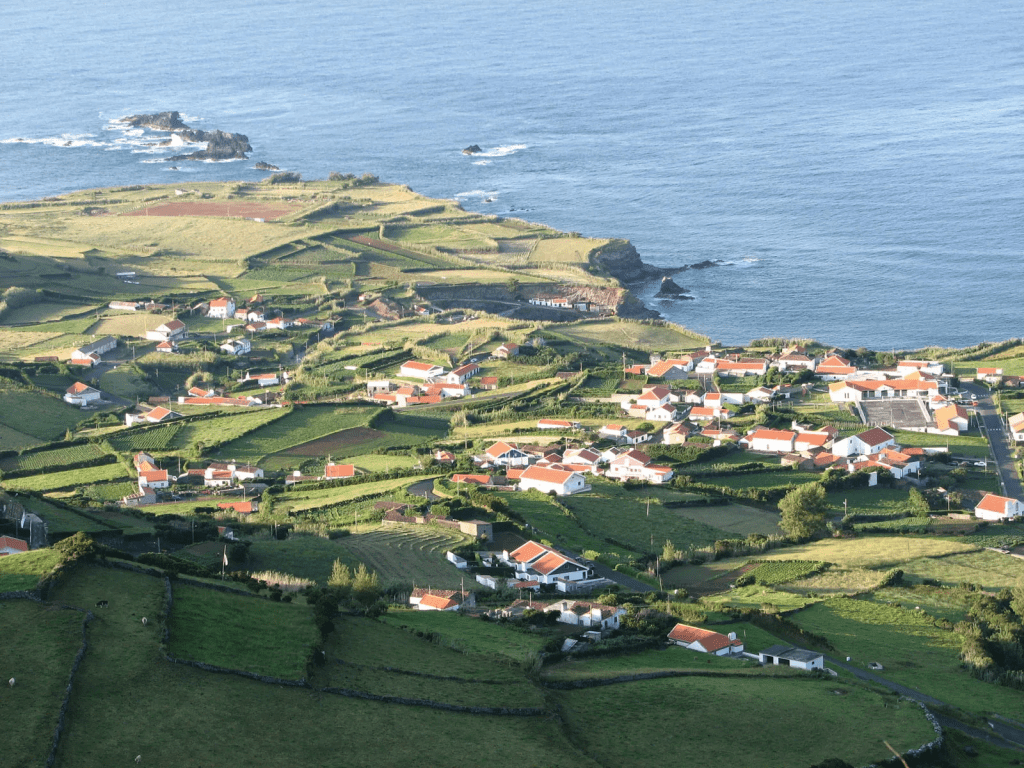
What can we do with the jewels we have, such as natural structures or Angra do Heroísmo, which is a World Heritage Site, to preserve what is ours and, at the same time, set up a tourism industry that respects natural and human habitats and the built structures themselves? Is there any effective model you know of?
We need to do a lot of educating among the population, starting with schools, where there should be a weekly lesson dedicated to how we should welcome those who visit us and what everyone, starting with the little ones, can contribute to making the visit a success for all parties. It would be a way of preparing the next generation for tourism.
Then we need to value what we have, starting with our primary sector, our heritage, our cities and towns, and, above all, our increasingly depopulated parishes, without forgetting our environment, which is one of the reasons people visit us. It’s a job that takes time, perhaps years, but it has to be done quickly. I confess that I don’t know of any models that we can copy, but if we do it with heart, imagination, and enthusiasm, I believe we can get there. However, there are no changes “without growing pains” and this sometimes requires making choices.

The Azorean economy has historically had cycles and the next one only emerges when the previous one runs out, and so on. We may be on our way out of the cow cycle (the transitions are sometimes barely perceptible at certain stages) and into the tourism cycle. Can you see this transition or at least an appetite for it?
In my humble opinion, it would be a mistake to do away with the cow cycle altogether and just think that the future lies in the tourism sector. The two cycles can share day-to-day life together because they complement each other. The competent authorities should place greater value on the cow cycle, which has given us bread for our mouths in the worst of times, and take advantage of it to attract tourists who don’t know about the sector and only have access to it through the products resulting from this cycle when they buy them as a final product. Above all, our tourists should interact with the primary sector and preferably try out its various activities, resulting in a new source of income for the residents who carry out this activity. The islands are not just a landscape. They also have a life of their own that should be shared by the tourists themselves, from our festivities to the work in our communities, many of which are rural. This would be an asset for the tourism sector and an experience for everyone to take with them and share with others who would be willing to do the same.
If we don’t, we’ll have more and more tourists tomorrow, but islands with no life of their own and more and more virtual dependence on seasonal tourism. It’s a job that has to start tomorrow, preferably today.
in Diário Insular-José Lourenço, director
Translated to English as a community outreach program from the Portuguese Beyond Borders Institute (PBBI) and the Modern and Classical Languages and Literatures Department (MCLL) as part of Bruma Publication and ADMA (Azores-Diaspora Media Alliance) at California State University, Fresno, PBBI thanks Luso Financial for sponsoring NOVIDADES.

 Novidades - The Islands and the Diaspora