


The population of the island of Santa Maria, which is getting older, is not very satisfied with its health care and, as it doesn’t have a hospital, believes that a different approach needs to be taken to the community’s problems.
The healthcare provided is good in prevention and assistance, but there is a lack of specialties. In other words, no specialists on the island meet the population’s needs. The solution that has been found is for the people of Mari to go to the largest hospital in the Azores, Ponta Delgada – now with some limitations due to the fire – but this is not enough to reassure the population. There have been unforeseen and urgent health situations, which have caused some families great headaches regarding immediate transportation to Ponta Delgada.
Patients in emergency situations are transported by the Portuguese Air Force stationed in the Azores, an essential element in evacuations on islands without a hospital. However, there are reports of delays in this process, not because the Air Force isn’t diligent, which it is, and very much so, as the citizens affected by the emergency recognize, but because it can’t respond to all situations at the same time and/or because there are cases in which there is no team to replace them when they exceed the flight time. There is even a case of a patient who has reached the Regional Legislative Assembly of the Azores, and the family is waiting for her to get to the Assembly of the Republic. All this so patients don’t have to wait hours to be evacuated and risk their lives. The aim is for solutions to be found promptly that meet the population’s needs.
The Mayor of Vila do Porto also expresses concern in this area. “Health is fundamental, and although it seems that everything is going very well, and we even have good professionals (more doctors and nurses), the truth is that we continue to have shortcomings, and we have to achieve better health.” This is because, as Bárbara Chaves says, “the fact that there may not be a flight to take a patient from Santa Maria to São Miguel is, in itself, a limitation.”
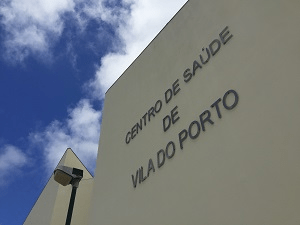
At the moment, the Board of Directors of the Health Center has also resigned due to disagreements with the Ministry, but the reasons are unknown, and Bárbara Chaves guarantees that she doesn’t know either. “What interests me is that the people of Marião continue to have access to healthcare, which isn’t happening in its entirety, that they are able to go to other hospitals with the regularity they need, and that they have the same opportunities as Azoreans who live on islands with a hospital.”
The mayor of Mariense defends the need to provide the Health Center with new and better equipment, promote an expansion of the emergency service with a more dignified space, and reduce the waiting time for patients, which sometimes exceeds 5 and 6 hours. “
Santa Casa needs support.
Some work is planned for the Vila do Porto Health Center, but the population doesn’t know when it will go ahead.
Bárbara Chaves says, “we need to look at health not just in Santa Maria, but on all the islands so that each island can have better conditions and citizens can enjoy consultations on their island of residence.” As such, the mayor advocates for specialists to come to Santa Maria instead of patients having to travel, which should only be done as a last necessity.
“We have to bear in mind that an aging population needs greater care in the area of health.” Alongside this, there is also a great need to pay attention to what happens in the Private Institutions of Social Solidarity.
“These institutions do a very worthy job and need to be given their due value and a corresponding look at their valences and their real costs. It’s important to bear in mind that our IPSS have financial difficulties, that they are public, and that they can’t meet all their costs, whether it’s for the home or for the Atelier de Tempos Livres, among others,” says Bárbara Chaves.
For the mayor, “there is a need to review the financial amounts allocated to the IPSS in a way that is appropriate to the current reality,” reinforcing the idea that “the financing of the IPSS needs to be reviewed and strengthened.”
Confronted with the fact that resources are not infinite, she admits that she knows “that this is the case” but then adds that what “people need is to continue getting their health care on time. The care is indeed provided because the professionals are excellent, but due to lack of space in the home, many people have this care in the Health Center and this shouldn’t happen because what people need is a home.” For this to happen, Bárbara Chaves believes that “Santa Casa da Misericórdia de Santa Maria urgently needs more adequate funding for its needs” because only then will it be able to respond to the population.
“Well-treated people last longer, which is good.” To this end, Bárbara Chaves, like the Island Council, argues that “the Santa Casa Home needs to be expanded so that it can increase its number of beds.” Santa Casa already has a project, but it needs funding and the political will to make it happen, as the Mariense mayor emphasizes.
Nélia Câmarais, a journalist for the newspaper Correio dos Açores – Natalino Viveiros, director
Translated to English as a community outreach program from the Portuguese Beyond Borders Institute (PBBI) and the Modern and Classical Languages and Literatures Department (MCLL) as part of Bruma Publication and ADMA (Azores-Diaspora Media Alliance) at California State University, Fresno, PBBI thanks Luso Financial for sponsoring NOVIDADES.

 Novidades - The Islands and the Diaspora