


In September 2018, the Escola Básica Integrada das Capelas hosted the New Routes project. It was approved by the Regional Directorate for Education, the subject of independent research by the team led by Professor Pedro González from the University of the Azores. It was supervised by Professor José Pacheco, founder of the Escola da Ponte. Looking at the School’s Cultural Project (PCE), the school functions as a “Learning Community, made up of parents, educators (operational assistants) and tutors (teachers)”, with a view to cooperative learning and community values. With this in mind, Correio dos Açores interviewed Paulo Oliveira, one of the people responsible for this project as a parent, to better understand the work that has been done and the results obtained.
Correio dos Açores – What is your assessment of the ‘New Routes’ project?
Paulo Oliveira (One of the people responsible for ‘Novas Rotas’) – I’ve been a father in the community for 3 years and, although I wasn’t part of the genesis, I’ve followed the enormous evolution of the project and its remarkable resilience (the result of being a united community aligned in values and objectives) in overcoming the difficulties that have been presented to us. It is with great pride that we now see the New Routes Community growing sustainably, very well received at EBI Capelas, planting seeds for a promising future for our children.
How many students did you start with, and how many will join the project this school year? To what extent does the students’ support demonstrate the project’s relevance?
The project began with 50 children, and we’re starting this school year with 66. The growing number of students and families joining the New Routes Project strongly indicates this community’s relevance and success. It demonstrates the positive resonance with the demand for this pedagogical model. I would venture to say that there is a recognition of the quality of the project derived from the satisfaction and involvement of the families who are part of it and who, as a result of the trust shown, recommend it to other families, positively impacting those around them (other teachers, students, and acquaintances).

How is the New Routes project, which began in September 2018, developing? How do you think it differs from the traditional education system?
The most visible and tangible evolution was moving out of Quinta do Norte and into EBI Capelas. Although we have lost more contact with nature, this has also allowed us to provide different physical conditions for our children, tutors, and educators. In my vision, I value community learning based on values that are shared by all and that reinforce the community spirit. These values are matrices for the integral and holistic development of children: solidarity, honesty, respect, equality, and love.
What learning methods are used in the project? How well have the students taken to it?
The learning resources used are study guides, daily and weekly plans, specialist moments, project development, responsibility groups, cooperation councils, mentoring, and reflective circles. One of the main aims of using these tools is to provide the child, within their individual development, with critical and self-critical capacity and a spirit of initiative and responsibility. This promotes the search for knowledge, duly guided, in many situations, allowing for a more individualized, procedural, and continuous assessment in the regulation of learning.
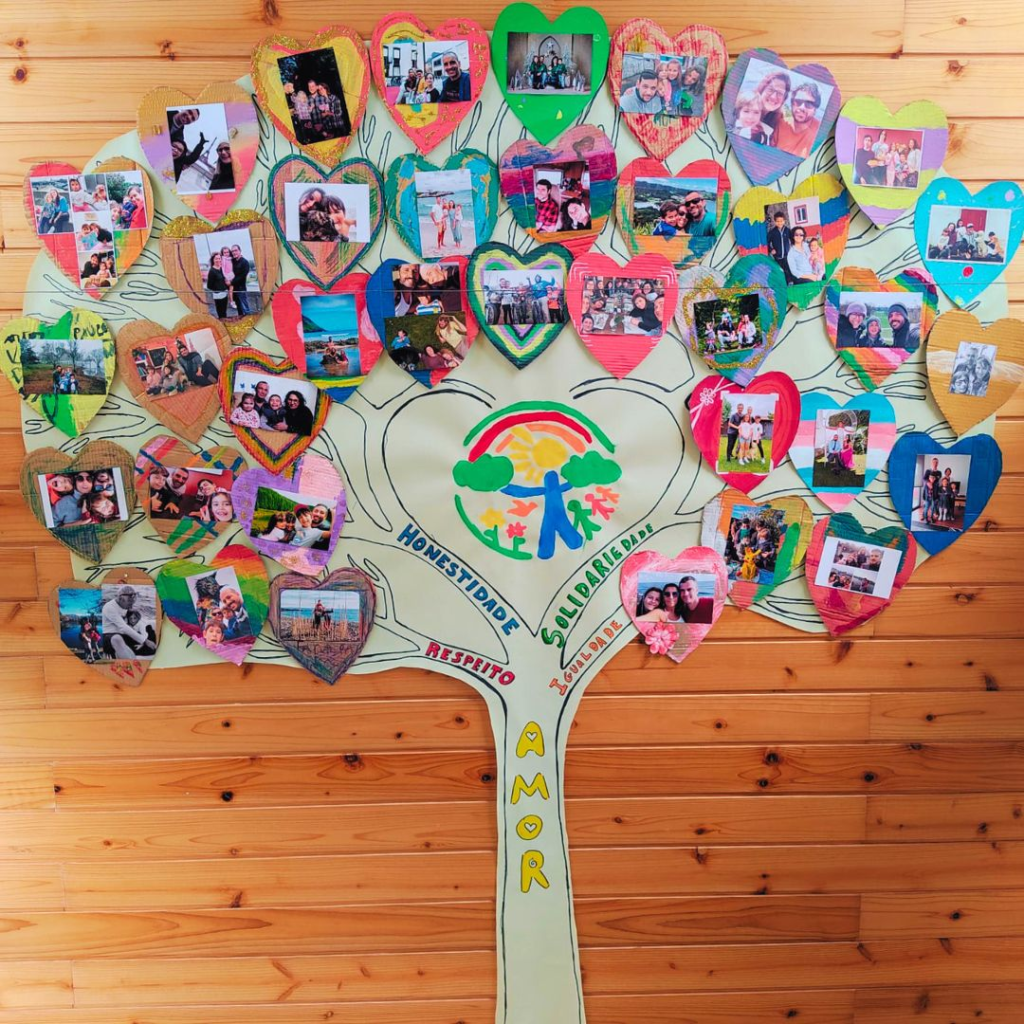
A future “with healthy growth.”
Six years on, can you describe the added value of ‘New Routes’ for the students who joined the project?
In general, the New Routes children are thrilled, empathetic towards others, able to verbalize their feelings and emotions, working on their personal construction of knowledge acquisition and emotional self-regulation, much as a result of the tutors’ and educators’ work on individual respect and the capacity for active listening and sharing.
What future do you see for the project?
Not wanting to mix my individual wishes with a “colder” reading of the project, I envision a future with healthy growth, sufficient resources, and the ability to disseminate and create other learning communities through our example.
Is there anything else you’d like to add to this interview?
Yes, of course. Words are sometimes insufficient to convey emotions and ideas, so anyone interested in getting to know us better should visit our social networks and website and, if they wish, book a guided tour.
https://novasrotaseducacao.wordpress.com/
https://www.instagram.com/novasrotas.educacao
https://www.facebook.com/novasrotaseducacao
José Henrique Andrade is a journalist for Correio dos Açores-Natalino Viveiros, director

Translated to English as a community outreach program from the Portuguese Beyond Borders Institute (PBBI) and the Modern and Classical Languages and Literatures Department (MCLL) as part of Bruma Publication and ADMA (Azores-Diaspora Media Alliance) at California State University, Fresno, PBBI thanks Luso Financial for sponsoring NOVIDADES.

 Novidades - The Islands and the Diaspora