

BlueOASIS is a Portuguese engineering consultant company focused on creating innovative and sustainable solutions for the oceans that are making a big bet on the Azores. Since it was founded in October 2021, with just four employees at the time, the company has been developing projects that “aim at environmental sustainability, addressing challenges such as the development of offshore renewable energies, intelligent ocean monitoring, aquaculture, decarbonization of the maritime industry and cleaning up the oceans.”
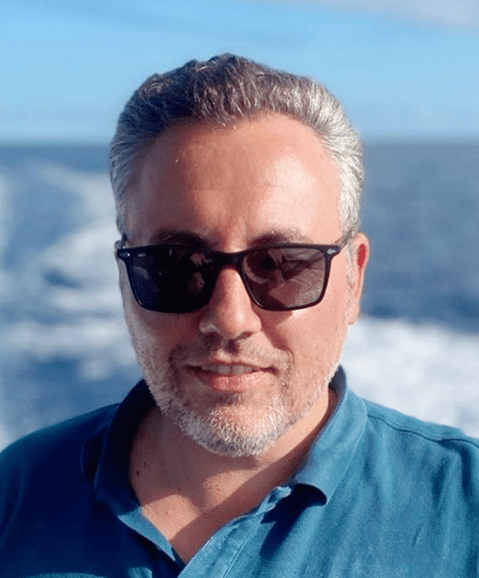
Founded by Guilherme Beleza Vaz, an aerospace engineer, doctor, and professor with over 24 years of experience in the maritime and naval sector, blueOASIS stands out for its “use of Industry 4.0 technologies, such as data science, artificial intelligence (AI), computational methods, and high-performance computing (HPC).”
With a network of HPC clusters in Portugal, the UK, the Netherlands, and Iceland, the company guarantees almost 450 million processing hours per year, making it the country’s leader in computing capacity.
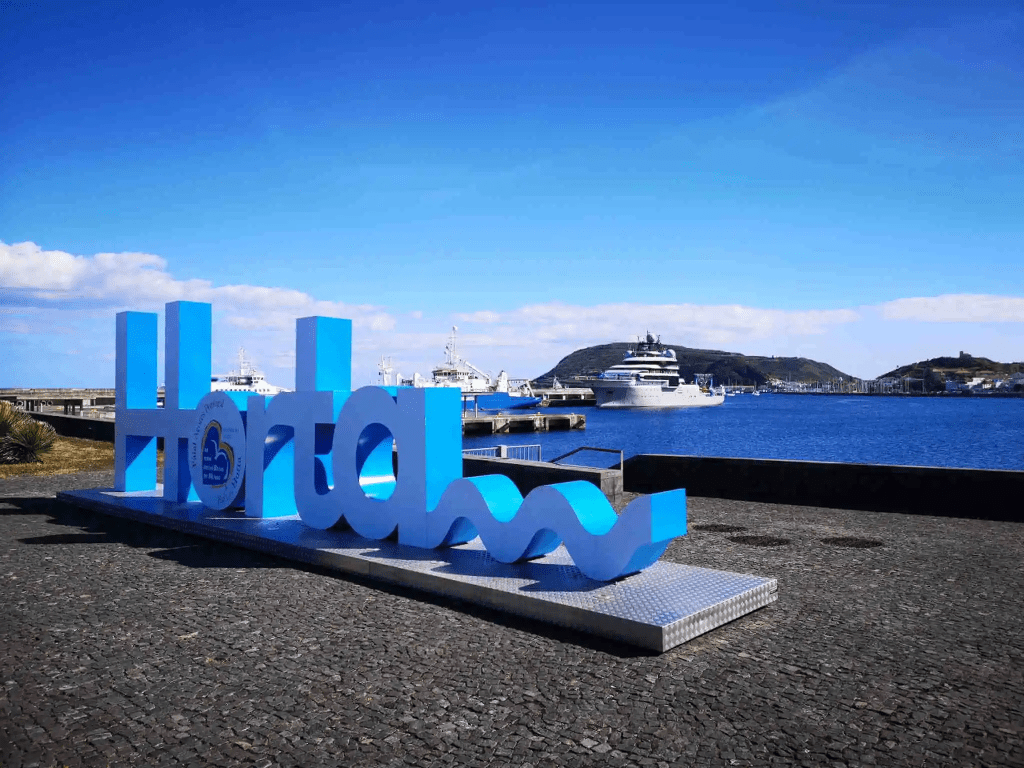
The Azores “occupy a central position” in blueOASIS’ growth strategy. With offices in Faial and a “solid” representation through the Hydro TWIN spinoff, active since May 2024, the company has established local partnerships with institutions such as Okeanos at the University of the Azores; the School of the Sea (EMA); Portos dos Açores; AirCenter; ANACOM; the Navy and Terinov.
In collaboration with these entities, blueOASIS “contributes to the promotion of the Blue Economy in the region, expanding the development of sustainable technologies.”
HydroTWIN: The Ocean’s First Acoustic Digital Ocean Twin “Made in the Azores”
The company reveals that “one of the biggest challenges for the preservation of marine ecosystems is underwater noise pollution, which affects several marine species, including cetaceans, turtles and fish.”
Anthropogenic noise sources, such as maritime traffic and offshore energy operations, “create a growing urgency in the need to monitor and mitigate noise impacts on the underwater environment.”
In the context of underwater acoustic monitoring, he believes, “it is essential to distinguish between sound and noise. Sound refers to any vibration that propagates as a mechanical wave through a medium, and is a natural part of the underwater environment. Many marine animals, such as cetaceans and fish, rely on sound to communicate, hunt and navigate.”
On the other hand, noise “is typically described as unwanted sound, especially when its presence disturbs the balance of the ecosystem. Anthropogenic noise, i.e. noise generated by human activities (such as shipping, oil and gas exploration, or underwater construction), is one of the biggest acoustic pollutants in the oceans.”
The negative effect of noise
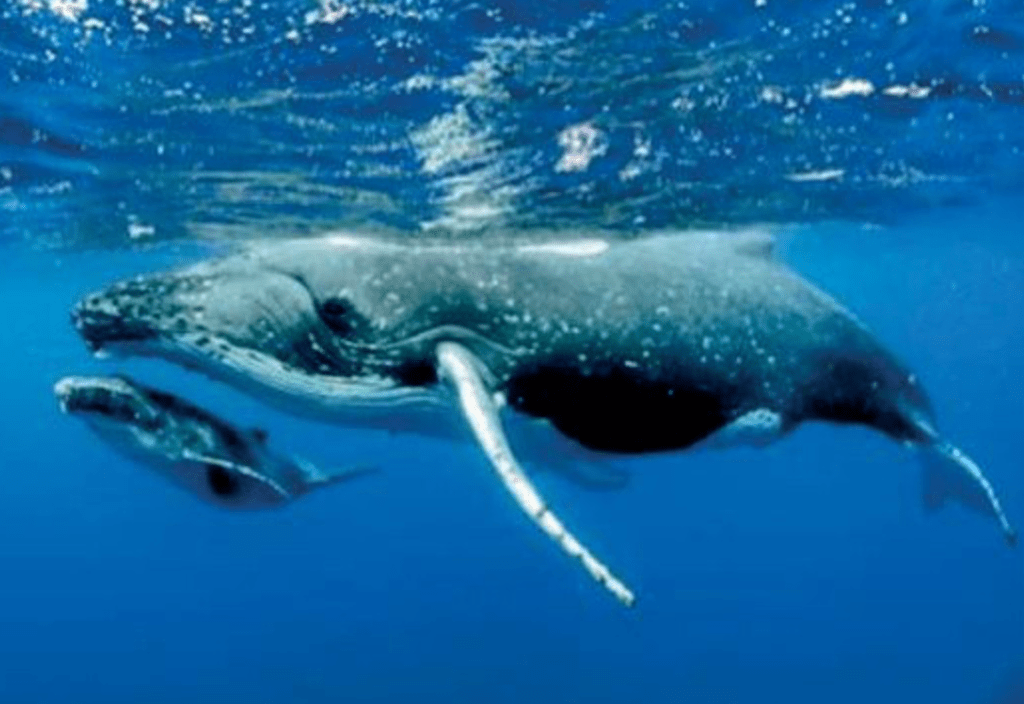
This noise” has significant effects on marine life, especially on species that depend on sound for their survival.” Marine mammals, such as whales and dolphins, “are particularly vulnerable, as excessive noise can interfere with their ability to communicate and echolocate, which is essential for migration and feeding.
Acoustic monitoring “is therefore a crucial tool for assessing the impact of these noise sources and developing solutions to minimize interference in the marine environment, ensuring the sustainability of ocean ecosystems.”
blueOASIS’ answer to this problem is HydroTWIN, the ocean’s first Digital Acoustic Twin. HydroTWIN uses IoT (Internet of Things) and edge-computing (underwater computing in this case) technologies to collect underwater acoustic data in real time, processing it with Artificial Intelligence.
This technology “makes it possible to acquire acoustic metrics as well as identify, classify and position all sound sources, be they fauna or objects.” Also, together with other modeling tools running on supercomputers, HydroTWIN “makes it possible to create precise and detailed sound maps of the marine environment.”
All the data and its analysis are sent in real time via satellite or 3G-5G communications and visible to everyone 24 hours a day, from anywhere on the planet, via dashboards in the Cloud.
Deconcentrating boats in whale watching and detecting illegal fishing
Another possible application for HydroTWIN is “to support whale watching tourism. Monitoring the acoustic activity of cetaceans in the waters of the Azores in real-time makes it possible to identify precisely where, when and how often the different species vocalize.”
“It thus offers a significant advantage to these companies, optimizing routes and departure times to maximize the chances of successful encounters. In addition to providing a more enriching experience for tourists, this technology contributes to the preservation of species by facilitating the detection of animals, which minimizes the impact caused by the excessive concentration of boats around the same groups, promoting sustainable tourism, and respecting the balance of marine ecosystems,” says the company.
In addition to its applications in research, species conservation and tourism, HydroTWIN “is also an essential tool for the security of critical infrastructures such as offshore energy platforms, ports and submarine cables.”
Preventing threats to the submarine cable
In particular, HydroTWIN “could play a key role in the project to develop the new Azores CAM submarine cable, to detect and prevent potential threats to its installation and operation, expand the underwater acoustic radar, providing continuous and accurate surveillance of the marine environment around the cable, helping not only with physical protection, but also with the study of acoustic conditions, facilitating the monitoring of anthropogenic noise and promoting the sustainability of affected ecosystems.”
HydroTWIN can also be used to detect illegal activities, such as clandestine fishing or smuggling, and in maritime defense operations.
According to the company, the Azores, with their strategic location in the North Atlantic and extreme environmental conditions, “are the ideal place to test new ocean technologies.”
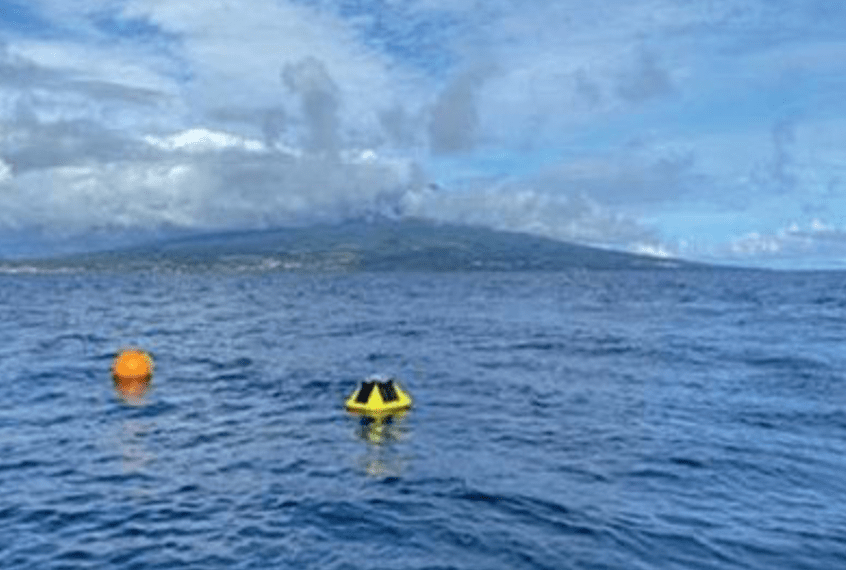
blueOASIS “is currently carrying out tests of HydrocTWIN in Faial, validating its measurements in real conditions, including the detection of ships, dolphins and whales.”
These tests “are demonstrating the system’s effectiveness in monitoring underwater noise and proving its resistance to adverse weather conditions.”
With HydroTWIN, blueOASIS not only “hears” the ocean, but also “sees” and protects marine ecosystems from invisible threats, offering an innovative and effective solution for ocean conservation.”
“Silicon Valley of ocean technologies”
blueOASIS believes “strongly in the potential of the Azores as a strategic hub for the development of cutting-edge ocean technologies.”
According to the company, “the combination of high performance computing, artificial intelligence and underwater acoustic monitoring allows the company to lead the ocean sustainability sector, with a clear vision: to export technologies developed in the Azores to the world.”
With the expansion of its operations in the archipelago and a team that already has 16 employees, a permanent member and several Artificial Intelligence assistants in Faial, an office in EMA, and several sensors in the Faial-Pico channel, the company is “consolidating its presence in the region and promoting the growth of the Blue Economy.”
blueOASIS aims to “attract more investment, empower the local community and develop technologies that can be applied globally, always with a focus on the preservation and sustainability of the oceans.”
in Correio dos Açores-Natalino Viveiros, director
Translated to English as a community outreach program from the Portuguese Beyond Borders Institute (PBBI) and the Modern and Classical Languages and Literatures Department (MCLL) as part of Bruma Publication and ADMA (Azores-Diaspora Media Alliance) at California State University, Fresno, PBBI thanks Luso Financial for sponsoring NOVIDADES.

 Novidades - The Islands and the Diaspora