

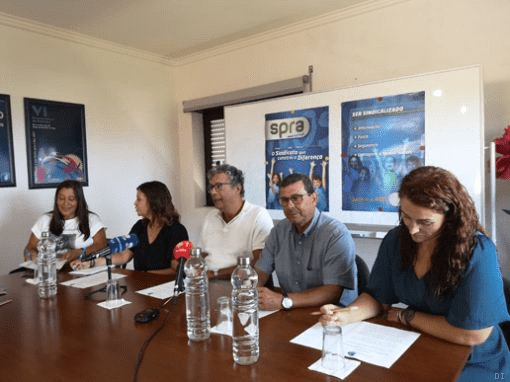
The Azores Regional Teachers’ Union (SPRA) believes that this was the school year in which the teacher shortage was most noticeable in two decades and is calling for the implementation of incentives for the class.
“It’s been worse, it’s been worse and it’s going to get worse when it comes to teaching staff, there’s no doubt about that. The new constraint that arose this year was the early start to the school year,” said SPRA president António Lucas at a press conference yesterday.
The school year starts in the Azores between September 9 and 11, while on the mainland, it begins between September 12 and 16.
In some cases, the difference of a week brought added difficulties for schools, according to António Lucas, because preparing for the start of classes involves “complex logistics,” involving issues such as class formation, teachers’ timetables, school transport, or the provision of meals.
“In practice, schools had just over four working days to prepare for the new school year,” he said.

Islands with more difficulties
SPRA’s president stressed that the shortage of teachers in the region has worsened “, especially on the outlying islands,” where there have been “record numbers of timetables that have not been completed.”
“In the case of Flores, Corvo, Santa Maria and Graciosa, it’s starting to reach very significant proportions, with around a third of the teachers who should be in these schools not being there, because they’re on the move, especially in São Miguel and Terceira,” he warned.
According to SPRA, at the start of the school year there were almost 200 vacancies on the Azores Public Employment Exchange (BEPA), many of which will be filled “at the expense of staff with no professional qualifications and in some cases even no academic qualifications”.
For António Lucas, the shortage of teachers “will get worse before it starts to improve” because “it is impossible in the current context to create teacher training mechanisms that will at least replace the number of teachers who have been retiring”.
“It’s a problem that’s starting to become structural […]. There are issues here that we could have already started to mitigate and haven’t. We’re waking up very late and so we’re already chasing the damage,” he said.

Incentives
The union leader recalled that SPRA has been warning since 2019 that the Azorean executive must implement incentives to retain teachers, which have already been provided for in the law for more than 10 years.
The Azorean executive (PSD/CDS/PPM) has already said it intends to implement the incentives in the next school year, but the union argues that the law needs improvement.
“The incentives, as they are defined, are mainly for those who are going, not for those who are already there. We always want to safeguard principles of equality, not least so as not to create disputes in the workplace,” explained António Lucas.
According to SPRA’s president, the incentives include, for example, “the possibility of keeping people for 15 years, by subsidizing interest on the purchase of housing”.
In addition to the teacher shortage, the union warned of the lack of auxiliary and technical staff, which jeopardizes the implementation of inclusive education and the need to revitalize many buildings in the Azorean schools.
in Diário Insular, José Lourenço-director
Translated to English as a community outreach program from the Portuguese Beyond Borders Institute (PBBI) and the Modern and Classical Languages and Literatures Department (MCLL) as part of Bruma Publication and ADMA (Azores-Diaspora Media Alliance) at California State University, Fresno, PBBI thanks Luso Financial for sponsoring NOVIDADES.

 Novidades - The Islands and the Diaspora