


What the Azores were like in the 20th century
Remembering the progress made in science and technology in the 20th century is essential. However, despite these crucial advances, humanity was not immune to new epidemics such as the one that happened in the 21st century with COVID-19, which caused the death of more than six million people in the world, according to the figures known by the WHO, and which, as we know, had a considerable impact on world economies, including our region, without forgetting the shock it had on people in general and families in particular.
To discuss the region’s state, we must go back to the 20th century and remember the changes that took place in various parts of the world and which had a significant impact. These changes resulted in advances in civilization due to the political changes in different countries and continents.
However, as with everything, there is almost always a reverse side to the coin, and the 20th century was marked in the first half as a “period of great massacres” resulting from two major wars, one of which had its epicenter in the heart of Europe.
The second half was astonishing due to the revolutions during this period. Popular force and resistance defeated some of the weapons that sustained countless dictatorships.
The Cold War calmed down between Russia and the United States of America. During this period, ferocious dictatorships fell, opening the windows of democracy to countries that, although located in Europe, were subjugated by the Soviet Union.
But history is repeating itself today, with two wars taking place, one in Europe between Ukraine and Russia, in which the latter is maintaining the dominating dream of yesteryear, while the other is taking place in the East, between Israelis and Islamists, where not even Christ has managed to reconcile and unite these peoples.
The significant changes in the twilight of the 20th century occurred because several world leaders were decisive in implementing the political changes.
I remember that John Paul II, “the Saint who came to the Azores,” led this change with the support of other statesmen such as Ronald Reagan from the United States of America, François Mitterrand from France, and Margaret Thatcher from England with the valuable contribution of Mikhail Gorbachev, President of the Soviet Union, who faced with the imminent collapse of the Union, opened the doors that led to the fall of the Berlin Wall and the subsequent unification of Germany, thus sealing the end of the Cold War.
This was followed by the popular uprisings in Poland, with Lech Walesa leading the fall of the communist regime, which was followed by the overthrow of other dictatorships, most notably Romania, Hungary, and Czechoslovakia, and, finally, the break-up of the Soviet Union, which led to the granting of independence to Ukraine, Georgia, Kazakhstan, and Belarus, determining the creation of a new Commonwealth of Independent States. In addition to the politicians named, many others contributed to the changes in the final years of the 20th century.
Portugal transmuted its regime with the April 25, 1974 revolution during this period. Seven months later, when many of the participants on April 25 were preparing to establish a far-left republic based on the Cuban model, the MFA was forced to revalidate the revolution as a democratic project.
On November 25, 1975, the democratic regime began to take shape because the Constituent Assembly survived the extremist rebels’ attempts.
Then came the independence of the African colonies, while in the Azores, there had already been demands for a broad autonomy with its own government since April 25. Without the status of a colony, the region was treated, time and time again, worse than the colonies that gained independence in 1975.
The islands were always remembered as adjacent, and the state was only interested in the taxes generated there. By law, these taxes were revenue due to the state and sent to it, even when business from island to island was taxed by district customs as imports/exports.
In addition, Portugal was receiving benefits that were exchanges of favor resulting from the military facilities granted to friendly countries, especially the USA, in exchange for voting against the growing pressure exerted by various states at the UN, demanding that Portugal grant independence to all its overseas colonies.
During World War II in Europe, despite Salazar’s proclaimed neutrality, he used the Azores as a bargaining chip during the war, with the risk of being invaded by the Germans, who sailed through Azorean waters.
In other words, because we were adjacent, we had no rights, only obligations towards the state. This fact has been with us since the islands’ settlement but grew after the overthrow of the Monarchy and later with the establishment of the Republic in 1910.
After April 25, Democratic Autonomy was born as a result of a project that was transformed into a peaceful revolution by the Azoreans, who understood the proposal presented to them by the People’s Democratic Party of the Azores, making them aware of their own identity, their historical roots, and the culture they had generated and consolidated for centuries on these islands.
In the 20th century, regionalism gained strength and space, and democracy opened the door to creating new states and autonomous regions.
We are 24 years into the 21st century, and the journey to get where we are today has not been easy. It has been a painful and hard battle. There were open wounds, which have healed over time.
After the first elections to the Legislative Assembly of the Azores and the installation and inauguration of the first Regional Government, there was frequent mistrust between the Region and the Republic, a fact that dialogue alone could not overcome. It was necessary to use a persevering exercise, which politics and politicians must possess and know how to apply to overcome barriers and open up new horizons, which, in this case, the Constitution enshrined for the Azores and Madeira.
It is important to note for future reference the names of the Members of Parliament who, in addition to the five who were elected by the Azores to the Constituent Assembly, among them the First President of the Government, João Bosco Mota Amaral, contributed to the approval of the Autonomy project in the Constituent Assembly, the Members of Parliament who understood the importance and the fundamental reasons for its approval, among them, Francisco Sá Carneiro, Pinto Balsemão, Mário Soares, Mota Pinto, Jaime Gama, Barbosa de Melo, Cunha Leal, Jorge Miranda, Medeiros Ferreira, Mário Mesquita and José Luís Nunes, who, despite some differences over the project under debate, managed to create a consensus that resulted in the architecture of the Political and Administrative Autonomy of the Azores and Madeira, which the 1976 Constitution enshrined.
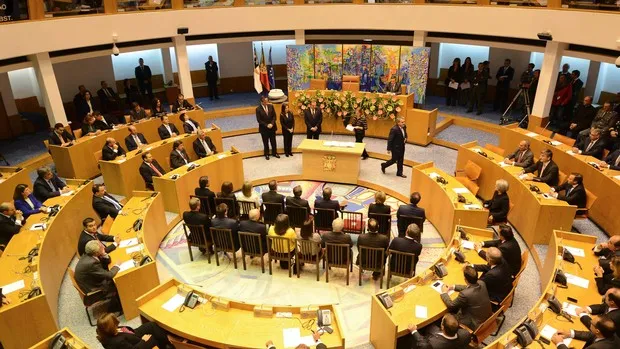
At that time, the Azores were nine islands that wanted to know each other but lacked the means. With determination and urgency, the need arose to create the form and procedures necessary to conceive the unity of the Azores and the Azoreans. This objective was based on launching social, economic, and cultural development projects through policies of equal opportunity for all, combating discrimination between islands, and guaranteeing, from the outset, equal access to education and health and the mobility of the Azoreans within their territory.
During the period of Autonomy, the Azores changed, society opened up to debate, and the passion for development was shared by all Azoreans, who gave their opinion without hesitation on the measures and political choices of the governments.
It was a demanding, committed, and mobilized society.
Meanwhile, Autonomy was consolidated. In statutory terms, the improvements that experience advised and that the Constitutional Court allowed were made to some essential powers that belong to the Region.
Over the last 48 years, Autonomy has moved in different directions.
It was progressive for several years due to the political firmness with which the region’s competencies were defended, and the state’s obligations towards the autonomous regime were demanded. The second stage was based on calm Autonomy. Still, it was so quiet that it originated in the approval of the Regional Finance Law, which was the work of the Minister of Finance, António Sousa Franco, a profound expert and supporter of Autonomy. Then it moved on to a dialoguing Autonomy and ended up being a cooperative one, the results of which have run aground in the cooperation that has ceased to exist between the Republic and the Autonomous Region of the Azores.
The problem is that during the 48 years of Autonomy, in the last decade and a half, there has been no cooperation between the State and the Regional Autonomy, violating the territorial cohesion policy that is a catalyst for increasing public and private funding, a measure that is an obligation of the Member States of the Union – to ensure with funds from the national budget, to foster investor confidence, a commitment that is proclaimed by the Republic and the European Union, has not been applied in the Region, serving only as a flag to be used whenever necessary by national politicians. Many promises have been made but not kept.
One wonders how Autonomy is doing today. To answer the question, we must first recognize that the changes that have taken place in recent decades, which have also affected the region, have created new habits, needs, concepts of life, and other values.
As with everything, these changes have positive and negative aspects, and the virtue lies in finding a balance between the two poles. This must be worked out by those who accept the political responsibility of governance and the elected Members of Parliament, who must be the ombudsmen and assistants of the citizens who elected them.
For this reason, Azorean society must be demanding of its representatives but must also accept the limitations imposed by our archipelagic status.
It is common knowledge that the democratic system needs to be reformed to make it more participatory so that citizens can organize themselves, value their capacity, exercise their citizenship rights, and evaluate political choices and decisions that condition the future of entire generations, which, to be successful, must be accompanied by reason and the principle that one’s freedom ends where another’s begins.
We are celebrating the 50th anniversary of the April Revolution, two years from the half-century anniversary of the approval of the 1976 Constitution, which enshrined the democratic autonomy of the Azores and Madeira.
We must take a step forward to respond to specific societal anxieties. Still, to do so, we need to gather our thoughts to assess how the Azores are doing after half a century of Autonomy and Democracy and what we want and need to face the demands of the next half-century.
In this global world, we are all networked. We feel the effects of what happens, positive and negative, anywhere globally. We can’t remain indifferent to what’s happening in Lisbon, Brussels, Washington, Beijing, Moscow, Africa, or the Middle East. So we have to think about what’s coming that directly affects us, in this case, Europe, the country, or even the region.
People are thinking about revising the Constitution, but we need to know what needs to be revised so that we don’t risk it being betrayed by the extremism of a few thinkers who have become the guardians of political morality.
There is only one way to counteract this worrying attrition that has taken hold of people and society in general: to react, participate, contribute, and demand, based on four pillars that I believe are fundamental for the future:
The role we should play as a region concerning the country, Europe, and the world.
We have maintained The Economic Development Model and what we need to correct for the future.
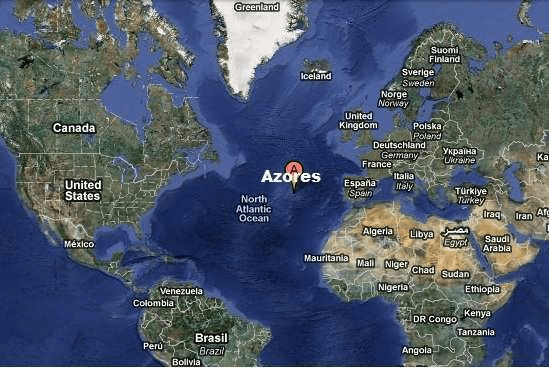
The role of the Azores in the country, Europe, and the World.
The Azores are, as we know, the border where Europe ends, and America begins, which puts us at the center of geopolitics and geostrategy between these two blocs, without forgetting that we are the bridge that joins these two continents in the middle of the Atlantic.
The consequences of good and bad political decisions also concern us, so the region needs to take more excellent care in participating in international forums. We need to show the importance of our sea and thus gain the weight that we once had and continue to have, especially when conflicts arise between the giants that dominate the world.
In the meantime, sooner or later, the Legislative Assembly of the Azores will be confronted with what has been pompously called the “Reform of Autonomy,” a proposal that has been dragging on for almost a decade and is still waiting in limbo.
As no reform has yet taken place, it is time to take advantage of this interregnum to reflect on our 47 years of autonomy and think about what autonomy will be like in the future when the continent’s regionalization is suspended. Within this political framework, to conjecture where the Autonomous Regions will be placed if there is continental regionalization, and I would like to add the following question:
Will we continue to be an Autonomous Region, or will we become a Regional State or a Federal State? Provided that Portugal becomes a Federation through the regionalization of the continent.
There can be no prejudice when discussing the future of the Azores, and the debate must be open, accessible, and in-depth, based on the principles of the region we are in and the regionalization that is pending on the continent. With the MEPs elected in the Azores, it is hoped that our presence in Europe will be expanded and revalued in the plurality of regional spaces, as we are an outermost region but one with a unique strategic value in the North Atlantic. With its maritime area of 984,300 square kilometers, the Azores represents 57% of the country’s EEZ. It is the Azores that give Portugal its value and naval dimension. We are a tangible asset that the country conserves but does not value for the region’s sake.

The Economic Development Model
The economic development model we have is no longer a concern for most politicians or civil society.
We are on the verge of the new Community Support Framework, which runs until 2030. Regardless of the financial envelope that is or will be reserved for the Region, we need to know how the new financial resources will be applied. First, it is important to know and calculate, if necessary, what the real impact of the previous resources from the framework that is now ending was on the Azorean economy.
It is important to know the contribution of all the European support the region has received since 1992 until 2020 and its impact on the region’s economic and social sectors, the importance it has had on infrastructure and social welfare, and the effect it has had on regional GDP over these 28 years.
This should be a task given to our university to study.
For the future, the primary sector must take advantage of all endogenous resources, including natural resources and raw materials, combining them with the skills, knowledge, and capacity for innovation of its own local productions, making them attractive factors for the tourist and residential economy. We need to value them and ensure that our output can respond to demand from the domestic market and export any excess. The secondary sector has modernized but has not grown enough.
Industry lags behind the tertiary sector, which is why it is important to invest in a new policy that incorporates research and technology, take advantage of Community support for the development of the industrial sector, mobilize entrepreneurs and investors in the diaspora, and join those who have passed through the Azores and decided to stay here and start a new business.
In other words, industries can thrive and multiply in the Azores, like those in Singapore or Switzerland, as long as there is talent. We search for those who have succeeded abroad, where they embarked fifty years ago or even longer. We need to look for examples of courage that could be good seeds for those who remain on the islands.
Mobilizing the industrial sector, bringing together innovation, and choosing business areas that justify the investment that the Azores need to make to break the syndrome that hinders our industrial growth is absolutely necessary.
The region lacks a financial and development company with the mission of supporting companies in the industrial sector from their creation to their internationalization. It would be an instrument for cooperation between the region and the banking sector.
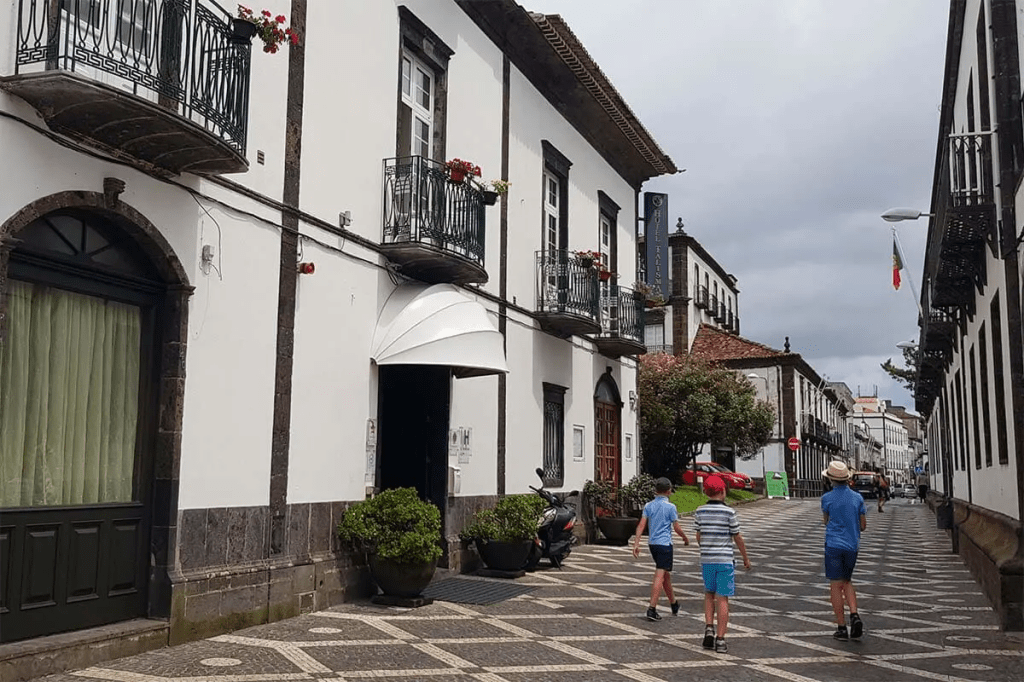
Regenerating the Social Matrix
Demography is a severe problem. In most of our islands, the low birth rate does not allow us to renew the population and increase the number of residents. We risk having more than 1/3 of the archipelago depopulated within a few years.
Ageing prevents local development policies from being planned and stimulated from a distance, which is why the region has to find answers to its situation and find the courage and consensus to come up with measures capable of encouraging the immigration of people, including young people, in order, in some cases, to ensure the population balance of the islands by increasing the birth rate.
In this context, we should not forget that the colonization of the Azores, which began in 1440, involved settlers from various parts of Portugal, including the Algarve, Alentejo, Extremadura, and Madeira. Then came the Spanish, French, Italians, Flemish, English, Jews, Moors, and African slaves.
These were our progenitors, and we now must find a new way of repopulating and integrating whoever comes along. A balanced population is essential if society is to remain cultured and dynamic, with schools as the catalyst capable of preparing successive generations for the challenges of the future.
Worst of all, we have space on our islands and no people to populate them.
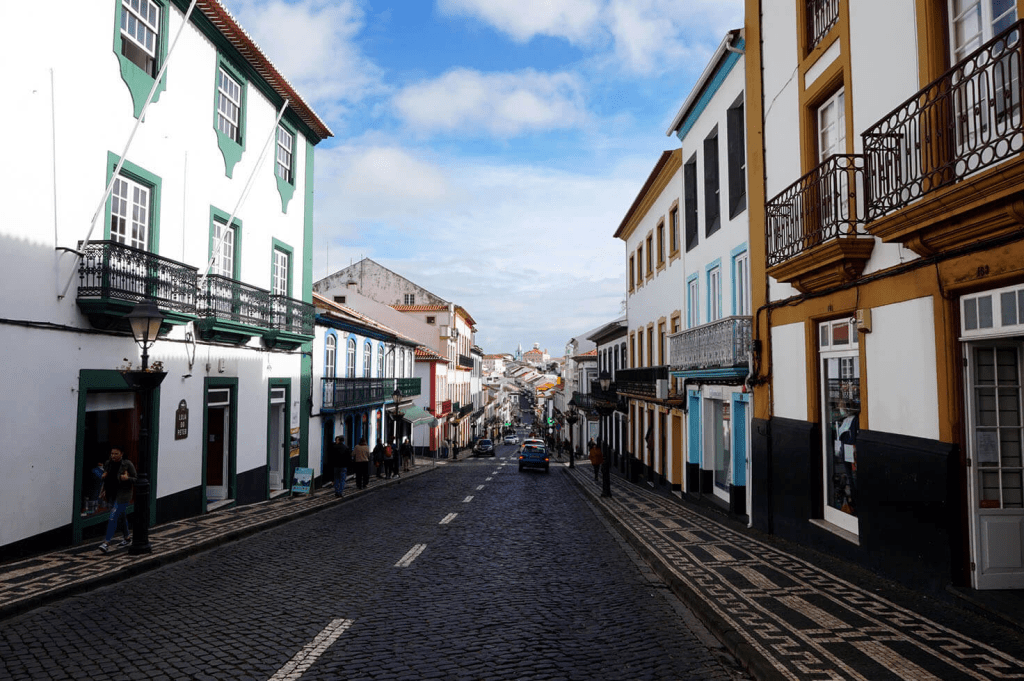
Rehabilitating the Azorean Identity
Without our own identity and culture, there may be nations and regions, but there are no people.
The remnants resulting from the settlement of the islands emerge from time to time, even generating division between islands and people. These contribute to the lack of self-esteem that sometimes occurs, as well as the absence of sharing and communion between people. These are remnants that exist, and we have to overcome them for the sake of unity and autonomy.
We need to value our talents and resources because cultural identity is the sap that feeds our pride in being a people with a history, ready to be the builders of our future.
On these issues of citizenship, we must also reflect and seek broad participation.
We need to think about the Azores for the future, certain that the Azoreans are the masters of themselves. The future has to be built by everyone, regardless of their beliefs, their color, their origin, and the party they support.
This task must be completed to succeed in the future and include our young people as indispensable workers in that future, which it is up to us as responsible citizens to outline and build.

What model do we need for the 2020/2030 decade?
The changes that have taken place in the Azores during the forty-eight years of autonomous rule have led to profound changes in the region. The customs of an essentially rural population have changed, becoming an urban population with urban habits.
They have surrendered to consumerism and detached themselves from their attachment to the land. They have more and better access to education, although they do not achieve the results they deserve in terms of education and training. In this case, the school failure rate remains high, which is very worrying.
They complain about their rights but forget about their duties as citizens. They have benefited from globalization but allow themselves to be taken in by the disasters it entails.
Faced with the successive crises that have occurred in the first two decades of the 21st century, citizens feel apathy and lack civic commitment to monitoring and participating in the management of public affairs.
The basic institutions of society, which were once based on religion, the family, and the military, have undergone major changes, and we have yet to find the means to fulfill their role in organizing society.
Governments and, in this case, the Region have lost political power, which has been transferred to Brussels, but above all, they have lost it to economic and financial power, which has gained weight due to liberalism, which has presented itself as the savior of the world.
In these 48 years of Autonomy, we have lived through three critical cycles: The cycle of building and affirming self-government, followed by the cycle of creating the infrastructures that are so necessary and indispensable for the harmonious development of all the islands.
With the creation of the Eurozone and the Community Funds allocated to the region, we began a cycle of economic growth, which was then halted by the serious crisis of 2009 to 2014.
Liberalism, the driving force behind globalization, has transformed 21st-century society into one that lacks solidarity, is unaccountable, surrenders to consumerism, complains about rights, and is repelled by any duty.
This is the postmodern reality, which will certainly require changes at various levels. We must live with each person’s rights and duties, respect the differences between people, and share the rights of both men and women.
This means finding a new model of society based on values and the balance of power. This will require bold politicians with a sense of service and demanding citizens who participate in the life of democratic institutions.
Based on the above, it’s time to consider what the next decade’s economic, social, and cultural model should be, given our current one.
The written press is a space for information and thought about the future. Therefore, it has sought to open the way for opinion and debate involving willing citizens to take a long-term view of the region and determine what policies should be adopted to create value and progress in the next decade.
Starting from the model on which the region’s government is based, where the public sector has a considerable weight, while the private sector suffers from bottlenecks that hinder dynamism and the capacity for more investment, the creation of more wealth and more employment, the time has come for civil society to seek to launch a debate on some pillars that can strengthen and guarantee the continuity of Autonomy, starting with:
The state of Autonomy;
The potential and bottlenecks of the Azores;
The use and safeguarding of existing resources;
The weight of the public sector and the shortcomings of the private sector;
The educational model and school failure. The corrections to be made to ensure greater literacy and preparation of young people to ensure their employability;
The consequences of the application of current EU funds and what the policy is for 2020-2030 to strengthen the economy and guarantee territorial and social cohesion;
What response do we have to mitigate the dramatic demographic problem in the region;
The Azores as an essential space in the European chessboard and its role in the security of the Atlantic Sea;
Given the questions left to reinforce the pillars of Autonomy, we must point out some guidelines for a political, social, economic, and cultural model for the Azores that we must consider for 2025/2030.

The Autonomy at 48
Autonomy is a conclusive project, endorsed in successive elections, subject to the changes in the world we belong to and the dynamics that make it an ever-unfinished project.
It mobilized Azoreans from one end of the archipelago to another, spreading Azoreanity between the islands and various parts of the world.
It awakened in the Azoreans the pride of being a people and united all the islands, with the specificity of each one, forming a single region in diversity.
It is a successful political project, and the broad consensus between the various political parties in the region over the past 48 years has contributed to it.
Autonomy has established itself as a flagship project to the detriment of the proposal for independence, which in the 1970s saw various movements advocating separation from the Republic.
Autonomy changed Azorean society and gave it the power to decide its future through the vote and successive elections.
The survival of the autonomous regime, now half a century old, lies in the pillar of regional unity and not in the spread of new powers across the islands.
The Weaknesses of Autonomy
Undeniably, some of the momentum of the Autonomy that brought all the islands together in a historic achievement in 1975/1976 has been lost. Today, there are signs of a weakening in the management of Autonomy, partly due to the transfer of powers from the States to the European Union with the consequent loss of the Region’s own competencies, but also due to forgetfulness and a lack of knowledge about how to use the powers that the Constitution and the Statute give us.
The specific nature of the Azores and the treatment it requires are neglected. The Region is often placed under the umbrella of European and national directives, which are rules that are not suited to our archipelagic condition and the economic space we have, creating blockages that prevent investment and economic and social development, which is then compounded by the public management model, which is vitiated by a bureaucracy that hinders the speed that public services must have to respond to the times we live in.
By standardizing measures and directives that are not suited to our idiosyncrasies, we are limiting the region’s power when we should be creative and bold in defending our interests.
The region can adjust EU directives as it has the legislative power to adapt national legislation to our insularity.
The weight of employment in the regional, local, and national public sectors is enormous. On the other hand, we have a fragile private sector that is excessively dependent on the tertiary sector, which does not always provide lasting employment.
We need a strong middle class because it becomes an essential lever for wealth creation. However, we have seen the disappearance of this middle class, the loss of elites, and the lack of renewal of the existing ones across the board rather than just by generational context.
All of these limitations that we are facing in the two and a bit decades of the new millennium increase poverty, concentrate wealth, and create a weakening factor for Autonomy.

How to correct the weaknesses
Maintaining Autonomy is the design for affirming a People with its own identity, history, and culture, with the people as the guarantors of society and the driving force behind the development it must generate.
Opening the door to representative democracy, adding a form that included the participation of citizens without party affiliation. It is well known that it is not easy to introduce single-name lists in elections, which is why social organizations should, in some issues, use the regional referendum instrument whenever necessary, as well as direct consultation through public consultations, which are not limited to posting on official platforms, which have little visibility and are therefore indifferent to public and opinionated debate, serving only to disengage from what is pompously called civic participation.
For citizen participation in politics to be successful, the current legal framework that defines the use of referendums in the region must be revised and made less bureaucratic.
Despite the apparent apathy towards politics, we have to recognize that the new society has opinions, has objectives, feels the need to make itself heard, and tends to create even uncontrolled and populist organic protest movements, some of them opinionated and others to represent and defend interests, some of which the representative and class institutions have become alienated from.
The political response to prevent this weakness has to be a convincing and permanent call for citizens to express themselves by giving their opinions and contributing to their realization by feeling like co-decision-makers in the management of public affairs.
People’s and institutions’ opinions, a consequence of freedom and democracy, cannot be feared or ignored by those who govern. They must represent added value for legislators and political decision-makers.
This must be the attitude of the political parties and their leaders: listening, willing to engage in dialogue, and, above all, seeing citizens as part of the process and not as adversaries of those who govern.
What reform does Autonomy need?
Looking at what the Constitution and the Statute give us in the regime of Democratic Autonomy, the political reform of Autonomy, to be called a reform, would imply that the Azores move to the status of a Federated or Confederated State.
This step would require changing the current state model and the Constitution itself, which will always be rejected, if only by the Jacobinism that controls national power. It is interesting to follow closely the compromises underway in Spain, starting with adopting the various languages of the 17 autonomous communities as official languages, which could turn into a “Babylon.”
In the case of our Autonomous Region, we can’t apply the slogan of the reform of Autonomy as it has been characterized because what we do have are some proposals that have been presented on a one-off basis and which involve constitutional changes, such as the elimination of the office of Representative of the Republic and the redistribution of the few powers reserved for it to other entities.
The reform for which we must all unite and demand is the reform of the Regional Finance Law, which suffered two major blows during the governments of José Sócrates and Passos Coelho. The two governing parties in the Azores, the PSD, and the PS, must use their power in Parliament to get the revision of the Regional Finance Law approved, which has been decreasing instead of increasing, and include in it the contribution that the Republic has to make to the Regional Health Service and to education. This must be a crusade led by the parties in the Assembly of the Republic, PSD, and PS, from the absolute majority. In the region, we need to prepare a crusade to get the Republic to do what it has to do in financial terms in the name of territorial cohesion, which is often invoked but not used or complied with by the Autonomous Regions.
Leaving aside any revision of the Statute of Autonomy, essential matters must be changed, which can be done through ordinary law. This is the case with the electoral law for the Regional Assembly, which reduces the number of seats in the Legislative Assembly, improves the quality of future Members, and imposes a minimum threshold of 5% of the vote for each Member to be elected from the compensation circle.
We must continue to demand shared management of the sea’s resources because the sea belongs to the Azores, and we occupy a maritime area representing 56% of the national EEZ.
We need more citizenship, and bringing citizens closer to politics is not done by dividing powers. It is achieved above all through the efficiency of the public administration, which is not always prepared to seek solutions that respond to what citizens need to solve their problems, boost the economy, and reduce the poverty that remains a scourge.
The region needs to have balanced accounts, but we must not forget that in the European Union, countries with severe financial imbalances, including France, struggle to service an unaffordable public debt. For this reason, and with respect for economists, we must not be “more papist than the Pope.” We must look for entrepreneurs committed to new investments, taking advantage of the new Community Framework, and creating more wealth to help balance the region’s budget deficit.
Finally, we must remember the growing need for a public safety policy that guarantees people peace of mind and combats the ever-increasing use and abuse of drugs, which is an open sore in families and a proven danger to society.
This fight must involve all the services and public bodies responsible for security and health.
Bringing all those responsible together is a bold move. Still, there has to be responsibility and action to prevent what we find daily in the region’s parishes, towns, and cities.
Américo Natalino Viveiros was a member of the Azorean government and now runs a media company in the Azores that includes the newspapers Correio dos Açores, Diário dos Açores, and Atlântico Expresso.
Translated to English as a community outreach program from the Portuguese Beyond Borders Institute (PBBI) and the Modern and Classical Languages and Literatures Department (MCLL) as part of Bruma Publication and ADMA (Azores-Diaspora Media Alliance) at California State University, Fresno, PBBI thanks Luso Financial for sponsoring NOVIDADES.
NOVIDADES will feature occasional opinion pieces from various leading thinkers and writers from the Azores to give the diaspora and those interested in the current Azores a sense of the significant opinions on some of the archipelago’s issues.

 Novidades - The Islands and the Diaspora