


The privatization of SATA is still on hold, and the regional government announced it won’t happen this year. What can be made of this situation?
We have a Regional Government that is in a constant existential crisis: it lives with the horror of not distancing itself from the previous executive, of being held hostage by the instability of those who support it on its (extreme) right, of navigating amid its contradictions, dealing with the consequences of a calculating patchwork. It is against this backdrop that SATA is being discussed; without any project for the future, the motivation is only one: to desperately remove the stone from the shoe. So, I confess that I’m afraid to offer rational justifications when the causes they’re trying to explain don’t seem to be precisely logical (logical in the interests of the Azoreans).
Some advocate integrating SATA into TAP (except the regional SATA), with privatization taking place alongside the national carrier. What is your view?
As an Azorean and particularly as a Mariense (resident of Santa Maria island), I can’t conceive of any other way of providing SATA’s services than as a public company. We live in an archipelagic reality, where the only way to get around is by air (the problems of maritime transport remain the same in Santa Maria; SIFROTA was sand in our eyes); mobility is a strategic sector that has to be in the hands of those who use it, the Azoreans. In this system we live in, the state is the entity that brings us together. In our particular case, it is the Autonomous Region due to its political-administrative statute. This issue seems to me to be purely a matter of common sense. If they still insist that they want private companies to operate, then let them compete with SATA, it is not in anyone’s head that the Azoreans should lose a service that guarantees their services – which is different from saying that its management is excellent, of course.

SATA’s debt disaster is immeasurable… Are we looking at systematic mismanagement, or was embarking on this adventure madness?
I’m not an accountant or someone who has ventured into SATA’s reports; I don’t claim to be. It is often said that the problem lies in politics, not business management. Well, this is an abuse of words: what they criticize is not political management but partisan management. And this is what continues to happen: the ideological blindness of liberal extremism (which already affected the PS, who initiated the privatization) wants to rip off the Azoreans for their financial failure, the result of having seen SATA as yet another place to put managers instead of people, with a public service strategy that has the Azoreans at its core. This trick is as crazy as claiming that the problem will be solved if it’s a private company: so what doesn’t make a profit in the public sector makes a profit in the private sector? Especially in such a small market? This company would clearly have to focus on tourism, worrying about bringing tourists to the archipelago without worrying about the residents. Is this what we want? The region would probably give money to this company, or have we forgotten the story with Ryanair?
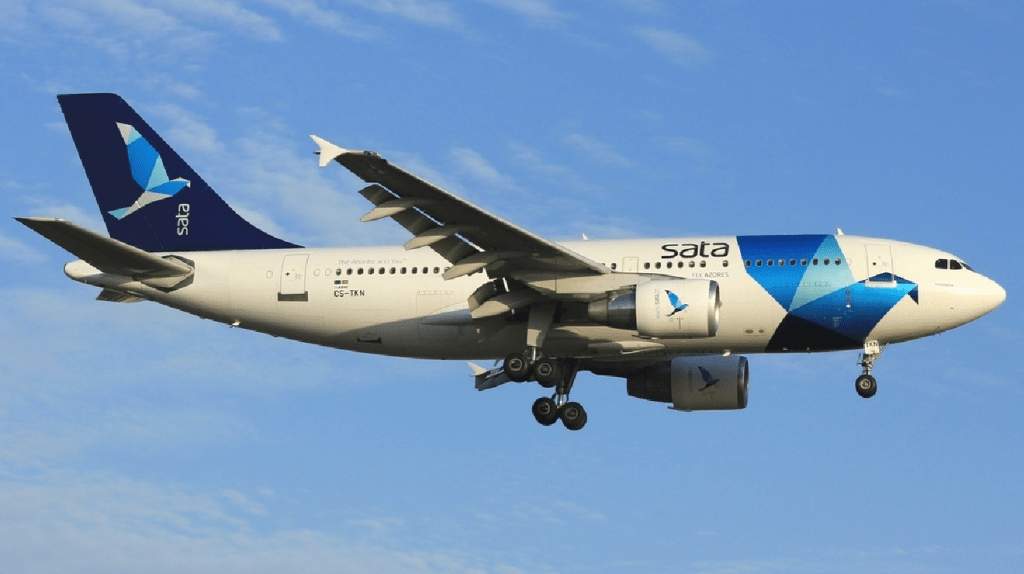
Does the Azores need a company like SATA “on a jet,” or would it be better if we took care of the inter-island connections and negotiated connections with the outside world?
Azoreans need a company that guarantees them inter-island mobility with the continent and the diaspora at affordable prices – I must remind you that nobody chooses where they are born. That said, we shouldn’t be discussing privatizing SATA but how to avoid advance payments from residents, allowing Azoreans greater flexibility in accessing the Portuguese mainland. As a Mariense and a displaced student, this is my concern.
In Diário Insular – Jos;e Lourenço, director
PBBI-Fresno State is dedicated to building bridges between the Azorean Diaspora and the Azores. Through NOVIDADES, we focus on bringing information from a variety of voices and sources so that those of us in the diaspora can have a holistic perspective on the Azores and how the Azorean Diaspora can be a contributing and intricate part of the New Azores.
Translated to English as a community outreach program from the Portuguese Beyond Borders Institute (PBBI) and the Modern and Classical Languages and Literatures Department (MCLL) as part of Bruma Publication and ADMA (Azores-Diaspora Media Alliance) at California State University, Fresno, PBBI thanks Luso Financial for sponsoring NOVIDADES.

 Novidades - The Islands and the Diaspora