


Correio dos Açores —After a long process and constant concern from the people of Mariá, we will finally have launches in Malbusca. Tell us what’s going to happen over the next few days.
Bruno Carvalho—We will launch two small rockets we manufactured in Portugal and produced by a recognized entity in the field.
The goal here may not be so much the flights themselves. Still, the important thing will be to analyze the logistics capacity and technical procedures on the island, as well as with the entities that govern the sector. I’m talking about entities with a say in safety matters: the National Civil Aviation Authority (ANAC), which refers airspace reservations to NAV; the Maritime Police through the National Maritime Authority; and Civil Protection on the ground. These entities must be aware of what is going on and have the capacity to carry out a risk analysis.
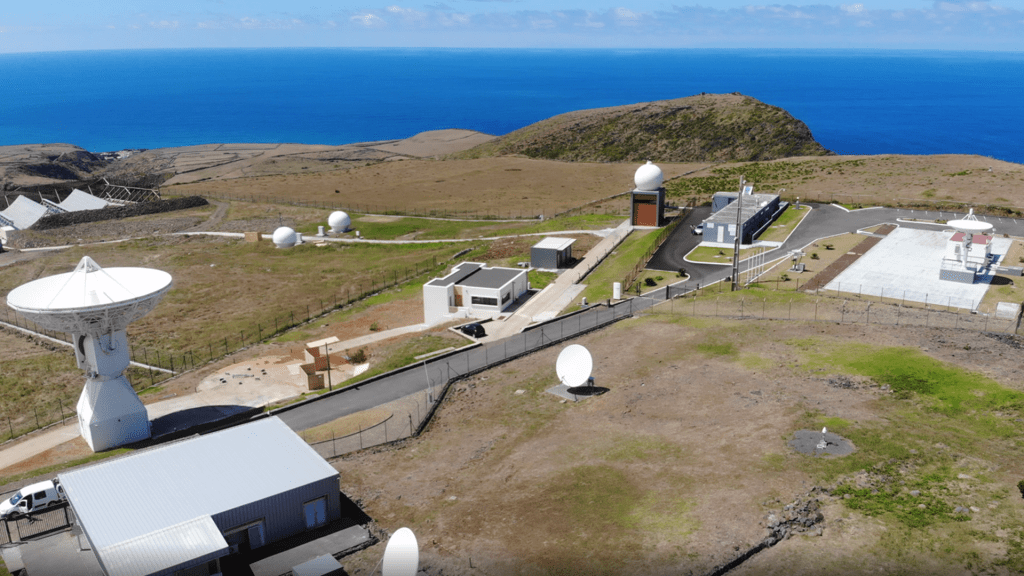
We have obtained a license or authorization to fly two small rockets to an altitude of about 10 kilometers above sea level in a reserved space, both air and sea. We are also testing the procedures for placing the equipment on the island, demonstrating that it is possible to have an activity like this on the island of Santa Maria.
So can we say that these launches are a sample for the future?
Yes, the idea is to demonstrate that with a small rocket, we can launch larger ones
Concerning launching orbital rockets, I hope that this will happen in a few months’ time, as soon as possible. It’s a step that we can’t take yet due to regulations because we’re lacking a piece of legislation so that we can launch from a space point of view,
The launches that will take place over the next few days will allow us to demonstrate to the authorities that these launch centers are qualified to carry out this entire functional process.

We know that the two rockets that will be launched in the next few days use engines made up of non-toxic propellants. However, in the near future, do you believe achieving harmony between aerospace activity and the environment will be possible? The environmental issue is significant, and I have to safeguard two things here: the safety of people and property, in other words, the safety of the island, and the importance of the environmental issue. Obviously, there are always risks, just as at airports on all the islands.
What we can say about a spaceport, or what a spaceport might be, is that the amount of fuel we use for a rocket, around 300 kilos or a ton, does not compare with the tons used in the planes that fly daily.
We are working with vehicle suppliers who will bring even cleaner fuel-use resolutions. We’re clearly aiming for the environment. This is one of the topics that we will have to address more formally, so to speak. I know it causes some concern, and rightly so, because I also want the environment to be respected.
Only 10 kilos of non-toxic propellant will be used for these launches. Of course, we will carry out the appropriate environmental analyses to scale up this activity in Santa Maria.
Would you like to add any more information?
I’d like to thank you for your interest and the people of Santa Maria for the consideration you’ve shown us and will show us this week. We’re going to interrupt certain pedestrian paths. The road will be conditioned for short periods, but it will be conditioned, and everything will be coordinated with the Public Security Police. We have the necessary equipment and technology to guarantee people’s safety.
José Henrique Andrade is a journalist for the newspaper Correio dos Açores-Natalino Viveiros, director
Translated to English as a community outreach program from the Portuguese Beyond Borders Institute (PBBI) and the Modern and Classical Languages and Literatures Department (MCLL) as part of Bruma Publication and ADMA (Azores-Diaspora Media Alliance) at California State University, Fresno, PBBI thanks Luso Financial for sponsoring NOVIDADES.

 Novidades - The Islands and the Diaspora