

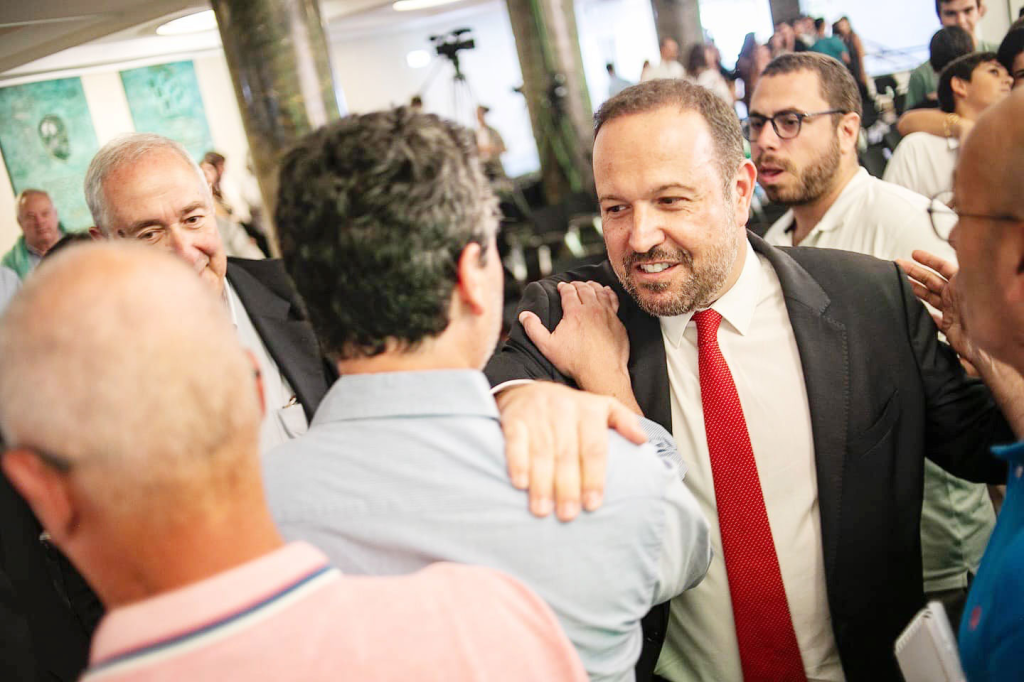
(Note from NOVIDADES: This is a long but worthwhile interview that we encourage our readers to take a look at. It is important for the Azorean Diaspora and all those interested in the Azores and the archipelago’s relationship with the US to examine all of the issues that the Azores face and all the perspectives from the various political forces.)
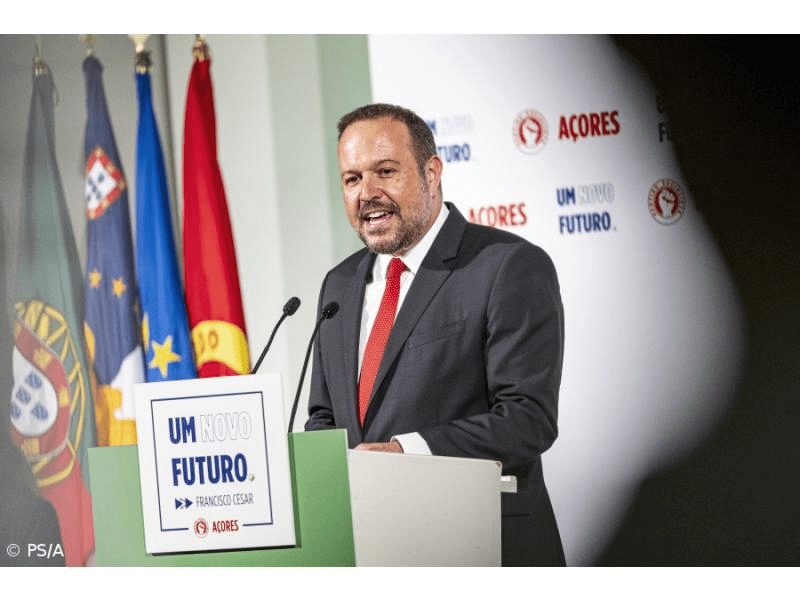
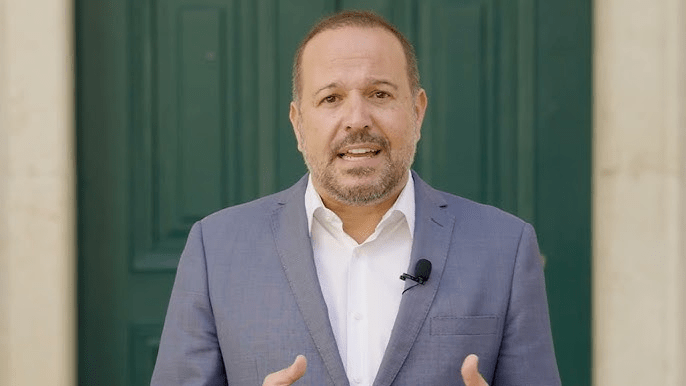
The leader of the PS/Açores, Francisco César, is going to take to the next Congress of the PS Açores, which begins on Friday (October 27), a new way of being in opposition, exchanging criticism for a greater sense of being a democratic alternative to the current government of the Azores. He says that the new PS/A that will emerge from the congress next Sunday will comprise those who have been in the leadership, those who are now, and those who will come. “Everyone will make their contribution”. The congress will also give rise to another guideline: to be open to consensus with the PSD/A on the significant issues facing the Azores. The 2025 Budget and Plan, a revision of the Regional Finance Law, and an extraordinary constitutional revision for the Autonomous Regions. Consensus that, in Francisco César’s opinion, can be achieved by taking joint responsibility for decisions, with compromises on both sides. The PS/A leader has chosen housing and education as top priorities. Affordable housing for everyone (because even the upper-middle class needs support to afford a home, no matter how expensive it is). Education is the primary way to break the region’s poverty cycle. In this pre-Congress interview with ‘Correio dos Açores,’ Francisco César focuses critically on the regional public debt. He tries to show why the problem lies with “uncontrolled” public spending, not revenue. He states that the region is running up debts of 480,000 euros daily. He also warns that SATA Internacional and SATA Air Açores will likely disappear.
Correio dos Açores – Is there a sense that the Socialist Party is adjusting to the new reality of Azorean society…?
Francisco César (PS/Azores leader): I can’t judge the past. I shouldn’t because I was proud to be part of the Socialist Party’s heritage.
Naturally, a new leadership with a renewed political project has a different style and form, or at least one suited to the characteristics of those currently in office in the Socialist Party. What I’m trying to do is the best I can, considering the project we have and the objectives we want.
The Socialist Party’s project is not an opposition project. The Socialist Party’s project is a political alternative. This means that we want to demonstrate to the Azoreans that we are a party with the capacity to develop the region, prepare it, and do things differently from now on. This affirmation is made in contradiction; in creating an alternative and in the central body of what constitutes our autonomy, there is no reason – and this unites us with the main parties – for divergence. What I have done is affirm divergence and convergence when necessary and the creation of an alternative. I don’t know if it’s different from the past or more appropriate, but I do know that it’s the one we believe is the most adjusted to reality. I’m sure that those who preceded me thought that the way I was doing it was the way that best-suited reality. They are different people with different backgrounds and ways of doing things. But always on the same basis and with the socialist conscience that we have.
For example, do you have a greater sense of convergence with the government?
Not with the government. We have no sense of convergence with the government, we have a sense of convergence on issues that are of interest to the Azores and the Azoreans. Let’s see: we have a company, SATA, which is one of the most important companies for the construction of Autonomy and Azoreanity. It allows us to make the archipelago not just a group of islands, but a group with an Azorean identity.
We realize we could be left without Grupo SATA, Internacional, and SATA Air Açores. There is this real danger. Imagine what it would be like not to have SATA.
What should the Socialist Party do about it? It should try to help ensure this doesn’t happen and say, ‘Well if we need to work together, create an alternative. If we need the political strength to restructure, the Socialist Party is here.’ It’s here to share the responsibility and the consequences of the decision but also to be part of the decision-making process of what needs to be done in the company. Because that is responsibility. And if necessary, we are available.
I said the same thing about Budget 2025. It is far from the Socialist Party’s budget.
But adjustments may bring the Socialist Party closer to an agreement…
Although it’s not the Socialist Party’s budget, the region must have one. And it may deserve not approval, but viability with abstention. But for that to happen, we need to make the minimum number of corrections to accept this budget. The region needs to make the emergency adjustments. We have a massive problem regarding public debt and the sustainability of the region’s accounts. At the moment, we feel that the public accounts are unprepared, disorganized, and sometimes chaotic in how they are managed. This government owes everyone everything. It already has a payment period of more than, or almost more than, five and a half months. Moreover, we are the region in the country that has increased its debt the most.
The region’s debt already stands at 3.2 million euros. Its debt to banks alone has increased by an average of 489,000 euros per day over the last 18 months, and it is spending 480,000 euros a day on debt.
But isn’t this debt also an inheritance?
Even if it were, it would not be relevant to this conversation. We’re not discussing inheritances here; we’re talking about the future. It’s not an inheritance, but even if it were, it would be irrelevant. We want to solve the problem.
A society’s discussion of its future can’t always be about whether one or the other is to blame. This time has passed. The Socialist Party has already been judged. It has won and lost elections. People have chosen this coalition. Now, we must pass judgment on this coalition and its responsibilities, but above all, we must be able to sit down and solve future problems.
If the PS was responsible for the past, that doesn’t matter. What worries me is that we have the most significant deficit in the country. In the first quarter, the Azores were responsible for more than half of the increase in the country’s deficit. At the end of June, this government had a rise in debt of around 150/180 million euros, clearly more than 100 million euros. And it seems to me that we are not correcting the course; that is, we are preoccupied with talking about the Republic not transferring, that the revenues are not enough, but what we can solve, we are not only not solving, we are accelerating. The region currently has a problem of uncontrolled public spending. And this should be reviewed.
Some economists say that the debt problem can be solved through revenue…
Do I believe that? The region increased its tax revenue in 2021 by 47.9 million euros compared to 2020. In 2022, tax revenue increased by 76.2 million euros compared to 2020. And in 2023, last year, tax revenue increased by 120 million euros compared to 2020. This government has 244 million euros more than in the final years of the previous Socialist government. And yet they believe there is a revenue problem…
Any family with a certain income knows they can’t spend more than they have. Although the family may wish to increase their income in the future, they must manage their family economy well within their means.
“The PRR’s execution levels are very artificial, and there is little or no physical work.”
We have the largest government ever in the history of Autonomy. The most significant number of advisors, chiefs of staff, and technical specialists. The biggest government ever. Intermediate consumption – state or regional fat – has increased substantially. Expenditure continues to rise and it’s not the essentials of health or education, it’s not those services that are at the heart of governance. Expenditure has been increasing consecutively. The government continues to hire and pay princely sums to feed its offices. This is at a time when deficits are accumulating. Before we discuss revenue, and I advise you to read some of my illustrious PSD colleagues, the region should examine the nature of its expenditure. Because it’s not just about health and education. And even in health and education, the truth is that we need a management shock in the way these sectors are being managed.
The government itself said it had zero indebtedness, but it didn’t. In fact, it didn’t have zero debt. The government is not implementing EU funds, the PRR.
It’s implementing the funds but not implementing them to the necessary extent…
No. I can tell you that, at the moment, the execution levels are very artificial and that there is little or no physical work. The government has achieved some of the Recovery and Resilience Plan’s milestones and targets, but when it comes to actual physical implementation, it will be very late. Our concern is that the Recovery and Resilience Plan can be fully implemented.
Do you accept that it might be possible to ask Brussels for an extension to the deadline?
It’s not a question of allowing it but of knowing if it’s possible because there are deadlines. There has been a great deal of irresponsibility in this area, hence our concern.
Bureaucracy has prevented better implementation of the RRP…?
This government can use Parliament to solve bureaucratic problems. All it has to do is propose to Parliament that the form of public procurement be changed.
I’ll give you an example: the government of the Republic realized that it would have difficulties implementing the RRP because of the way public procurement is done. It approached the PS and negotiated a change to the law to speed up the implementation of the PRR, and the PS, at the national level, rightly agreed to make this revision with the PSD.
In the Azores, the PSD only complains; it has never spoken to us so that, within the framework of Parliament, we can use our powers to speed up whatever needs to be done. What often seems to me is that this government complains too much and does little to no work.
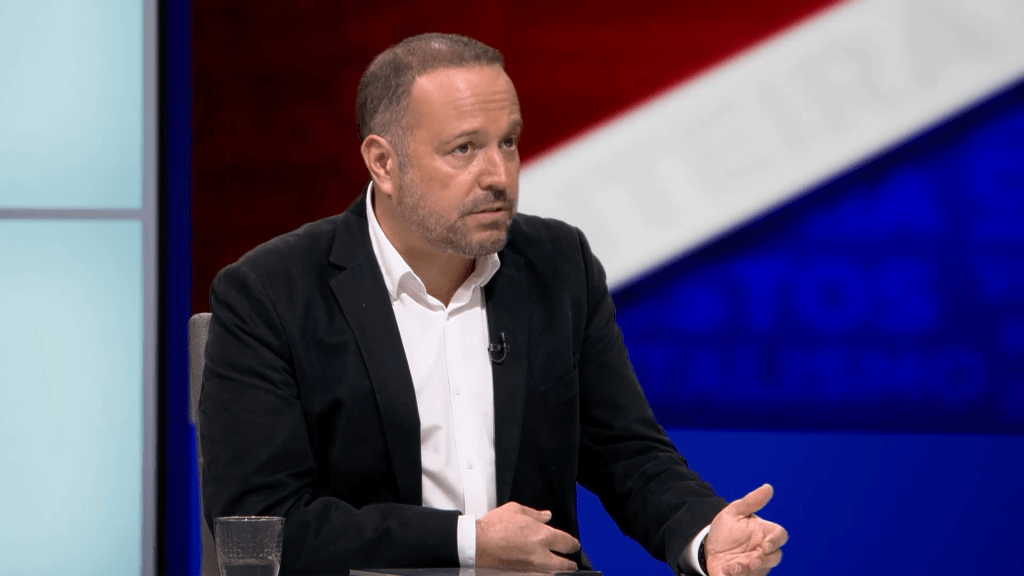
What changes need to be made, and what will you not do without in a negotiation with the PSD/A to make the 2025 Plan and Budget viable?
We have put 11 measures on the table. These measures have a social and emergency component and a component more related to debt and expenditure control.
The first problem has to be resolved urgently. Currently, young people are missing out on higher education, and in some cases vocational education, because the biggest expense they have in terms of their qualifications is accommodation. Any parent who has a child studying on the mainland knows that the biggest burden is not food, not tuition fees, but housing. A room on the mainland now costs almost as much as the annual tuition fee. You pay per month what the yearly tuition fee costs.
How can this problem be solved?
What should be done is to create a program to support these young Azorean students with accommodation costs. The government must agree to pay an amount, which must be negotiated with the regional government within the framework of the budget agreement, a concrete amount of support so that the family budget reduces housing weight by around 25/30%. It’s impossible to pay 500 to 600 euros in rent every month. This is no longer a problem for the most disadvantaged but for the middle class and even the upper-middle class. Because 500 to 600 euros a month is very heavy and can cause many people to give up studying because they don’t have the capacity, or to choose a university where the price of accommodation is lower and not the one they would like to go to and have the grades to get into. This is emerging. There are two to three months to resolve the issue.
We’re available to negotiate, and of the 11 measures we’re presenting, we’re not going to say whether we’re giving up.
In a negotiation process, there are compromises…
Of course, there are. The 2025 Budget has more than 500 articles and 1000 actions. We are proposing 11 amendments. That’s not a lot.
Another example: We have a problem with support for housing access, especially for young people. The problem of housing in the Azores is not a problem for the most disadvantaged. In the past, housing policy was mainly for social housing because the middle classes were able to get housing. What is happening in the Azores is still very asymmetrical, but it is already prevalent on almost all the islands: there is no housing. It’s not just a question of price; there isn’t enough housing either. The Socialist Party is aware of this, and it’s confusing that the government hasn’t realized that the housing problem is transversal; it’s not just a question of income; it’s a generational issue.
How can we be satisfied with our society’s functioning and what we call the social contract if someone who has studied and got a degree has an income of over 1,000 euros and can’t get a home?
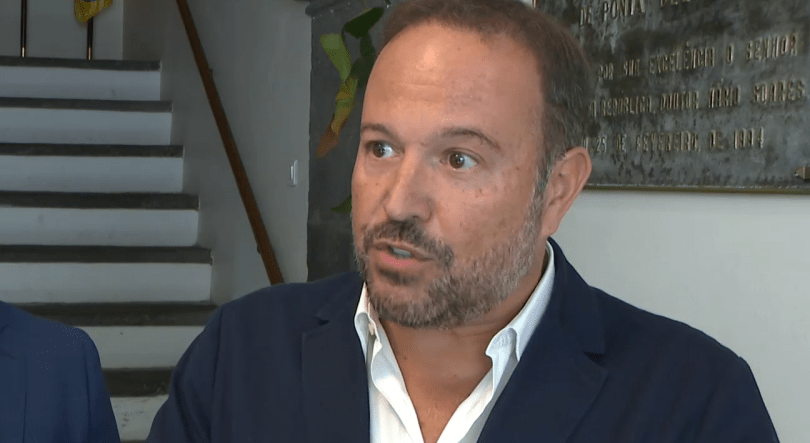
The bureaucracy of the Government of the Republic is involved in 1,000 houses for the municipalities of the Azores…
That’s not all; it’s not enough. The housing shortage program is so acute that young people aged 23 to 40 can’t leave their parents’ house. It’s a problem of demand and lack of supply. Much of the construction is mainly due to high prices and external demand from people with high purchasing power.
In the Azores, we have the advantage of autonomy. This means that we can complement the national programs to support the purchase of housing and support for rents and the construction of new housing through PRRs and funds that governments and municipalities have available. We can and must strengthen these programs. And we have to go back to the past. Housing cooperatives, self-construction, support for purchasing housing, enabling young people to finance or help with the part they must give to the bank to get their own home. The implementation of this measure must be negotiated; it must be calibrated according to what is being done and what we would like to see done.
There is no second chance for this generation. We may end up with the most qualified generation ever, but also the most precarious ever in terms of their emancipation, in other words, they can’t get a home.
In the system designed today, only couples can obtain financing for housing. A young person on their own can’t rent a room or buy a house with a bank loan, even if they have a reasonable income. Because the price is so high, not even the upper-middle class can afford it. And we cannot fail in this social contract. And the PS and I, since the election campaign, have been pointing out that in the Azores, housing is not a problem for the poorest classes; it’s a problem that cuts across all young people and all those who are in the job market and would like to have a home.
But aren’t housing programs running into bureaucracy?
There’s always bureaucracy, and there’s no reason within the region’s remit for it not to be resolved. The problem we have in the Azores is the supply. There isn’t enough housing on the market, which means that what is on the market is at a high price. We must put what little there is on the housing market up for rent or sale to young people. We have to start a rehabilitation program for housing for young people, not just for the socially deprived.
Most of the PRR is geared towards social rehabilitation. And we have to work for those currently in the job market. And who, at the moment, have the capacity for part of their income to be allocated to housing. But at the moment, their disposable income, despite being above average, is insufficient. We also need to create a program to encourage the construction of new homes for sale. So many solutions can be implemented, such as the government paying a monthly rent to private individuals to build on public land. Housing concession contracts for 80 years make it easier to build on government land or rehabilitate and rent out part of it to those who can afford it. The government has to invest in public housing stock and be a mediator in market prices so that they come down and those who work also have the right to housing.
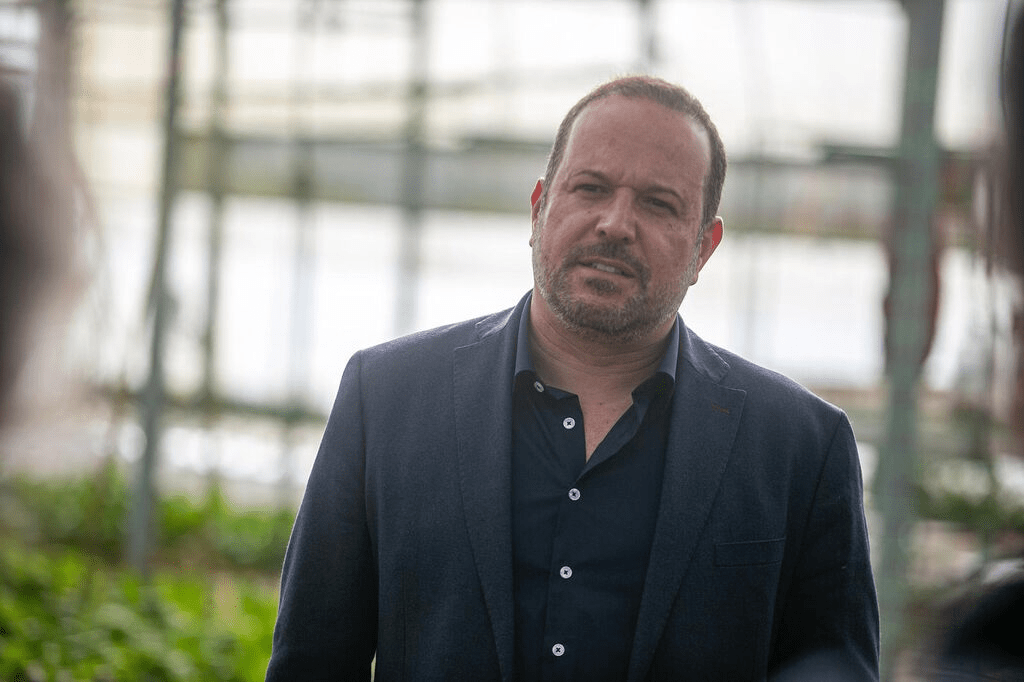
Out of 11 measures, you mentioned two…
We have a problem with educational qualifications. We are the country’s worst region regarding school failure and dropouts.
There’s a cycle of poverty that feeds on itself. There are broken families who don’t value education as necessary. We know that even today, the precarious social conditions to which families are subjected are a massive obstacle to qualification. There is only one way to end poverty. Social support is essential, but the main instrument for fighting poverty is education and qualifications. We also want to create a program to support the increase in young Azoreans with higher education qualifications. We have to financially support those who have more difficulties, if necessary. There is an exciting project at the national level: tutoring; in other words, the school tutoring the children so that their entire social path is monitored and their social condition is not a barrier. The Socialist Party defends the role of a full-time school. In fact, this is the primary measure in the global orientation motion that breaks the cycle of poverty. This program we propose to the Regional Government to directly support those with the most difficulties is one of the first steps. And we have to do it now. There is no developed region, no sector we can create here, no modern agriculture, and no sustainable fishing if we don’t have a capable and qualified workforce to respond to this.
You have been concerned about housing. Is that why one of the guests at the PS congress is a former housing minister in António Costa’s government?
We’re going to have several guests. Each in areas that we consider essential. We’re going to have work done and to present, in the area of housing, with the former housing minister who will make her contribution. She has a national perspective, which must be adapted to the Azores in some areas. Some parts don’t apply, but others make a good contribution. The PS has chosen education, housing, the health sector, the economy, and the reform of the region’s autonomy as its priorities for this congress.
Those are the five priorities. However, the PS knows the best way to respond to these challenges is by opening up to civil society and external contributions. We must always be open to receiving donations from those on the continent, from those who are socialists, from those who are not socialists, or from those who, being from another party, have something to contribute. And that’s what we want to start doing at this congress. We will have contributions in these five areas from people with their own viewpoints.
What about contributions from independents who aren’t members of the PS?
Many independents and other socialists are not from the Azores; others are socialists who are not in the Azores but are Azoreans and know their land. Now we know one thing: If we work in a closed circuit and the same people always design the same policies, we can’t expect different results. The work of opening up the PS to civil society and listening to voices other than just those there begins now. And it also starts with the congress. We’re going to have experts in the field of education. Dr. João Convaneiro, who has worked mainly in scenarios similar to ours, namely on the Setúbal peninsula, is coming to contribute. We will have contributions from some Azoreans on the reform of public administration and the transparency of public administration to regain citizens’ trust in their institutions. The PS is doing work, and this work should be known, both in the area of health and the economy. It’s essential to make other contributions, and we will. I’m sure we will.
Do you think it’s essential for the PS and PSD Azores to agree to increase state transfers to the region by 2025?
The PS is willing to improve the Regional Finance Law.
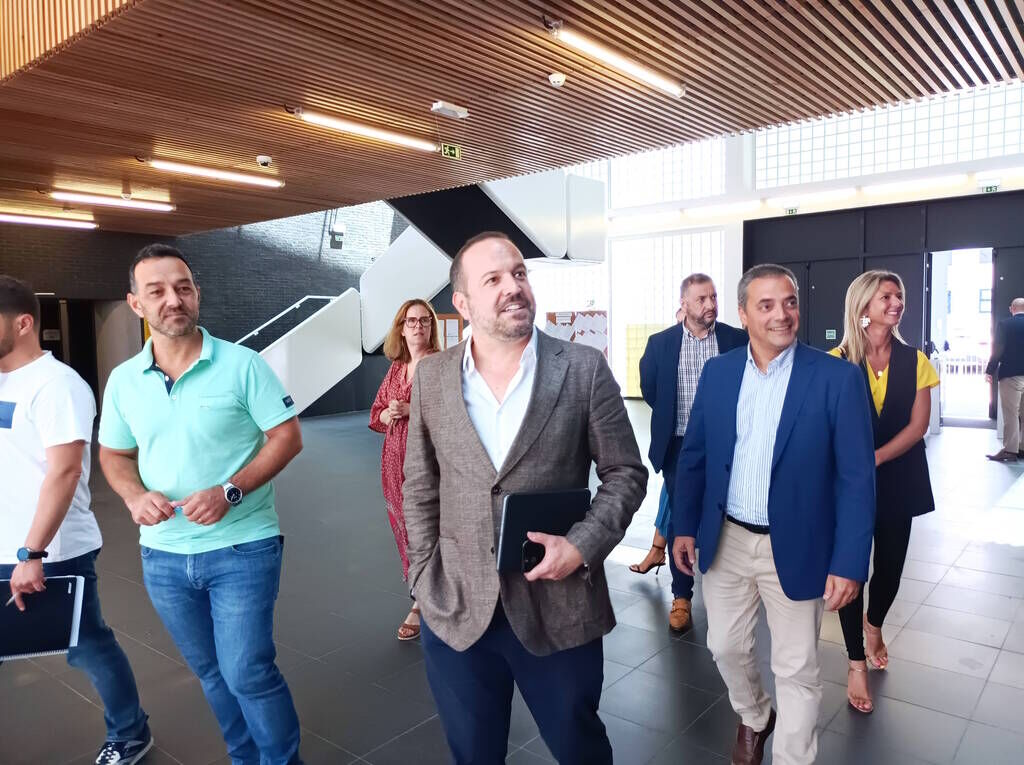
“So far I’ve never heard the PSD/Azores call for consensus or negotiations.”
For 2025?
No. The PS is available to sustainably improve the Regional Finance Law, not by seeking immediate revenue but by guaranteeing the region’s sustainability.
The PS does not talk to the PSD through the press about this or other matters. If the government believes there is work to be done on the Regional Finance Law, it should talk to us. We will appoint a PS official to negotiate with them and talk to them about setting up a group on the Regional Finance Law. I’ve heard on this subject that there’s a problem with the region’s revenues and that the government of the Republic doesn’t pay. What I find curious is that before, the problem was that the Government of the Republic was PS, and now they are making less noise, but the Government of the Republic has changed, and the circumstances remain the same. And so I’d like you to talk to us because this Regional Government isn’t just working to solve its problems. It is working and must work to solve the region’s problems, now and in the future. And it should talk to us because we are also concerned and interested in the region’s future in terms of its economic sustainability.
What I think, and what I keep saying, is that the region may have a revenue problem, but above all, it has an expenditure problem. A lot of expenditure in the Azores is poorly made and not reproductive. There is a lot of waste. And I didn’t want the debate on the region’s governance to be replaced by a discussion on what we don’t get because this problem has only arisen now. In past administrations, the sustainability of public accounts did not occur, and the PSD did not raise it because of a revenue problem but because of a management problem. In the past, everything was a management problem.
Our past problems have been exacerbated this term. Just look at SATA, which is already in its third administration, and the problem is getting worse…
Are you open to negotiating an understanding for the constitutional revision of the chapter on the Autonomous Regions?
The Socialist Party has always been open; it’s not a question of my leadership or the previous leadership. The Socialist Party has committed at a PS meeting at the national level to launch an extraordinary process once the opinion or recommendations of the regional parliaments on the revision of Autonomy have been finalized. As soon as this was finished, the Socialist Party would be available to trigger the revision, and it has always said and maintained that the revision of the Constitution for the Autonomous Regions is not done in the context of and mixed with other issues that are not specific to the Region. Therefore, in the ordinary constitutional revision process, the Socialist Party has already said it is unavailable. In an extraordinary revision process particular to the Autonomous Regions, the Socialist Party says it is available to move forward on this issue. That’s what was decided, and that’s what we’re going to do.
Without the PS, there can be no constitutional revision…
Neither without the PSD. That’s why the question arises: Is the PSD willing to proceed with a specific extraordinary revision on Regional Autonomy when the PS decides or when the regional parliaments are finished? Will the PSD make possible a remarkable revision of the Constitution on Regional Autonomies?
We don’t want the current constitutional revision to be a bit about the Azores—and done in haste in the midst of dozens of articles that have nothing to do with the Region. When it comes to discussing autonomy, we only want to discuss it. That’s the most responsible attitude, and I’m asking whether the PSD is willing to conduct this review with the PS.
Do you place each issue in its own place, or is one always dependent on the other? Agreement on the 2025 Budget and Plan, the Regional Finance Law, the SATA agreement, and the constitutional revision of Regional Autonomies. Every man for himself or all in one?
So far, I have never heard the Social Democratic Party call for consensus or negotiations. From the start, we were the ones who said that there are issues that are too important for the only consensus to be a consensus in which the Regional Government of the Azores will talk to the Regional Government of Madeira and not the Azoreans. We are available to speak. And it’s essential to understand what talking means. Talking means sharing decisions and deciding together. They can’t say, ‘We have an opinion and you must validate and defend it.’ It means sharing the decision; that’s our commitment. If we can agree on what unites us, we are available separately to discuss issue by issue. There are issues where we can reach an agreement, and there may be others where we cannot.
We now have a responsible position on this matter. We’re willing to negotiate if it’s in the Azores’ interest. And to give in on some issues. A negotiation is not done in a way in which the PS gives in, and the other parties don’t give in. There are many issues, particularly in the Law on the Finances of the Autonomous Regions, regarding the current chaotic management of public finances. There is a severe public finance problem in the Azores. You only have to see that the public business sector is worse off than it was; you only have to know the non-payment of suppliers; you only have to see the expectations created; you only have to understand how the government manages its policies internally. For the first time, the islands are separated, and it seems that there is one policy for some islands and a different one for others. If they want to talk to us, it has to be in good faith and focus on the result, not political gain.
Do you share the warning of a possible excess of tourism in the Azores?
Currently, the Azores don’t have an overtourism problem but a tourism management problem. It’s completely different. We are nine islands, and we must manage our tourism throughout our territory and solve the problem of peak tourist numbers in the region.
Tourism is only good if it’s good for the Azoreans. If it redistributes wealth. If the wealth that comes here through tourists provides a good income for those who work in the tourism sector, profits for entrepreneurs because we are concerned that companies have an income, that they preserve what is good about us, and that they give the Azores a good name.
It doesn’t do me any good to have a lot if the restaurant worker or the entrepreneur doesn’t make an income from it or if our sustainability is not guaranteed. This economic activity has to be redistributive in terms of its income. That’s the point.
The question is not the number of tourists but what kind of tourists we want, whether they come all at once or spread out over the year. It’s no use having a fantastic August if you have January and February with completely empty hotels because they can’t insure their workers and have to pay them during these months. We have a problem managing the tourist flow, the tourist offer, and those who visit us. I have many concerns about this, which have to be seen and worked in a way that allows everyone to get the most out of those who visit us.
The economy is tourism, agriculture, fisheries, innovation, science and digital. But for that to happen, we have to be qualified. And at the moment, we don’t have the qualifications. We are not prepared to compete with other regions of the country because we have the worst education indicators in Europe. And that’s important. We have excellent teachers and excellent schools. We have to combine all of this so that no student is left out of this system because they have very precarious socio-economic conditions or may not even see the importance of education for their future. The only way we can keep up with any region in the country is to break this cycle.
Which Socialist Party will emerge from this next Congress?
I would like to see the Socialist Party emerge from the next congress united around a program of development and economic and social growth for the Azores—what we call building a new future.
The PS is going to this congress to debate and create a political alternative. One of the appeals I make, and I can also make it here in Correio dos Açores, is for the Socialists to focus more on building a political alternative, on what we would do differently if we were the government, rather than criticizing the government for the sake of attacking it. Criticism is vital, and monitoring is essential. Still, I think the PS has to establish itself as a credible force and a political alternative to what is being done in the Azores today.
This can be done with new ideas and a renewed team…?
This is done with everyone’s contribution. With the contributions of those who have been, those who are, and those who will arrive. We are all too few to constitute a political alternative. We are a party that currently has priorities that people must understand and an alternative project for education. How can we, in the space of a generation, stop being the worst region in the country and become one of the best from the point of view of leading indicators? How can we achieve this and then stop being an exporter of labor? In other words, qualified people go abroad in search of better alternatives. How can we keep them here? We have to be a region with a strong, thriving agricultural sector that sells to the markets; that is, it knows that it has a product with added value for the markets and is not just focused on production or having an undifferentiated product.
We must modernize our agriculture, give economic sustainability to our fisheries, and restructure the fisheries sector.
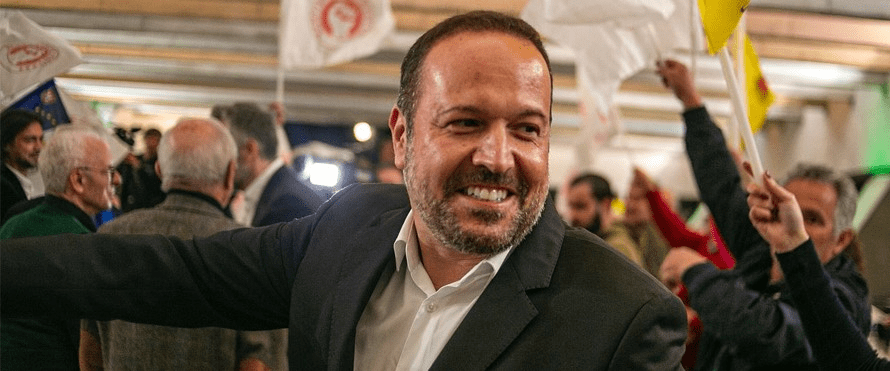
João Paz and Frederico Figueiredo are journalists for the Correio dos Açores-Natalino Viveiros, director
Translated to English as a community outreach program from the Portuguese Beyond Borders Institute (PBBI) and the Modern and Classical Languages and Literatures Department (MCLL) as part of Bruma Publication and ADMA (Azores-Diaspora Media Alliance) at California State University, Fresno, PBBI thanks Luso Financial for sponsoring NOVIDADES.
 Novidades - The Islands and the Diaspora