

As a journalist for 45 years and an Azorean citizen, I have become accustomed to noticing that the national PSD governments made and implemented commitments to the Organs of Self-Government of the Azores, going where no other party on the political spectrum went when it took office except one or two Socialist governments that were more sympathetic to the region’s budgetary needs to meet the competencies of the Organs of Self-Government.
The governments of Sá Carneiro and Amaro da Costa and, later, the government of Pinto Balsemão gave a dimension to the process of Political, Administrative, and Financial Autonomy of the Azores that no other government has provided, except the government of António Guterres and the Minister of Finance, Sousa Franco, who brought the region’s debt to zero at a time of extreme difficulty for Autonomy.
The only exceptions of national PSD governments that created financial difficulties for the Azores were those of Cavaco Silva, who went so far as to amend the Autonomous Regions’ Finance Law to reduce the transfers of state money to the Azores and Madeira. Those who, at the time, successfully tried to create a fog over Cavaco Silva’s centralism for party-political reasons now openly admit that the then Prime Minister harmed the Azores.
However, after Cavaco Silva, the national PSD governments remained consistent with regional autonomies, almost always transferring the necessary funds for the region’s competencies and never failing to meet their commitments.
The funds needed for better health and successful education have always been the Achilles heel of Autonomy. Over time, the Region should have determined – even before the existence of the Autonomous Regions Finance Law – the amount corresponding to the increase in annual expenditure on health and education to justifiably agree with the Government of the Republic on the amount of transfers from the State Budget to the Region. And if that had happened, we wouldn’t now be in unaffordable debt in these two sectors that are essential to the region. But this is not the issue we are writing about today.
What brings us to these ‘Correio dos Açores’ opinion columns is the Republic’s failure to meet its financial commitments to the Azores, first by António Costa’s government and now by Luís Montenegro’s government, a debt that has become a stranglehold on the Azorean government’s treasury.
First of all, for the sake of intellectual honesty, it’s important to note that José Manuel Bolieiro’s government was much more proactive in demanding the payments made by António Costa’s government and softer now concerning the duplicate payments by Luís Montenegro’s government. I’d be tempted to say that José Manuel Bolieiro’s government has lost its political strength without proof.
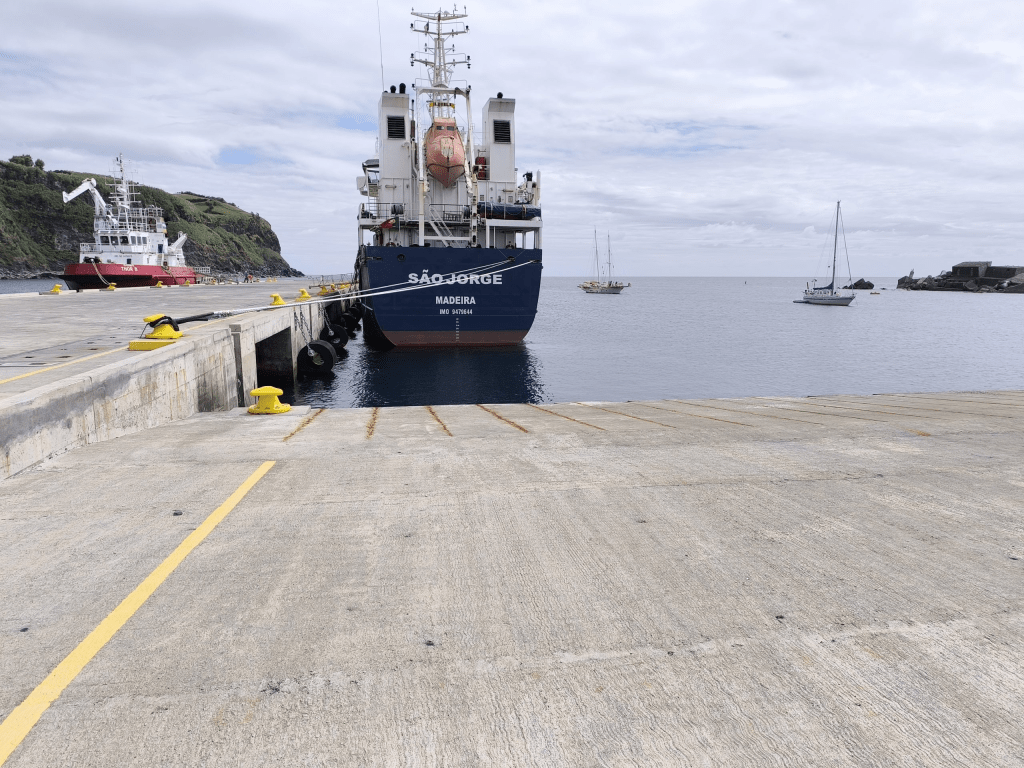
What remains of the Region’s Budget for 2024 today is a blanket with evident dimensions. And when you cover the head, you uncover the feet, and vice versa. And because the government of the Republic still “hasn’t given a cent” of the 85% of the cost of building the port of Lajes das Flores, these costs are being borne by the Region’s budget. Under these conditions and because of the need to move forward with this work, there are commitments that the Government of the Azores had made that will not be fulfilled because the blanket will not be enough to cover everything.
Luís Montenegro’s government also undertook to pay 85% of the eligible costs of restoring the Divino Espírito Santo Hospital after the fire on May 6th. However, this support soon became entangled in a working group that doesn’t have the due speed that public health circumstances demand (with delays also from the Azores government) so that funds from the Republic start arriving to pay for work already carried out. In the meantime, the 2024 regional budget will bear these financial costs.
This is the main reason why the Azorean government has systematically defaulted on payments to suppliers and has fallen many months behind on the payment of support owed to almost all economic and social sectors, which has impacted many Azorean companies and families.
But, from the tone of the Regional Government, it seems that we are in the best of all worlds. There were times in the Azorean Autonomy when, for much less than what the current Central Government is doing to the Azores, the Region’s Organs of Self-Government would point their batteries at the Terreiro de Passo demanding, with posture, the fulfillment of commitments made.
The Regional Legislative Assembly has become a den of bickering and politicking, which leads nowhere. Deputies like to listen to each other without realizing that the debate between peers bypasses the people.
The Region has lost on almost all fronts in the dialogue with the Government of the Republic of and with the approval of the President of the Republic: it’s the Law of the Sea; it’s the failure of the Republic to fulfill its commitments to pay funds that are essential to have a balanced 2024 Budget with the work on the port of Flores and the Ponta Delgada Hospital at a good pace; it’s now the mobility subsidy with tariffs that will have a ceiling of 600 euros (…). The national VAT cap is intended in the State Budget for 2025, but we don’t know what it will result in.
Given the region’s financial problems, the need to resort to certain amounts of indebtedness, which only the 2025 State Budget will be able to foresee, and some other issues shrouded in fog whose solutions will not be the most favorable for the Region.
I miss the Azorean government demanding meetings with the Government of the Republic with a list of unresolved issues. And many solutions were found in these meetings, even if it meant punching the table.
At no time in the history of the Azores have Azoreans been submissive. From my earliest days as a journalist, I have remembered the maxim: “It is better to die free than in peace subjected.”
We are facing a central government that has inherited António Costa’s broken promises, but Montenegro’s government is also indebted to the Azores.
Throughout these 45 years of journalism, we have learned the stepmotherly relationship that has grown between the Republic and the Region, to the detriment of the Azores and the Azoreans.
João Paz(journalist for Correio dos Açores and Atlântico Expresso newspapers)
NOVIDADES will feature occasional opinion pieces from various leading thinkers and writers from the Azores to give the diaspora and those interested in the current Azores a sense of the significant opinions on some of the archipelago’s issues.
Translated to English as a community outreach program from the Portuguese Beyond Borders Institute (PBBI) and the Modern and Classical Languages and Literatures Department (MCLL).
 Novidades - The Islands and the Diaspora