


The Azores are, by virtue of their multiple nature, a group of islands of excellence, both in terms of landscape and quality of life, and with a solid cultural heritage, where climates, peoples, and narratives have crossed to form an existential palimpsest that naturally appeals to many of the people who visit the archipelago. However, the reality hidden in government declarations is darker than one might expect. The outlying areas and less populated islands suffer from abandonment. And when they welcome tourism, they suffer from a lack of infrastructure to provide those who visit us with a decent quality, without detracting from the defense of our heritage, traditions and the dignity of those who live here. If these shortcomings are felt on several islands, I can’t imagine one that has suffered as much as Flores.
In recent years, after hurricanes, storms, political storms and interference by those in charge of the region, the island of Flores has been abandoned forgotten by economic, environmental, cultural and social policies. While we try to cover up our weaknesses with reports like the one on SIC’s Portugal à Vista program, which treated the issue with the colonialist uniqueness of a view from afar, the truth is that bleak news continues to emerge from the island that I was born on.
On September 23rd, as the president of the regional government sat down to watch the football match and the soccer match in the comfortable stands of the Bessa stadium, the island of Flores was in yet another hardship supply shortage. The reason for this was the breakdown of one of the cranes on the ship that supplies the island and the equally blatant lack of vision and ability to anticipate for that commercial transportation route, which remains in serious difficulty.
In fact, weeks went by without the ship supplying Flores. It was the repair of the ship’s crane that was holding it up and, of course, the regional government was not to blame. Later, in the regional press, it was revealed that the delay was not due to the crane being repaired but to a dispute between the shipowner and Opertri, which is responsible for stevedoring in the port of Horta. In fact, the regional government is not responsible for the breakdown of the crane and the weather conditions, but the issue that cannot be forgotten is its responsibility for supplying the island. It’s about time that those responsible understood the specificities of Flores and had some foresight to solve the problems more quickly. RTP Açores (the regional public television station) reported on the sadness of the Florentines, who couldn’t provide the minimum conditions for the tourists who still visit the island at this time of year and lamented the image they were sending out to the world. The following day, it was the Santa Cruz Volunteer Fire Brigade Association that spoke out about the possible risk of closure. If this happens, the island will be left to its own devices, in a territory so often battered by bad weather and the bad moods of the Atlantic Ocean. What kind of brand image will a territory pass on if it doesn’t have the minimum facilities to withstand any basic emergency? What distinctions does the archipelago deserve when it claims to be the best in some places and sweeps so many others under the carpet?
I was born in Flores, and every time I go back, I see an island that is ailing, without attention from the people who should be looking after all the Azoreans. It pains me to realize that thousands of people have been forgotten, to the detriment of some vendetta that is incomprehensible. The chronic lack of funds cannot be justified in an environment where Lisbon is, at least in theory, in complete agreement with Ponta Delgada. Twelfths are no excuse, when emergency statutes exist, to be used when necessary. The misfortune of some cannot be the ball game of those who should show more sense of state. Impunity must not go unpunished.
At the same time as the shortage of supplies, Flores was visited by the President of the Legislative Assembly of the Azores, Luís Garcia, who kicked off the Youth Roadmap with a sort of “Institutional Motivational Guru”, presenting success stories to young people from all the islands to motivate them to settle and counteract the loss of young people. I’m sure that the region’s top figure saw and understood how difficult it is for a young person to return to that island when a simple yogurt is missing from the shelf. And, knowing Luís Garcia, I’m even more certain that he got the message across to those responsible.
On September 25, Bishop Armando Esteves Domingues went on a pastoral visit to Flores, where he said, “The word I take with me is that of hope”. And I, a defender of the secular state, hope that the visit of these two figures will be the necessary wake-up call for the regional government, since the political structures in Flores, which support the government, are saying nothing.
P.S.: It is true that I have always tried to maintain a cordial and empathetic relationship with all the people who have been
made by Joaquim Machado during the debate on culture. Speaking of omissions, let’s not forget that his answer never mentioned cultural heritage, which has been abandoned and rained on in the museums and libraries of the Azores. But I’d also like to make another point to remind you that we’re not talking about subsidies but about public investments. we are talking about public investments. If the coalition likes the word “invest” for companies and economic groups, it doesn’t want to understand it in culture because it seems to lack it. Respect for cultural agents should be one and the same. Trying to conquer and divide is an opportunistic political gamesmanship on par with Venezuela’s argument, and it looks bad on anyone who tries to do so. I’ll end as you almost started that day in the Assembly: it’s a shame that it’s come to the point where a political statement of this kind is needed to alert all Azoreans to the stark reality that culture is on the verge of extinction.
Alexandra Manes publishes regularly in Azorean newspapers. She is originally from the island of Flores and currently makes her home in Angra do Heroísmo, Terceira, Azores.
NOVIDADES will feature occasional opinion pieces from various leading thinkers and writers from the Azores to give the diaspora and those interested in the current Azores a sense of the significant opinions on some of the archipelago’s issues.
Translated to English as a community outreach program from the Portuguese Beyond Borders Institute (PBBI) and the Modern and Classical Languages and Literatures Department (MCLL)
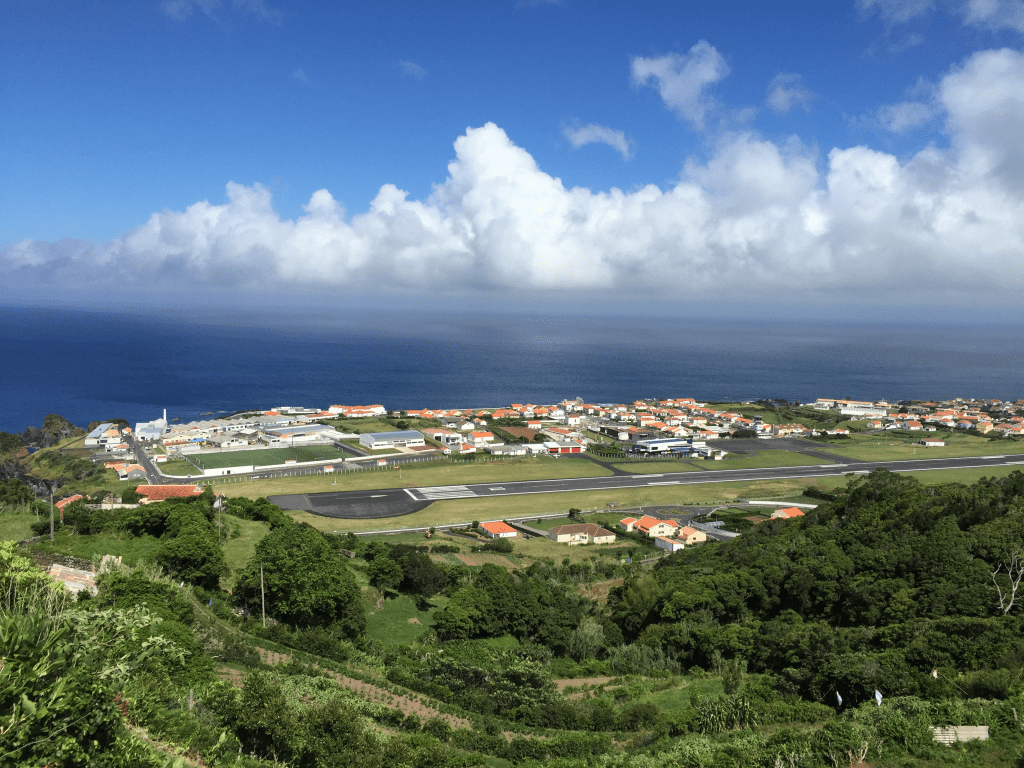
Picture of Santa Cruz, Flores Island-Azores
 Novidades - The Islands and the Diaspora