

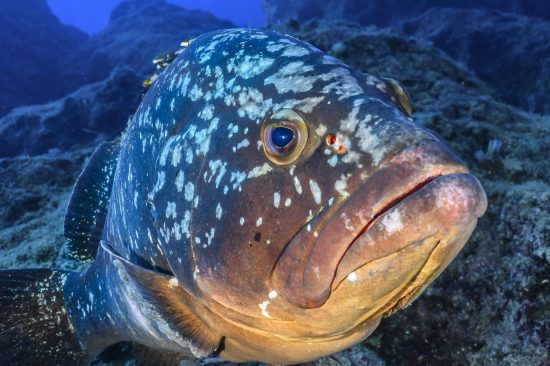
The Okeanos Institute admitted yesterday that grouper are dying out in the Azorean seas due to this summer’s high temperatures. “Comparable situations involving this same species have been reported in the Mediterranean in the past, typically associated with viral or bacterial outbreaks triggered during periods of abnormal warming of the sea,” reads the Okeanos statement.
Okeanos’ studies in the coastal zone of the Azores “show that, unlike other regions, the Azorean grouper population has shown stable population trends in recent years. There is no evidence that these occurrences are associated with the direct effect of fishing.”
In the Azores,” there has been a substantial and persistent thermal anomaly in the sea in recent summers, and especially during the summer of 2024. The IPMA has already reported that this will be the hottest summer in 80 years in the Azores, with the sea surface temperature reaching a historic 27.3 degrees Celsius and thermal anomalies of more than a degree Celsius.”
He adds that “coastal habitats and the species that live in them, including the grouper, are especially subject to the impacts of these heat waves as the top layer of the ocean is abnormally warm and reaches greater depths than usual. Our sensor network has consistently recorded temperatures of over 24 degrees Celsius at a depth of 25 meters.”
He concludes that “95% of the groupers reported are mature animals (>55 cm) at the end of the breeding season, so it is also to be expected that these individuals are particularly vulnerable during this period, given the energy they have to devote to reproduction.”
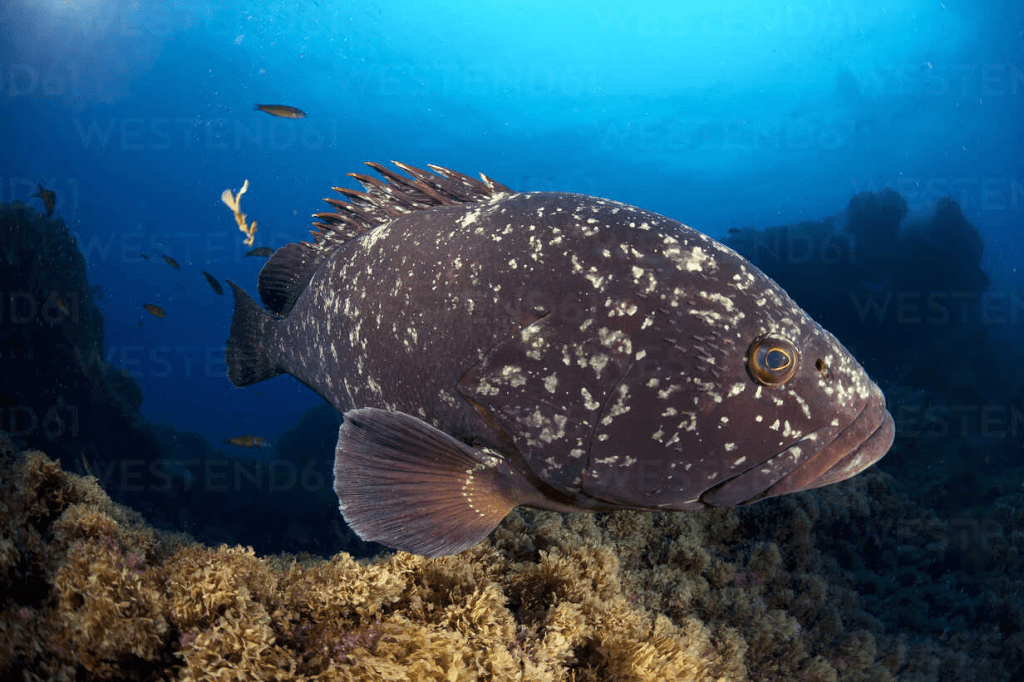
“These occurrences, whether or not they are the result of bacterial or viral infections, remind us of the impact that climate change may have on the oceans, affecting the survival of some species and, potentially, the economic performance of fisheries and human health,” reads the statement.
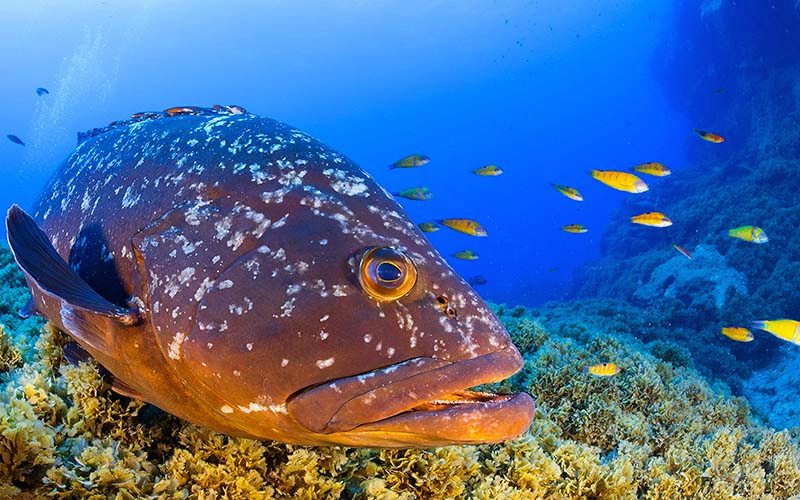
For around a month, dozens of strandings and deaths of groupers, a marine species of great ecological and commercial importance in the region, have been recorded on several islands in the western and central groups of the Azores.
Given the initial lack of knowledge about the causes of these occurrences, the Regional Government of the Azores (GRA) banned the capture, keeping on board, unloading and selling this species on September 27 to safeguard the public interest.
The OKEANOS Institute at the University of the Azores has studied this phenomenon since its first occurrence. Our MoniCO coastal monitoring program team has been recording data on occurrences and collecting specimens in collaboration with the sea user community.
It has also collected independent information from fisheries to assess the state of this species’ natural populations and monitored its exposure to environmental conditions.
As this situation involves epidemiological analysis with possible public health implications, OKEANOS has also, from the outset, coordinated its study and ecological monitoring efforts with the relevant regional authorities (DRP, DRPM, DRV) to exchange information and support the collection of samples to send to certified laboratories.
While awaiting the results of the diagnosis from the authorities, the OKEANOS Institute, pursuing its mission of disseminating scientific knowledge to the public, informs the following:
OKEANOS warns of “the importance of continued monitoring of this situation, and the need to develop early warning mechanisms in the Autonomous Region of the Azores to predict, detect and act in a planned and concerted manner in the face of situations that may occur in a current context of accelerating global changes. ”
In Correio dos Açores, Natalino Viveiros-director
Translated to English as a community outreach program from the Portuguese Beyond Borders Institute (PBBI) and the Modern and Classical Languages and Literatures Department (MCLL) as part of Bruma Publication and ADMA (Azores-Diaspora Media Alliance) at California State University, Fresno, PBBI thanks Luso Financial for sponsoring NOVIDADES.

 Novidades - The Islands and the Diaspora