

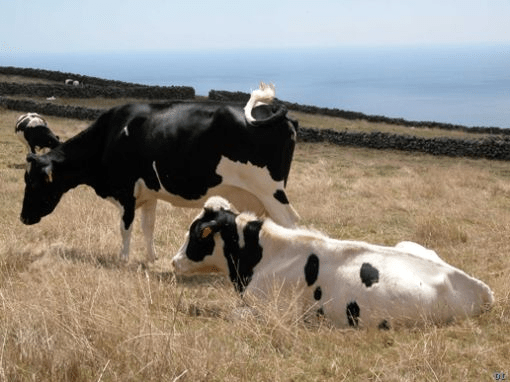
Replacing the dominant breed of cows in the Azores and changing the cattle’s diet are some of the suggestions made by agronomist Graça Silveira in the face of a climate change scenario that will force agricultural producers in the Azores to make more sustainable choices.
“Each of us is called upon to participate in more sustainable behavior in our choices of more sustainable production factors, including the type of cow, the type of feed, and water consumption. All of this has to be on the agenda when making a choice,” she told DI-Diário Insular newspaper in Angra do Heorísmo.
Scientists have long warned of the need to adopt more environmentally sustainable behaviors, but as the effects of climate change are starting to be felt, with impacts on crops, producers are beginning to realize that they have to follow this path if they also want to have a sustainable business from an economic point of view.
“We have no alternative. People are starting to feel it. The big problem is that science and the sector have a time difference. While we study and predict in advance what will happen and find alternative models, the people who are in business don’t care, it’s their pocket that counts,” said the agronomist, who is also a professor at the University of the Azores.
“Right now, people are realizing that they have to find ways to become more economically sustainable and that necessarily means becoming more environmentally sustainable,” she added.
Water needs
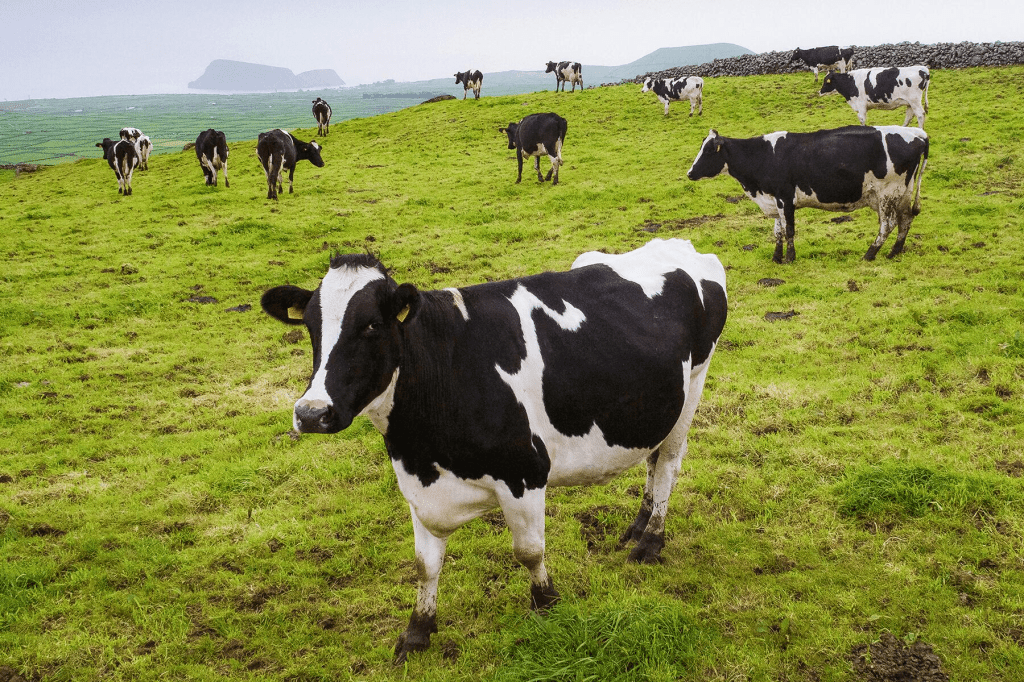
According to official figures available to DI, the Azores currently have 275,000 head of cattle, 80,000 of which are dairy cows.
The average annual water consumption per head of cattle is around 60 liters per day. In summer, this figure rises to 100 liters per day.
August was the hottest month in 83 years in the Azores. According to the weather report from the Portuguese Institute for the Sea and Atmosphere (IPMA), the region had an “extremely hot and generally dry month”.
The artificial lagoons that supply livestock in the north of the island dried up and the Angra do Heroísmo municipality had to divert water from the population’s supply network to prevent crops from running out of water.
“The municipality is supplying around 600 cubic meters a day to the crops from our network in Altares, about three times the amount of human consumption,” revealed the mayor of Angra do Heroísmo, Álamo Meneses, in September.
Meteorologists guarantee that the climate in the Azores has already changed and that the phenomena we are witnessing will continue to worsen.
“What we’re predicting for the future is that there will be two types of situation, and to some extent, we’re already seeing this: long periods with little precipitation, the so-called droughts, and short periods with a lot of precipitation,” meteorologist Diamantino Henriques told DI newspaper last week.
Controlling emissions
With this scenario, Graça Silveira argues that “the impacts that farming itself has on environmental change must be on the agenda.”
Climate change is increasingly leading to the monoculture of cows in the Azores, because pastures present fewer risks, but cattle farming has a greater environmental impact.
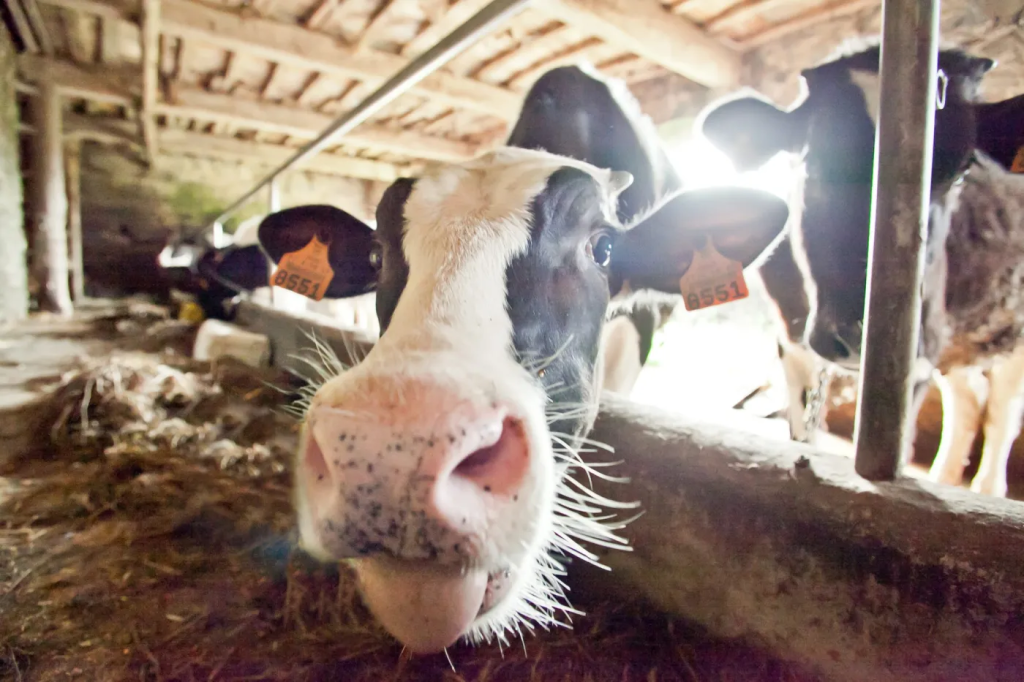
Global data indicates that “cows are responsible for 20% of greenhouse gases and 45% if we’re talking about methane alone”.
According to Graça Silveira, one measure that will reduce this impact is introducing algae into cow feed.
“There has been a lot of research. For example, there are certain algae that, when introduced into animal feed, reduce methane emissions. So there has been an effort to find solutions that minimize this impact in terms of feed,” she explained.
Several trials, some at the University of the Azores, have already been carried out on the possibility of introducing algae into cow feed.
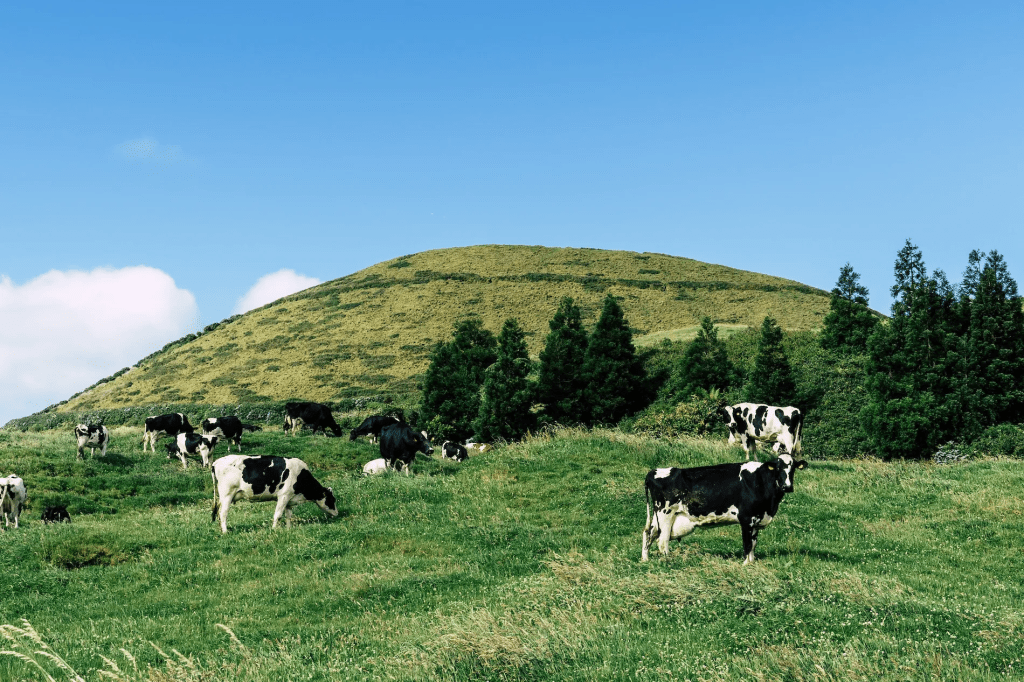
Another hypothesis raised by the agronomist is to replace the breed of cow. The Holstein Friesian is the dominant breed in Azorean pastures, but some breeds make production more sustainable.
“It’s already been proven that Jersey cows crossed with Holstein Friesians drink much less water and have a smaller impact in terms of their carbon footprint,” the researcher explained.
More attractive cattle farming
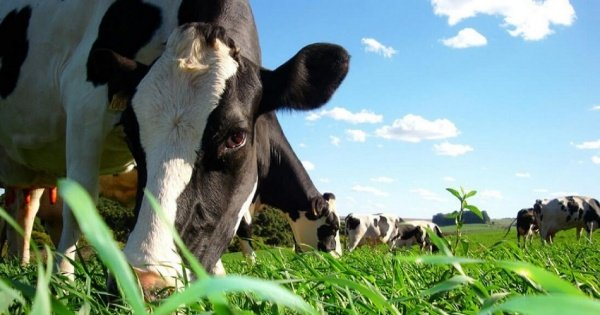
But if cattle farming has a greater environmental impact, why isn’t a greater focus on agricultural diversification in the Azores? Graça Silveira explains: “We ended up opting for pasture monoculture because pasture grows well, a storm passes, and the pasture isn’t all destroyed. It has an impact, but it has greater resilience and a greater capacity to recover.”
Extreme phenomena such as Hurricane Lorenzo, which passed through the archipelago five years ago, are becoming increasingly frequent and intense. They destroy infrastructure and affect crops. However, the region is still unable to implement agricultural insurance.
“We have a serious problem, which we’ve never been able to solve, which is that we’ve never been able to get insurance for agriculture, because it’s difficult. Either there’s a monthly payment which is almost prohibitive, or nobody wants to insure or take on the consequences of an entire harvest, which was on the eve of being harvested, with investment costs for production factors. Just when you’re finally going to get a return on that investment, a storm comes along, a windstorm and the crop is gone for life. It’s a huge risk, which makes people increasingly shy away from agricultural diversification,” said Graça Silveira.
“Pasture ended up being a natural option, firstly because there is pasture at a medium-low height. Then, because pasture is much more resilient. It’s affected by winds and storms, but it’s much less affected and recovers much more quickly,” she added.
In Diário Insular-José Lourenço-director
Translated to English as a community outreach program from the Portuguese Beyond Borders Institute (PBBI) and the Modern and Classical Languages and Literatures Department (MCLL) as part of Bruma Publication and ADMA (Azores-Diaspora Media Alliance) at California State University, Fresno, PBBI thanks Luso Financial for sponsoring NOVIDADES.

 Novidades - The Islands and the Diaspora