

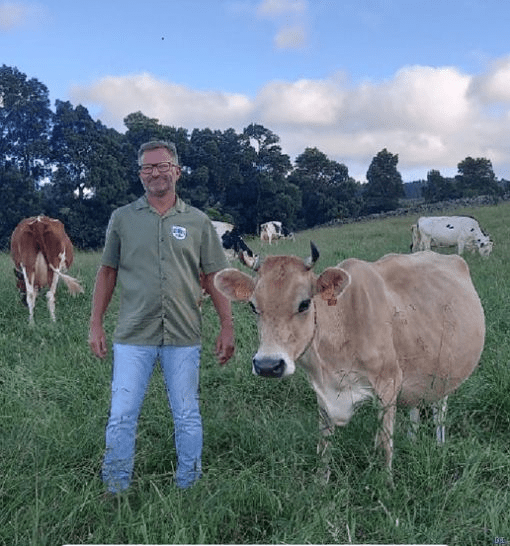
What is your current assessment of the organic milk production project on Terceira Island?
I joined this project with seven other dairy farmers when UNICOL suggested the opportunity in early 2017. The conversion to organic milk production began at the end of that year. The eight farms completed the conversion in mid-2019 and then became organic farms. It has the conditions to grow, as it did with the entry of eleven other farms. The first eight farms produced one and a half million liters of milk a year, and today, the nineteen farms produce four and a half million liters of milk.
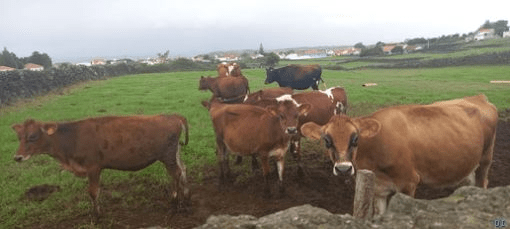
In addition to organic milk, you have already defended the production of A2A2 milk as an added value…
I have defended it and continue to do so because my strategy is to have all my farms produce this type of milk, which is a great added value for our Azorean agriculture. This could be another great niche in the milk market that can be exploited by our farmers and the industry. (This type of milk is an option for people with various types of intolerance, as it is easier to digest.)
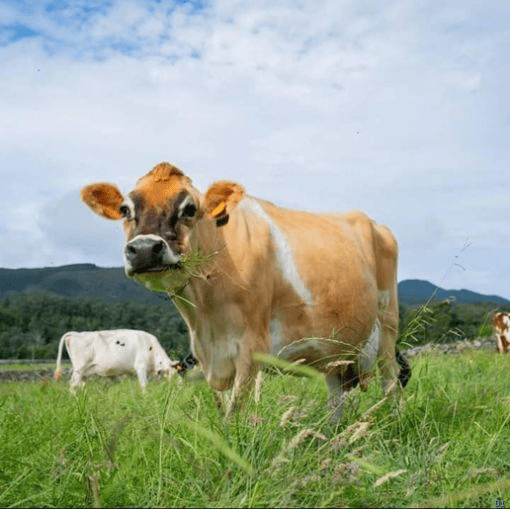
What do you think is missing for this idea to move forward?
I think that the first step is for farmers to genotype all their animals and find out which animals on their farm have the A2A2 gene and, from there, artificially inseminate them with bulls with the same A2A2 gene to obtain offspring with the same gene. Only then can you be sure of what you’re looking for. That’s what I did, and I was the first farm in our country to genotype all our farm animals in search of this type of milk.
Agriculture has also emerged from the point of view of tourism. Why did you join the “Milk and Cheese Route” tourism project?
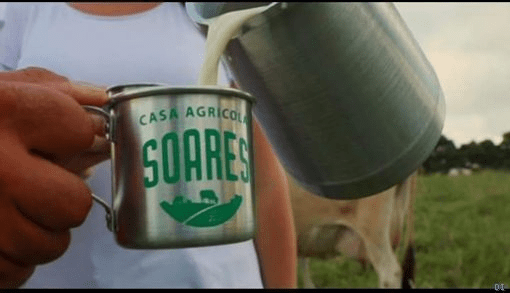
I had always dreamed of combining farming and tourism. This excellent opportunity came along on the part of Angra do Heroísmo City Council, and more specifically, Mrs. Councillor Fátima Amorim, to create this fantastic “Rota do Leite e do Queijo” (Milk and Cheese Route) tourist project, which has been highly successful for our farm “Casa Agrícola Soares.” I’ll tell you, I never imagined that there would be so many tourists who would like to see cows, but our farm has been preparing itself for many years to have many visits from tourists. We’ve already had visits from people worldwide, and many visits have already been booked. People want to see what they can’t find elsewhere, cows on pasture, producing as naturally as possible “organically”, animal welfare, respecting the environment and, finally, presenting them with a tasting of products produced on our farm and organic. If you ask me if this project has room to grow, I fully believe it, but we can’t fail. For my part, I have had the trust of the tour operators and travel agents who have worked with us. The trust we have had in each other is what has led us to this success.
In Diário Insular-José Lourenço, director
Translated to English as a community outreach program from the Portuguese Beyond Borders Institute (PBBI) and the Modern and Classical Languages and Literatures Department (MCLL) as part of Bruma Publication and ADMA (Azores-Diaspora Media Alliance) at California State University, Fresno, PBBI thanks Luso Financial for sponsoring NOVIDADES.
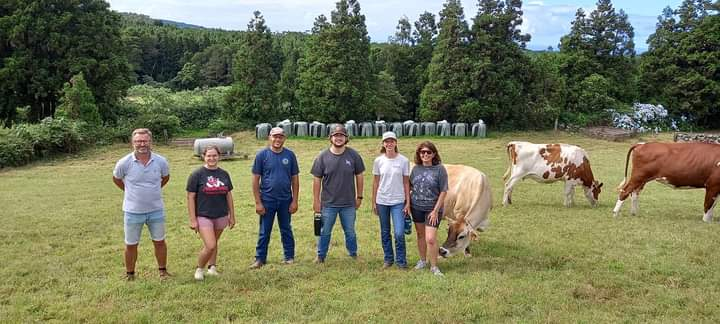
Note from NOVIDADES: Our four exchange students from Fresno State who did a month-long internship in Terceira Island during June of 2024 had the opportunity to see André Borba and his Family visit this innovative dairy and cheese-producing business.

 Novidades - The Islands and the Diaspora