

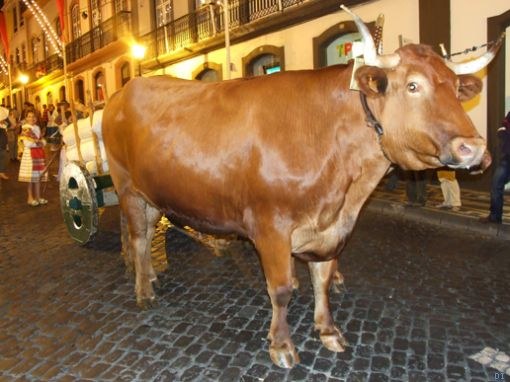
The Regional Secretary for Agriculture and Food announced the objective of creating an Interpretive Center for the Autochthonous Breed of the Ramo Grande on the Day of this breed of cattle breeding. The initiative took place in São Miguel last weekend.
“It makes sense and is only fair that an Interpretive Center for the Autochthonous Breed of the Ramo Grande is created to show new generations and visitors the history and future of these cattle,” said António Ventura.
According to the regional secretary, “It’s not a question of a new physical structure, it’s a question of reusing existing structures to be able to exhibit the complete agricultural history of the Azores” because “it’s important to record the memory and make our agricultural identity known from a didactic, tourist, economic and social perspective.”
According to official data, the number of animals of the Ramo Grande Autochthonous Breed is growing in the Azores. There has been an increase of 9.6% in the last ten years. In 2015, there were 2025 animals, and currently, there are 2544 registered animals and 278 breeders. Of these, the island of São Jorge has 1103 animals, or 43% of the regional total.
“Breeders of the breed are considered the guardians of an unparalleled genetic heritage, which, over several generations and in sometimes difficult conditions, they have insisted on maintaining as a legacy from their ancestors, seeking to preserve the inheritance they had received,” according to António Ventura.
The secretary also said that “the Ramo Grande breed built the Azores alongside the Azoreans” and that “without this breed of cattle, it would not have been possible to clear and plow the land.” Ventura emphasized that “these cattle have been used for centuries to work and to feed families with milk and meat.”
PROMOTING THE BREED
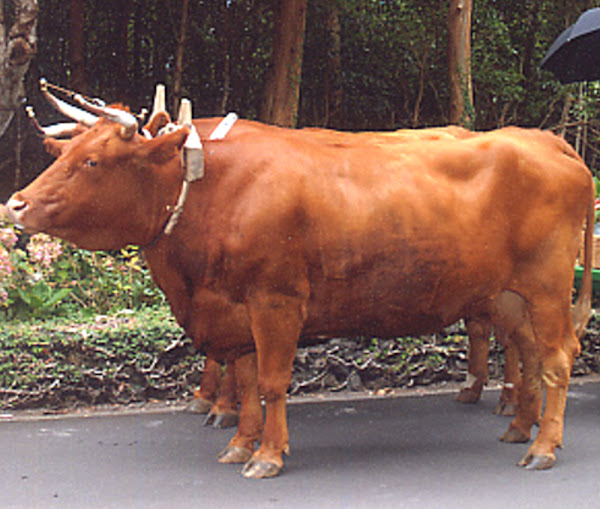
The Regional Secretariat for Agriculture and Food has increased support for breeders to maintain the Ramo Grande breed, within the scope of EU funds, by 25% this year. This means that each adult animal registered in the breed book will receive 250 euros. Meanwhile, support for preserving “Juntas de Bois” has existed since 2021, amounting to 250 euros per head (500 euros per joint). This year’s aid has already amounted to almost thirty thousand euros.
In 2024, 59 applications were approved, corresponding to 74 juntas de bois from São Jorge, São Miguel, Terceira, and Faial islands.
“The incentive aims to highlight the key role that cattle of this breed have played in the region since the settlement of the islands, in the development of agricultural activity, given their triple aptitude for the production of meat, milk and work, as well as, currently, the assiduous participation of these cattle in ethnographic parades and traditional festivities, especially associated with the cult of the Divine Holy Spirit, This is of great interest for the future conservation of this breed and arouses great enthusiasm in the population, both locals and visitors, especially those from the diaspora, as they remember all the agricultural activities that were carried out with these cattle by their ancestors,” says a note from the Regional Secretariat for Agriculture and Food.
GOOD MEAT
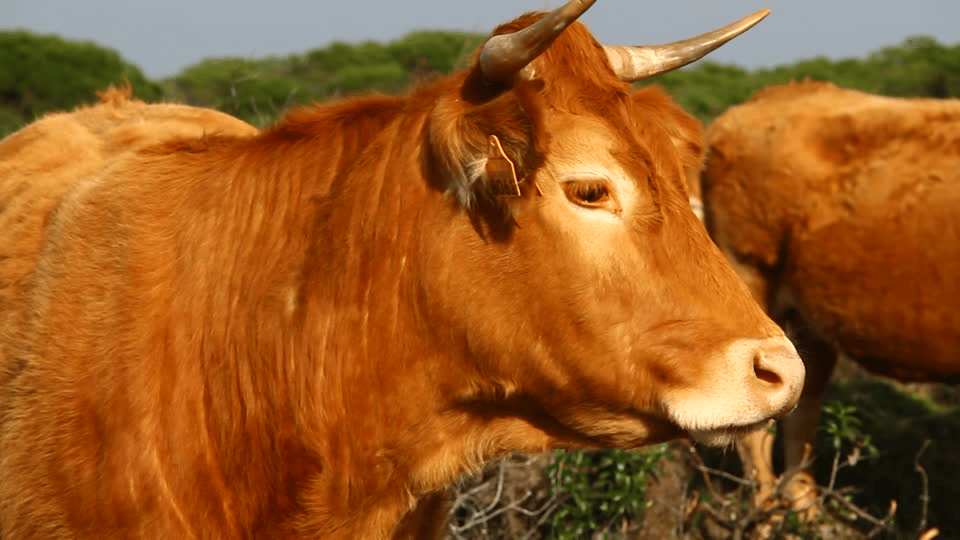
Since January 2022, the designation “Carne Ramo Grande PDO” has been registered and published in the Official Journal of the European Union. As of September 2024, 374 Ramo Grande animals have been slaughtered, 22 of which have been certified as “Carne do Ramo Grande DOP.”
The characteristics of “Ramo Grande Meat,” particularly in terms of taste, tenderness, and juiciness, according to the note sent to us by the Regional Secretariat for Agriculture and Food, “are the result of the animals being raised in a grazing system throughout the year, due to the edaphoclimatic conditions of the Azores allowing this, combined with the particular management given by the producer thanks to the docility of these animals.” According to the same source, “as it is a meat from a grazing system, in which the animals walk freely in the pastures and move between the various plots, it tends to have a more intense color.”
THE ORIGINS
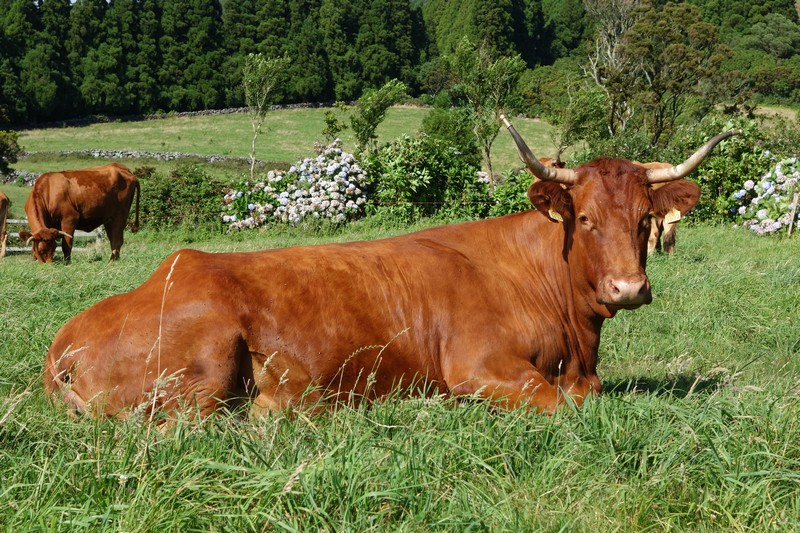
With the settlement of the Azores archipelago in the 15th century, cattle came from various regions of the mainland, which, due to the island’s characteristics and geographical isolation, acquired their own specificities and later gave rise to the Ramo Grande cattle, according to information on the website of the DGAV – Directorate General for Food and Veterinary Services.
The DGAV assumes that the first settlers on Terceira Island were of Minho and Algarve origin and were accompanied by various livestock species in their regions.
At the time of their arrival in the Azores, the Algarve, where the Portuguese discoverers of the Azores may have come from, was the center of dispersion for the then Algarve variety of the Alentejo breed, while the Minho region was one of the leading centers of expansion for cattle of the Galician or Minhota breed.
Quoted by the DGAV, Medeiros (1978) states that the breeds introduced to the Azores were national breeds, such as the Alentejana, Mirandesa, Minhota, and Algarvian breeds. Due to their insularity, these breeds gave rise to a type of cattle with a reddish coat, known as the “land breed,” and contributed to the creation of a nucleus of animals known as the “Ramo Grande.”
According to the DGAV text, the Zootechnical Register/Genealogical Book of the Ramo Grande breed was established in 1996 to preserve the small census that existed.
Translated to English as a community outreach program from the Portuguese Beyond Borders Institute (PBBI) and the Modern and Classical Languages and Literatures Department (MCLL) as part of Bruma Publication and ADMA (Azores-Diaspora Media Alliance) at California State University, Fresno, PBBI thanks Luso Financial for sponsoring NOVIDADES.


 Novidades - The Islands and the Diaspora