

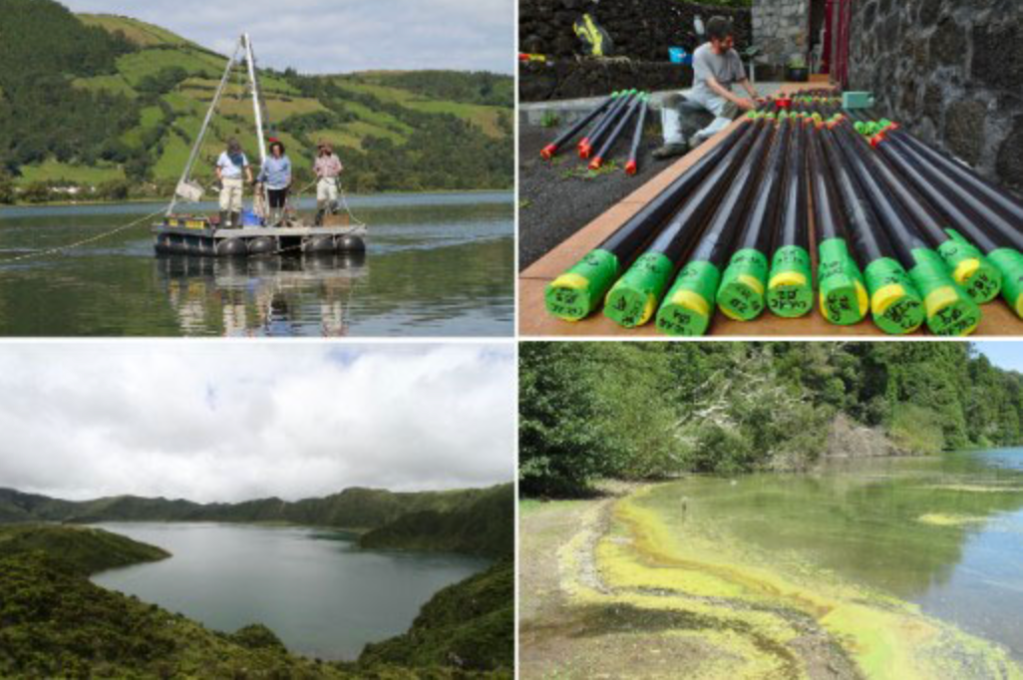
The temperature rise caused by climate change is endangering the lake ecosystems of the Azores archipelago.
These lakes, which are important for the population and essential for preserving the islands’ biodiversity, are losing part of their biodiversity and ability to provide ecosystem services.
This is confirmed by a study carried out on the island of São Miguel by researchers from the Center for Research in Biodiversity and Genetic Resources at the University of the Azores (CIBIO-Açores), which has just been published in the journal Nature Communications Earth & Environment, which found that the number of species of diatoms, single-celled algae that are at the base of the trophic chain, has fallen by an average of 27% in all the island’s lakes since 1982, when the temperature in the northern hemisphere increased by 0.35 ºC compared to the 20th-century average.
Likely, the changes detected in the archipelago’s lakes also occur in other ecosystems around the planet. The study also involved researchers from the Autonomous Universities of Barcelona, Évora, Coruña, and Barcelona, the National Museum of Natural Sciences (MNCN-CSIC), and the CREAF, GEO3BCN-CSIC and CEAB-CSIC institutes.
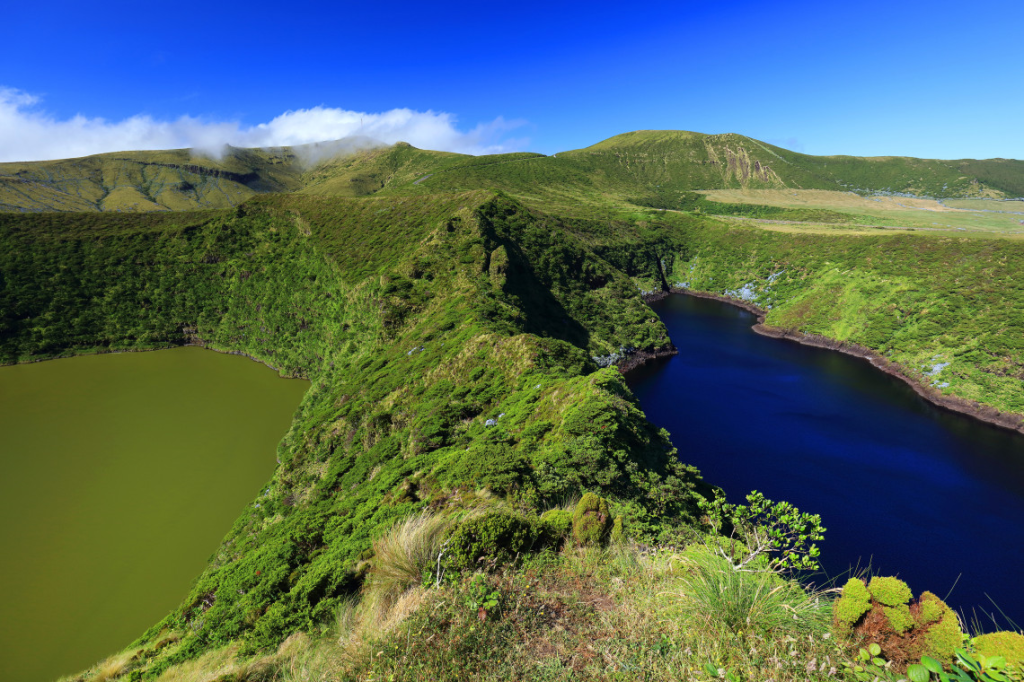
The rise in temperature caused by climate change is endangering the lake ecosystems of the Azores archipelago.
These lakes, which are important for the population and essential for preserving the islands’ biodiversity, are losing part of their biodiversity and ability to provide ecosystem services.
This is confirmed by a study carried out on the island of São Miguel by researchers from the Center for Research in Biodiversity and Genetic Resources at the University of the Azores (CIBIO-Açores), which has just been published in the journal Nature Communications Earth & Environment, which found that the number of species of diatoms, single-celled algae that are at the base of the trophic chain, has fallen by an average of 27% in all the island’s lakes since 1982 when the temperature in the northern hemisphere increased by 0.35 ºC compared to the 20th-century average.
Likely, the changes detected in the archipelago’s lakes also occur in other ecosystems around the planet. The study also involved researchers from the Autonomous Universities of Barcelona, Évora, Coruña, and Barcelona, the National Museum of Natural Sciences (MNCN-CSIC), and the CREAF, GEO3BCN-CSIC and CEAB-CSIC institutes.
In Diário dos Açores, Osvaldo Cabral-director
Translated to English as a community outreach program from the Portuguese Beyond Borders Institute (PBBI) and the Modern and Classical Languages and Literatures Department (MCLL) as part of Bruma Publication and ADMA (Azores-Diaspora Media Alliance) at California State University, Fresno, PBBI thanks Luso Financial for sponsoring NOVIDADES.
 Novidades - The Islands and the Diaspora