

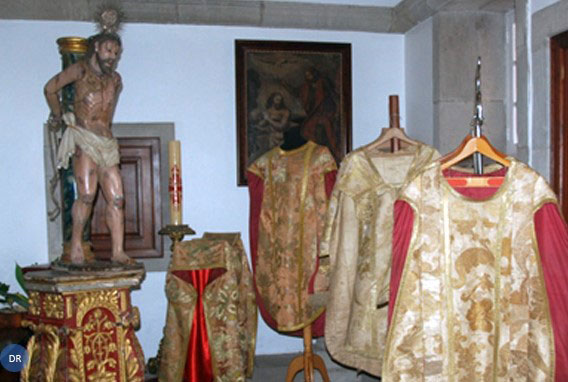
The Diocesan Service for the Church’s Cultural Assets has already completed the inventory of the heritage of 18 parishes in the diocese, which corresponds to around 12,000 files of inventoried objects, Rute Gregório, director of the Service, told Sítio Igreja Açores.
“We have tried to be pedagogical at this level: whenever a parish thinks it needs to make an intervention, we advise it to consult accredited technicians and then send the project to the Curia for the Bishop’s knowledge, who will ask us for advice. This is the correct way to proceed,” says Rute Gregório, who points out that working together and knowing that there are people who ‘know the heritage and know how to intervene in it correctly’ is the key to its ‘responsible preservation.’
“We have to be truthful and say that these procedures are often not followed,” laments the researcher who highlights, for example, the practice of introducing stained glass windows ‘that are not authorized in our heritage and other interventions’ that have been made.
“I don’t say this to censure but to warn that we must work together and when we intervene in our heritage any intervention must be responsible and, on the other hand, we all need to know that there are people available to advise and guide us in this safeguarding. We have to be careful, follow the correct procedures and listen to advice from those who know how to intervene,” he added.
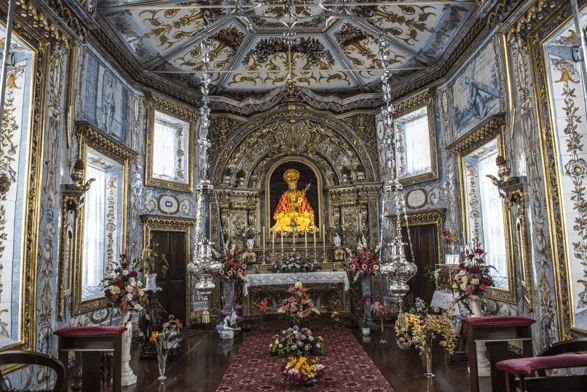
“On the one hand, we’re making this inventory: it’s a slow process and we have few resources, but since 2019 we’ve been working on it, which means that in São Miguel, Terceira and Faial we already have a lot of data included on our platform.”
The inventorying that has been going on, primarily since 2019, has relied mainly on scientific work and projects.
“We had Index Prima, with two young people, and now Dio 500, which have been projects that have allowed us to work in the field. We need to use service contracts for this work on the ground and we always have to have funding,” acknowledges Rute Gregório, pointing out that there are constraints that don’t allow for a faster pace in this inventory process.
Another of the diocese’s challenges, especially in the context of growing tourism in the Azores, is to find the best way to put heritage at the service of evangelization.
“We already have some visitable collections in the Cathedral of Angra, in São José, in Ponta delgada, or in Santa Cruz, in Lagoa, but it’s not enough to have leaflets and information available, there needs to be mediation,” he says.
“Proximity, the creation of a narrative that translates the meaning of what is being worshipped or exhibited, the decoding of symbolism, are fundamental to creating a dynamic that really boosts evangelization, but this requires resources, especially human resources,” says Rute Gregório.
The main challenges related to the Church’s cultural heritage were discussed in depth on Friday at the Leiria Museum, during the first days of the Pastoral Care of the Church’s Cultural Assets, with the presence of the Azorean diocese, concludes Igreja Açores.
in Diário dos Açores-Osvaldo Cabral, director
Translated to English as a community outreach program from the Portuguese Beyond Borders Institute (PBBI) and the Modern and Classical Languages and Literatures Department (MCLL) as part of Bruma Publication and ADMA (Azores-Diaspora Media Alliance) at California State University, Fresno, PBBI thanks Luso Financial for sponsoring NOVIDADES.

 Novidades - The Islands and the Diaspora