

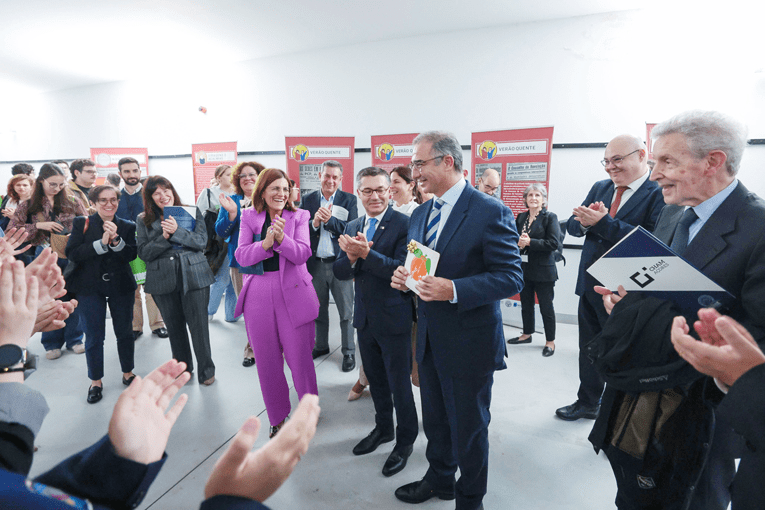
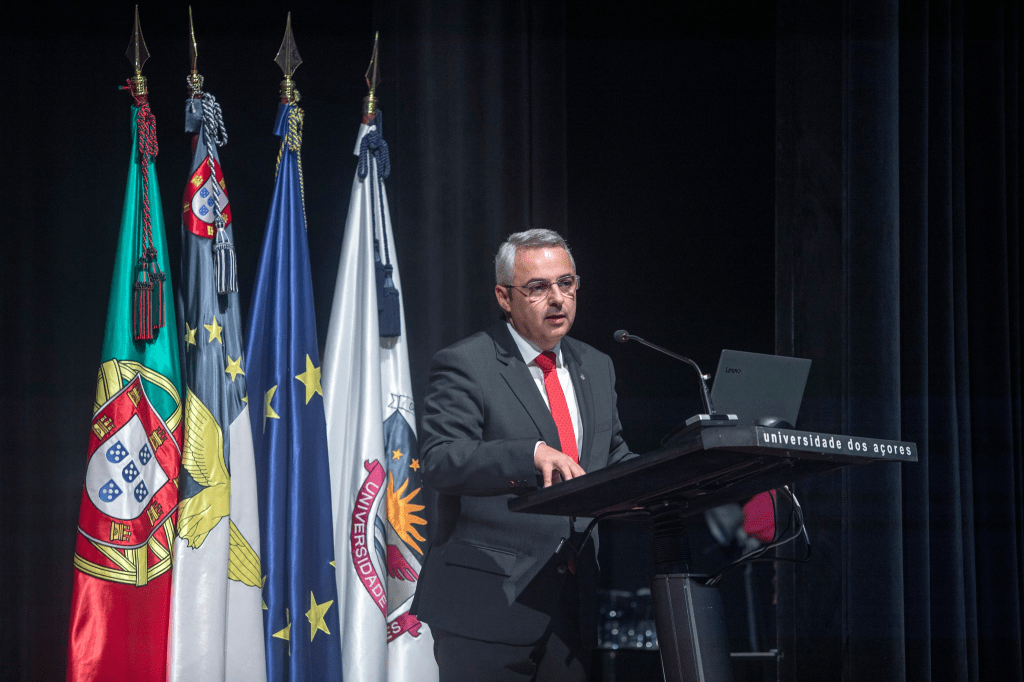
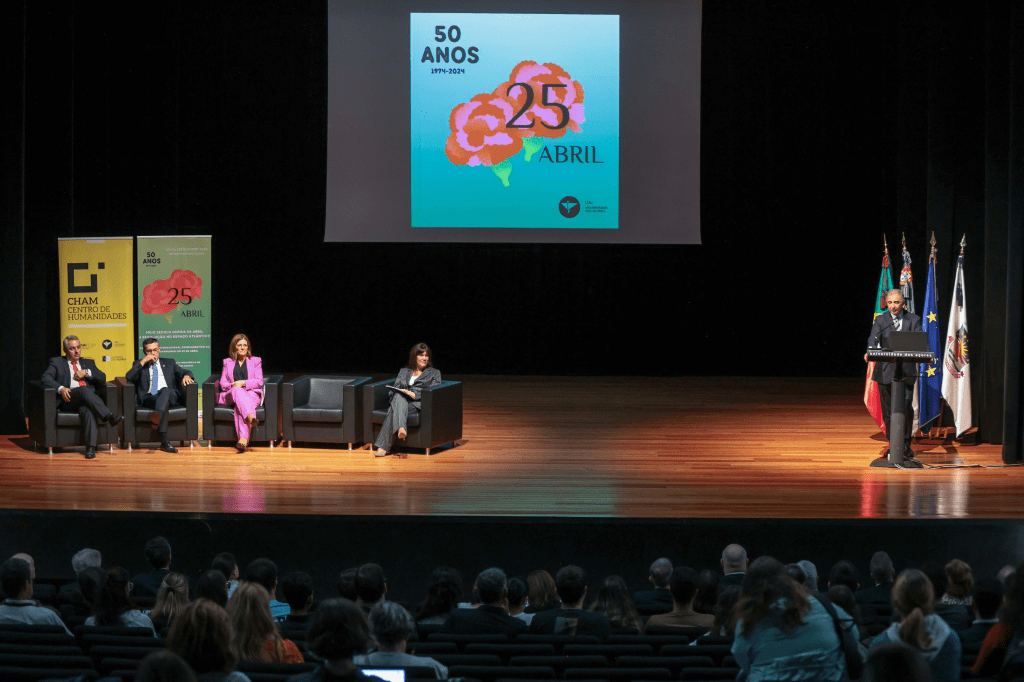
The President of the Government of the Azores, José Manuel Bolieiro, today chaired the opening session of the International Congress Commemorating the 50th anniversary of April 25, which took place in the Aula Magna of the University of the Azores in Ponta Delgada.
The event was part of the national commemorations of the Carnation Revolution. It was attended by the Executive Commissioner of the Mission Structure for the Commemorations of the 50th anniversary, Dr. Maria Inácia Rezola, an associate researcher at the New University of Lisbon.
The three-day congress brings together academics, researchers, and political figures to debate the legacy and impact of the 1974 Revolution.
The event’s highlight will be the Round Table entitled “Democratization, Autonomy and Decentralization,” which will be held tomorrow. At this table, crucial issues for the contemporary history of Portugal, and the Azores in particular, will be discussed.
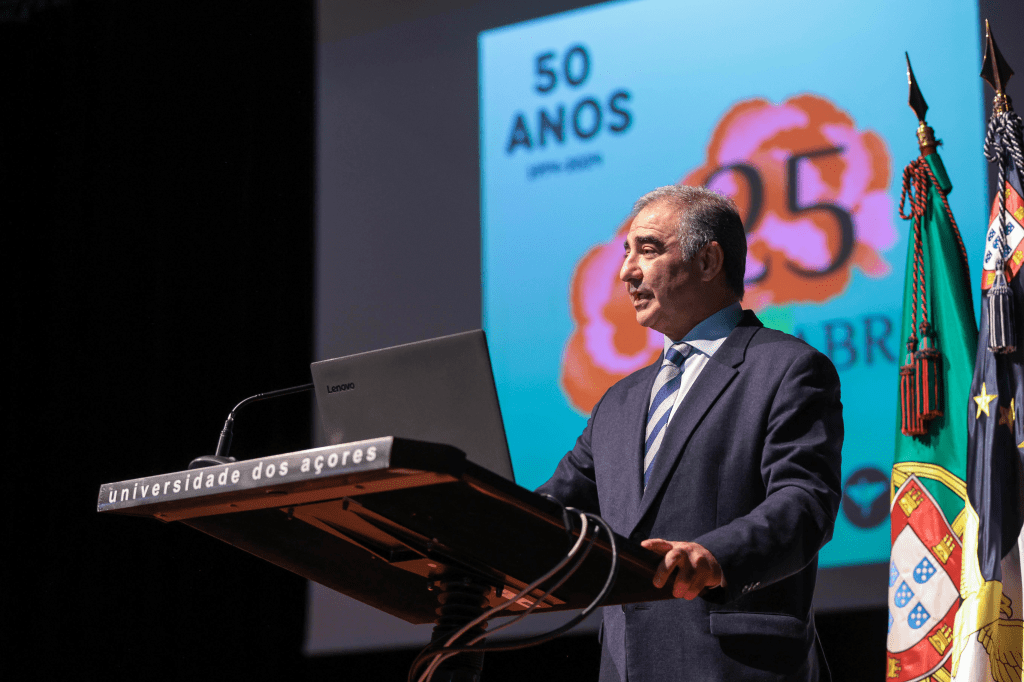
He stressed the fundamental role of democracy and education in the progress of the Azores and the country, mentioning the University of the Azores as an example of what democratization has achieved.
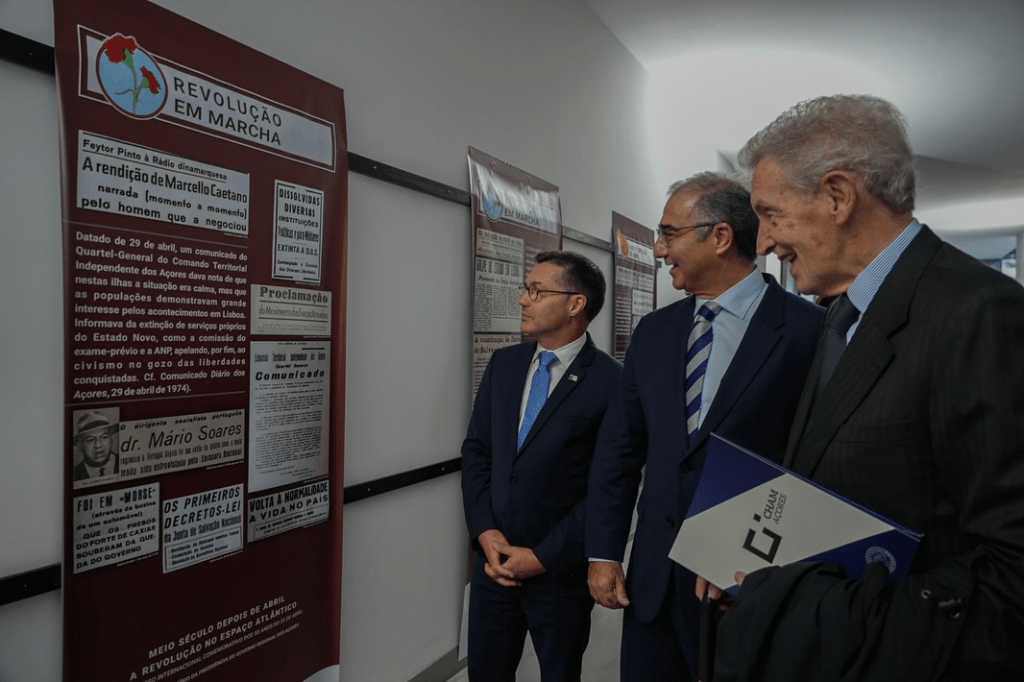
“The University of the Azores is the daughter of Portuguese democracy and democratization, reinforcing the political autonomy of the Azores and Madeira,” said José Manuel Bolieiro.
“Democracy has a realization that matters in our daily lives. It has had an influence on who we are and it will have an influence on who we plan to be,” he added.
The leader of the Azorean executive stressed that the institution, through scientific knowledge, “has promoted a critical, creative and constructive capacity in the region.”
According to José Manuel Bolieiro, education plays “a central role in shaping democratic culture and strengthening autonomy.”
“It is through education that we gain a culture of democratic participation, knowledge in favor of our autonomy and our own freedom, and critical capacity. This is a decisive element of democracy,” he said.
José Manuel Bolieiro also stressed the value of civic participation, saying that “the main value of democracy is not in saying things, but in sharing, in getting involved, in calling everyone to the common cause.”
The President of the Government also defended democratic governance, which promotes the enlightened and active participation of all “so that everyone can do their best for the common good.”
He took the opportunity to praise the Congress’s organization and highlight its educational value, especially for the younger generations. He said that events like this are fundamental for debating what has already been done regarding democracy and autonomy and for inspiring new achievements.
“There is so much done, but also so much to be done in democracy in Portugal,” he said, stressing the importance of educating and informing young people about the workings of democratic institutions and the importance of active citizenship in building a collective future.
José Manuel Bolieiro took the opportunity to talk about the importance of peace and respect for the sovereignty of peoples, associating the absence of war with a democratic culture.
“War exists because of a lack of democratic culture and respect for each other’s culture and sovereignty,” he said, stressing that April 25 was a peaceful revolution and should be remembered as an example of how peace can be achieved through democracy.
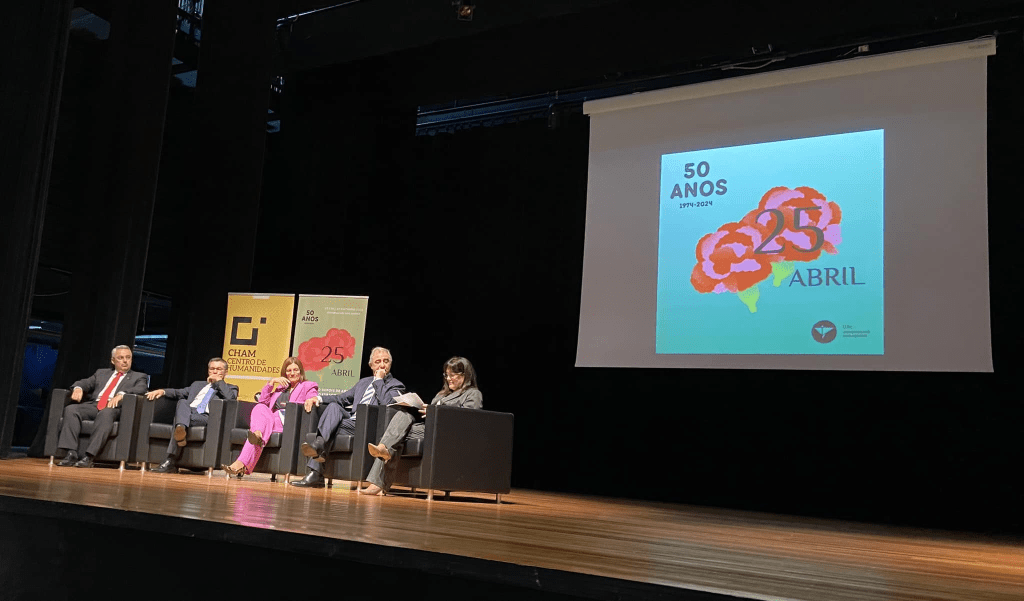
The opening session was also attended by the first President of the Government of the Azores, Mota Amaral; the President of the Regional Legislative Assembly, Luís Garcia; the Mayor of Ponta Delgada, Pedro do Nascimento Cabral; the Rector of the University of the Azores, Susana Mira Leal, and the Director of CHAM – Centro de Humanidades dos Açores, Susana Serpa Silva, who is also organizing the event.
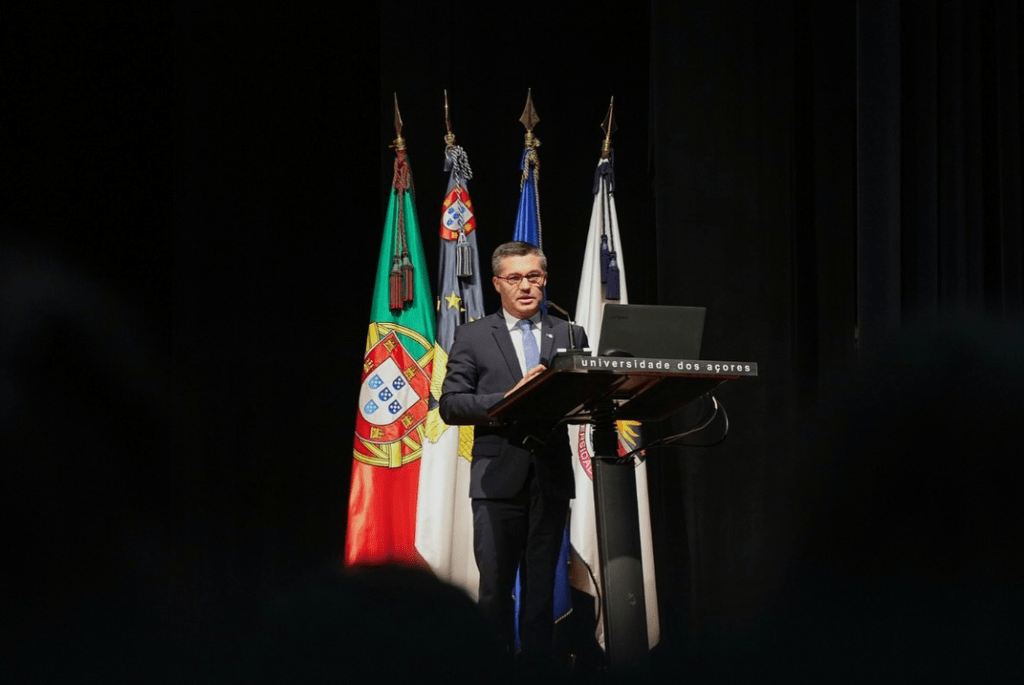
Luís Garcia: “Converge to find the best solutions.”
The President of the Legislative Assembly of the Autonomous Region of the Azores (ALRAA), Luís Garcia, called for a “culture of dialogue, responsibility and commitment” between all political decision-makers and development agents, ensuring that “our Autonomy is a true instrument for defending the interests of the Azoreans.”
“In a democracy, having room for difference and diversity is natural and healthy. However, it is also essential that we know how to converge to find the best solutions to the problems we face”, defended the President of the Assembly at the opening of the international congress.” Half a century after April. The Revolution in the Atlantic Area”, which took place this morning at the University of the Azores in Ponta Delgada.
The Speaker of the Azorean Parliament also praised the ongoing effort to build a solid democratic system in the Azores, stressing that “the regional institutions, despite the challenges, are working in the interests of the Azoreans,” pointing out that “this path cannot be achieved without maturity and responsibility” and, above all, without “a culture of dialogue and compromise,” elements that he considers “fundamental to facing the challenges that our region has on the horizon.”
Pedro Cabral: Deepening Autonomy to boost cohesion
The Mayor of Ponta Delgada, Pedro Nascimento Cabral, argued today that to fulfill the greatest values of the Revolution of April 25, 1974, the purposes of constitutional autonomy must be upheld and used to the benefit of national cohesion.
“In 50 years of democracy, in 48 years of Constitutional Autonomy, we have come to the conclusion that fulfilling April is very much about consolidating our Constitutional Autonomy, the deepening of which can be a driving factor behind the cohesion of the country as a whole,” the mayor stressed.
Taking advantage of the Congress’s theme, “Half a Century after April: The Revolution in the Atlantic Area,” the Mayor also shared his conviction that the necessary deepening of regional autonomies would contribute to the affirmation and resizing of an Atlantic Portugal.
“Autonomy expands the Atlantic dimension of Portugal, which, in addition to its geography, has the strategic position of the Azores as a pole of development in all areas – of the country, autonomous regions and local authorities,” he said.
Pedro Nascimento Cabral said that improving the autonomy of the Azores is seen as the way forward to, among other objectives, provide “greater capacity for action for the municipalities,” something which, as he also said, could be enhanced by the “necessary revision of the Regional Finance Law and its impact on the revision of the Local Finance Law itself.”
“All of us, as a nation, have specificities. That’s why this congress should be a stage for the Azores and the Autonomous Regions to highlight the issues that most concern us, in the sense that we should be considered and also recognized as true agents of change and democratic revolution in Portugal’s Atlantic area,” he added.
In Correio dos Açores-Natalino Viveiros, director
Translated to English as a community outreach program from the Portuguese Beyond Borders Institute (PBBI) and the Modern and Classical Languages and Literatures Department (MCLL) as part of Bruma Publication and ADMA (Azores-Diaspora Media Alliance) at California State University, Fresno, PBBI thanks Luso Financial for sponsoring NOVIDADES.

 Novidades - The Islands and the Diaspora