

MEN WHO HATE THE PUBLIC (II): LUÍS MONTENEGRO BY ALEXANDRA MANES
In April this year, Luís Montenegro spoke at his inauguration as Prime Minister of Portugal. Visibly nervous, as is natural, the orange politician talked to the country about the need for reform, growth, and alternation without the need to persecute, oppress, or alienate anyone. He spoke of the importance of education, the need for meritocracies, and the re-evaluation of investments to go beyond simply benefiting party friendships. About a month later, the new executive was immersed in a litany of controversies
worthy of the blush of the most shameless politician in our square, even though Miguel Relvas maintained his posture in his new role as a television commentator. The newspapers and the news broadcasts proclaimed the message of fear that was most heard behind the scenes. Montenegro had let go of the leash and given carte blanche for an internal purge capable of transforming Portuguese politics as we know it.
It wasn’t very different from the stories I’ve already covered about Miguel Albuquerque and Madeira, with the addition that the purpose was ideological cleansing in the face of direct opposition. People linked to the PS were allegedly and systematically removed from coordination and management positions. I’ll leave the reasons to the lawyers and the lawsuits that have been filed. But we know that, at this very moment, cases of abuse and cheap revenge are being discussed that should make anyone with a shred of morality shudder.
Thus began a revolution in cultural thinking, tinged with orange and light blue, with Montenegro in the lead, Paulo Rangel, Nuno Melo, and Paulo Núncio at the tip of the spearhead, and André Ventura and his friends in the shadows, sending messages that were less and less subtle and poorly with one purpose: the civil service is to be abolished.
In October of this year, when we learn of yet another set of disastrous proposals for the country’s future, it is impossible not to reflect on Montenegro’s destructive path of Montenegro, the new neoliberal champion, who has been mandated to destroy the public administration as we know it, in the footsteps of his mentor, Pedro Passos Coelho.
That same month, the media announced that Montenegro’s government was preparing a new reform package in line with its already proposed demolition strategy, which reflects his lack of vision for the public sector. As a good neoliberal, Luís Montenegro advocates strangling everything that is part of the state and does not involve the private sector to allow privatization, end fair access to essential services, stratify access to basic services, and further stratify civil society.
That day, the news informed us of the intention to reform the sickness scheme applied to the public sector, the vacation scheme, and, even more seriously, the strike system. What does Montenegro want to achieve with these changes in mind? We remember the time of his friend Passos Coelho, when well-deserved Christmas bonuses disappeared or when work began to cost an additional hour without civil servants receiving more for it. They actually received less.
The times of the man who was more Troikist than the Troika now seem like days of nostalgia because we still remember the price of olive oil with some poetic nostalgia.
Luís hasn’t started working in Pedro’s style yet because he’s still stuck in André’s populism. Still, in the meantime, he has already taken advantage of his absolute minority to the fatal collapse of one of the main pillars of our society. Without the sector, Portugal will plunge headlong into a sea of unregulated private enterprise, where the invisible hand of the market the invisible hand of the market will only serve to wrap itself around our necks mercilessly.
As I have already said, a clear example of this complacency is how RTP has been treated. However, there is talk of changing the citizenship syllabus without explaining the reasons other than quoting publications that the minister has seen on social media.
What does the opinion of education professionals, who are desperately trying to ensure that the ministry will continue to function minimally, matter? Well? You, Minister, have a doctorate in economics and are, therefore, perfectly able to apply the doctrines of Adam Smith to the destruction of public education.
So, too, is the work of the health minister, who advocates structural change in the public service, which is a cute way of supporting its privatization.
In culture, João Soalheiro, who has a degree in theology, advocates the creation of new tools for privatizing cultural heritage in parallel with the collective dismissal of practically all technical management positions for reasons that have yet to be explained publicly.
A tour of Montenegro’s and his government’s offices would reveal many more cases like this. Luís is from the Madeiran Albuquerque school, and if he’s allowed to, he seems prepared to do what his colleagues are doing in Madeira.
Madeira, which is to say, is ready to weaken the public, make friends with the private, and build a new country of castes, purges, and paranoid citizens. The only people who can stop it are us.
On a final note, Luís Montenegro’s speech at the Orange Congress made it clear how irrelevant the Azorean coalition is. Contrary to what was presented by his regional colors, he came forward with two hands full of nothing in an apparent attempt to deceive the population living on these islands. It announces a reduction in travel fares to national territory, leaving out the Autonomy’s demand: an end to the imposition of the maximum ceiling of 600 euros and the payment of the entire trip cost, only to be reimbursed later through the Social Mobility Allowance.
Those who claim to know every municipality in the country clearly haven’t understood the specificities of those who live on islands. We don’t have a railroad, and we’re a poor region!
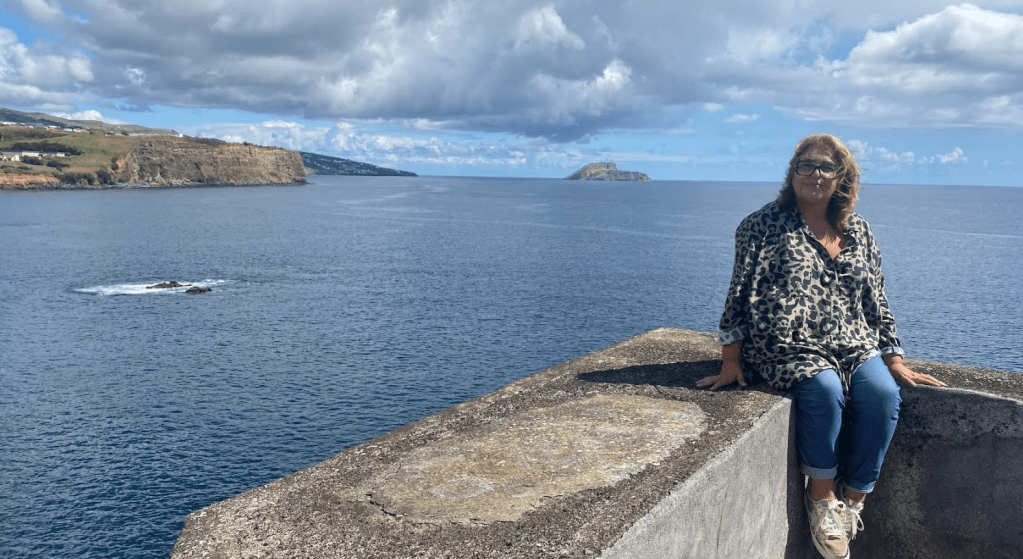
Alexandra Manes publishes regularly in Azorean newspapers. She is originally from the island of Flores and currently makes her home in Angra do Heroísmo, Terceira, Azores.
NOVIDADES will feature occasional opinion pieces from various leading thinkers and writers from the Azores to give the diaspora and those interested in the current Azores a sense of the significant opinions on some of the archipelago’s issues.
Translated to English as a community outreach program from the Portuguese Beyond Borders Institute (PBBI) and the Modern and Classical Languages and Literatures Department (MCLL)
 Novidades - The Islands and the Diaspora