

“We can also innovate through dermo-cosmetics,” emphasizes INOVA’s Scientific Director
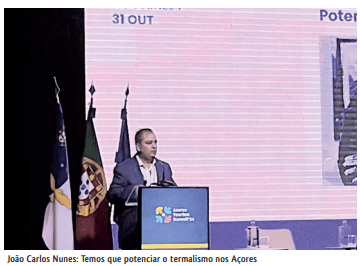
The Scientific Director of INOVA, João Carlos Nunes, said at the Azores Tourism Summit in Ponta Delgada that, in the region, “We need to move from words to deeds and make thermalism a key tourism product in the Azores.”
João Carlos Nunes spoke about the hydrothermal potential and thermalism in the Azores and pointed out some clues for its valorization and full use.
INOVA’s scientific director is convinced that the region “must take advantage of thermalism” and “give it another use and another projection.”
“We need to move on from words to deeds and make thermalism a key tourism product in the Azores. Because it contributes to the four premises: diversifying the tourist offer, reducing seasonality, taking advantage of endogenous resources and promoting the efficient use of our resources, contributing to the environmental and socio-economic sustainability of our Region,” said João Carlos Nunes.
He explained that “there are many uses, and we can be aware that we can innovate using thermalism. We can use the hot water as an environmental heating system, and there have been several projects on the table for some years, such as one for Ribeira Grande, which is 20 years old. “We can also innovate through dermo-cosmetics. We’ve been trying to do our bit at INOVA, and we’ve done a pilot production of dermo-cosmetic products. The potential is there; we just have to work on it. And the future of thermalism in the Azores is endless,” he stressed.
Thermalism on five islands
João Carlos Nunes believes that “all types of mineral water, particularly thermal water, can, should and must be used to build thermal infrastructures in the Azores.”
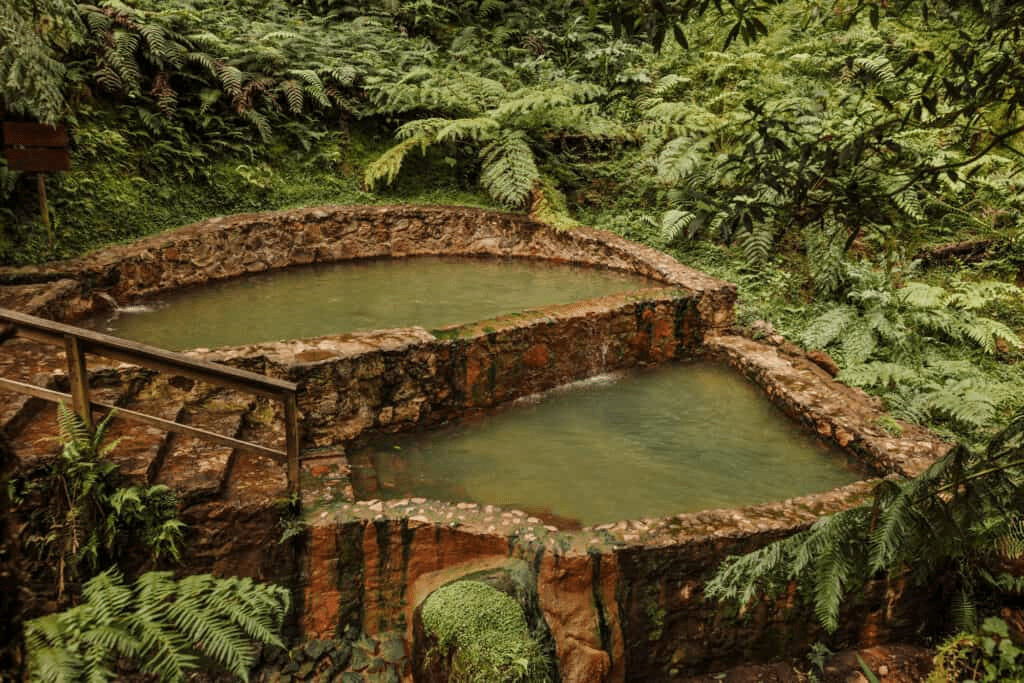
We are a volcanic region, and due to our geological contingency, we have a great diversity of thermal resources in the broadest sense. These thermal resources exist on five islands of the Azores: São Miguel, Terceira, Graciosa, Faial, and Flores, he specified.
According to João Carlos Nunes, this resource “has been used for centuries and there are countless references, practically since settlement, that these waters were used first in the context of balneology, or bathing, but also in the context of bath therapy, in other words, healing or improving people’s state of health. At least since the 18th century, we’ve had infrastructures such as the Carapacho thermal spa, which had this objective: the treatment of illness.”
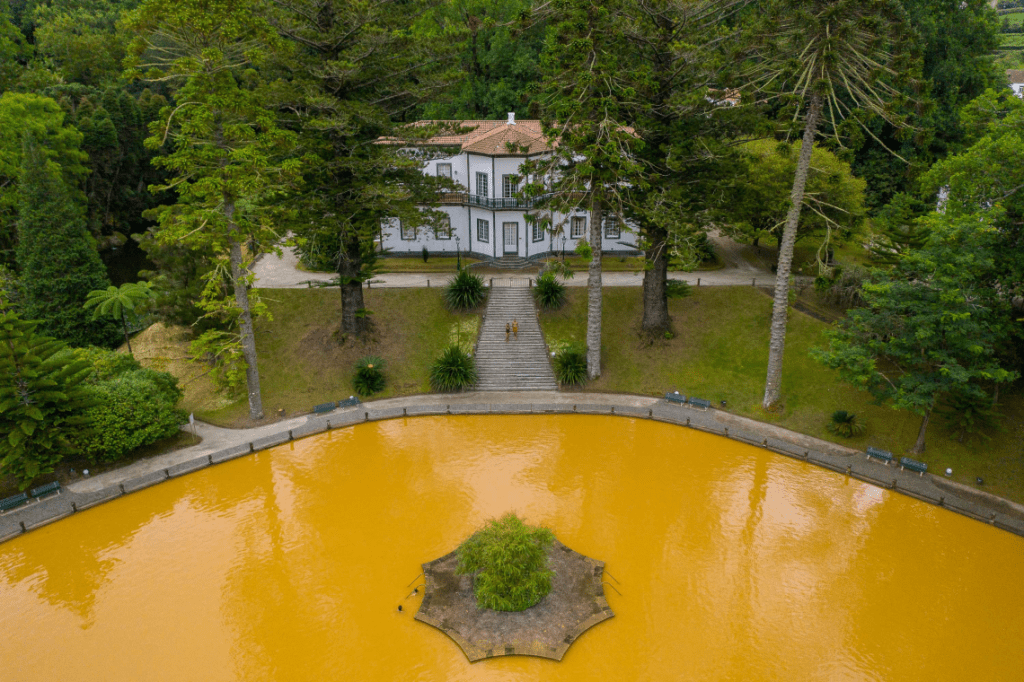
According to INOVA’s Scientific Director, thermal waters are concentrated in quantity and diversity on the island of São Miguel, particularly in Furnas. That’s why, he said, “we use the term Furnas hydropolis. In a very small area we have several divergences with very different characteristics, sometimes within 10 meters. The diversity is what makes Furnas unique in the Azores, but it’s good to remember that in addition to Furnas we have other areas on the island of São Miguel and other islands that have a recognized potential for use that has not yet been properly regularized.”
According to João Carlos Nunes, thermalism “fits like a glove with the reduction in seasonality and the diversity of tourism on offer” in the Azores. “It remains to be seen why this glove hasn’t been used more often and for longer,” he stressed.
In his opinion, “spa tourism is more attractive outside of the high season and although it is limited to five of the nine islands, it has great potential on those five, especially where there is no offer. We could improve our tourist offer by using this resource.”
Hot waters in Flores
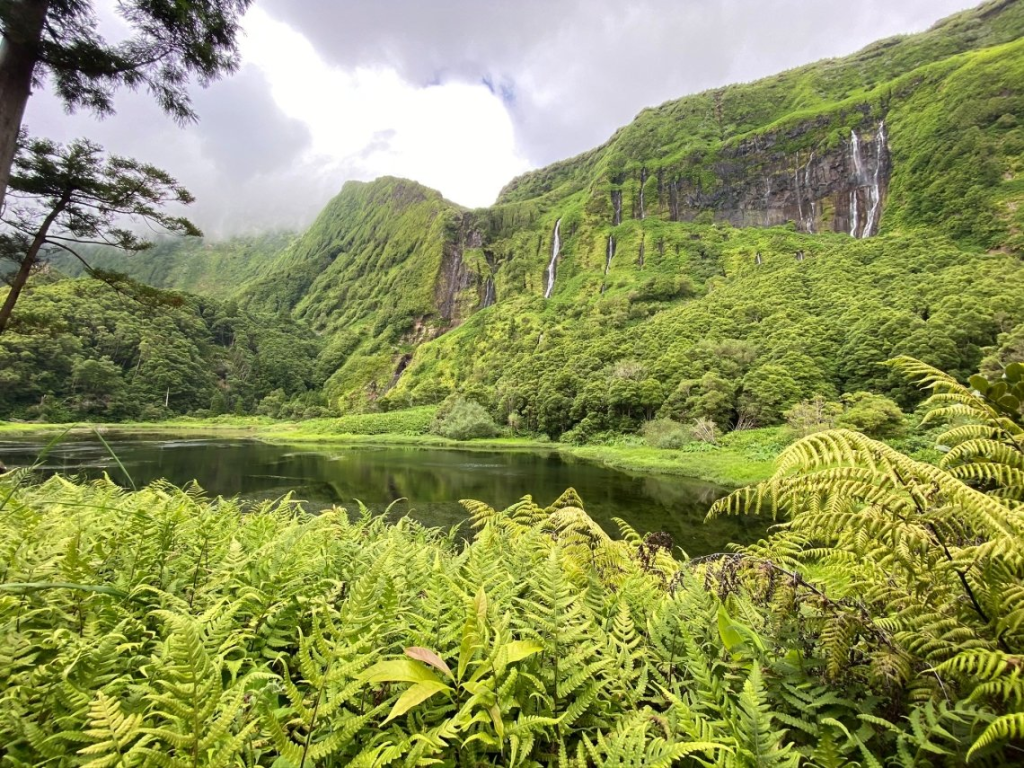
João Carlos Nunes unraveled the mystery, for many, of the existence of hot springs on the island of Flores. In particular” the Lagedo spring, which has a temperature of around 45 degrees and is currently ‘flowing into the stream’. According to the researcher, this “is a potential that exists and could possibly be used, because everything needs to be done. We don’t know what the flow is and need to set up a framework for site safety and then use and place the resource where it can be used by the population and our visitors.”
According to João Carlos Nunes, the problem lies in the size of the island, the tourist market, and investment costs. Often, there’s the will, but there’s no return in the desirable period, and then the government has to step up to the plate.”
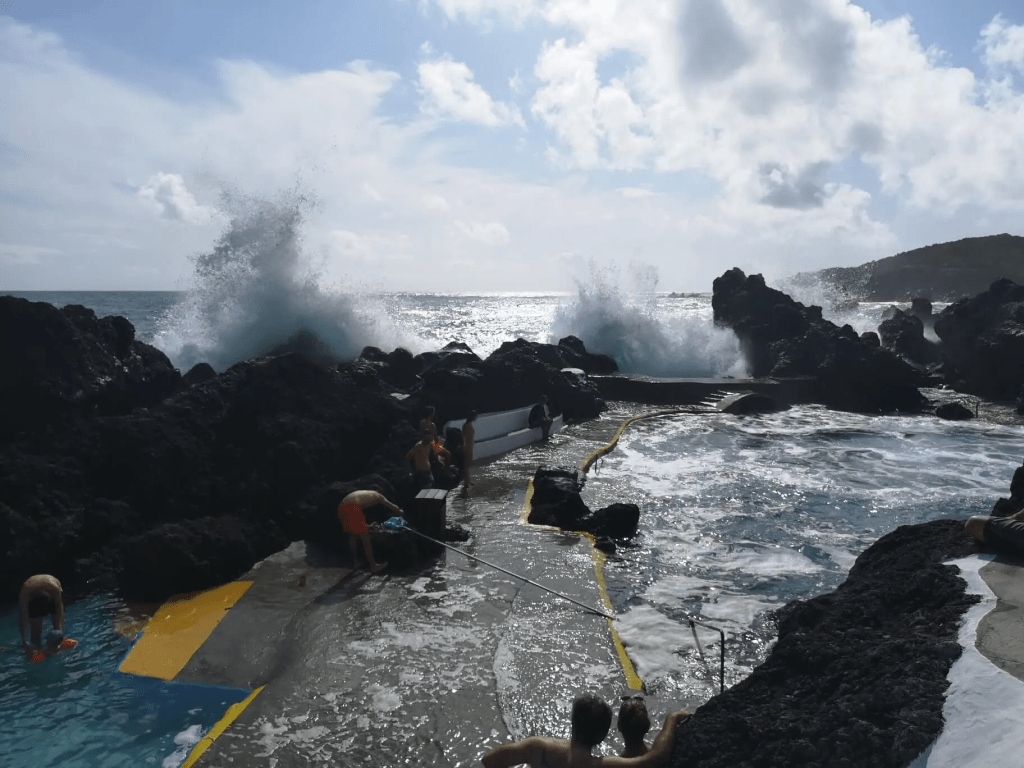
Faial: Varadouro thermal baths
The Varadouro thermal baths are well known, and I like to call them Varadouro-Capelo because, near the Varadouro baths, which have been closed for several years with no recovery in sight, there is a borehole about 2.5 kilometers away that has a temperature of 43 degrees Celsius. It has excellent water and was initially drilled to collect water for the town hall. Will we be able to use this water in 2025?”
“In the rehabilitation of thermalism in Faial,” says João Carlos Nunes, ”it’s essential that this joint approach, both to the infrastructures that exist next to the Varadouro spa and to this borehole, is taken together. This will add value to the approach that is going to be taken and boost other businesses that can be envisaged around this area, which is known for its scenic beauty,” he said.
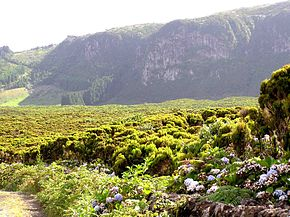
Terceira: The Posto Santo borehole
In Terceira, “there is a 39-degree borehole, similar to Dona Beija or Terra Nostra. The Posto Santo borehole is about three kilometers from the city of Angra do Heroísmo. INOVA has made a great effort to enhance and boost the use of this borehole. At the moment it is owned by the Angra City Council and we intend to continue with this study and detail the aquifer. We have to see where we can drill a borehole so as not to waste money. This work has been going on for around 9 years and we want to intensify it in order to offer a new tourist offer for Terceira island,” said João Carlos Nunes.
He stressed that Terceira “doesn’t have thermal springs and could have with the Posto Santo borehole, which is a potential area for using this resource.”
In addition, there have been recurrent requests to evaluate the use of the tributaries from the Pico Alto Power Station, which came into operation recently. Using tributaries from power stations has a problem in its direct use. Having a Blue Lagoon in the Azores will be challenging: taking the water from the power station and putting it in a reservoir for bathing. This is because our waters contain an excess of arsenic, and removing it, although not impossible, is very difficult. However, we can use the heat from the tributaries to generate a series of tourist attractions near the geothermal power stations. In Terceira, it would be more problematic since it’s in the central part of the island, distances, and climate, but nothing that can’t be assessed,” he said.
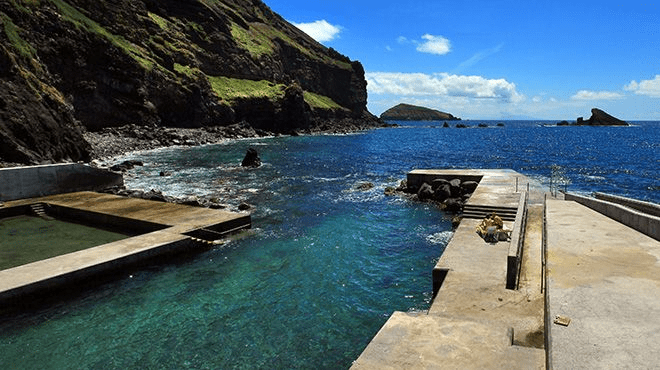
Graciosa and Carapacho
Graciosa, according to João Carlos Nunes, “is the second most important island in terms of thermal resources. As well as Carapacho, there is an area in Guadalupe where there is a hot spring. There are boreholes and the presence of thermal waters is recognized.”
As he explains, in Carapacho, “we have a major difficulty, similar to Flores: low population density and number of residents. It’s still a low tourism market.”
“In addition to all its traditional uses, Carapacho’s water is qualified and has a recognized cure for illnesses. Given this potential, we could implement the so-called Thalassotherapy, channeling a borehole that has water over 40 degrees to the nearby Carapacho bathing area and do something similar to Ferraria, a mixture of seawater and thermal water,” he explained.
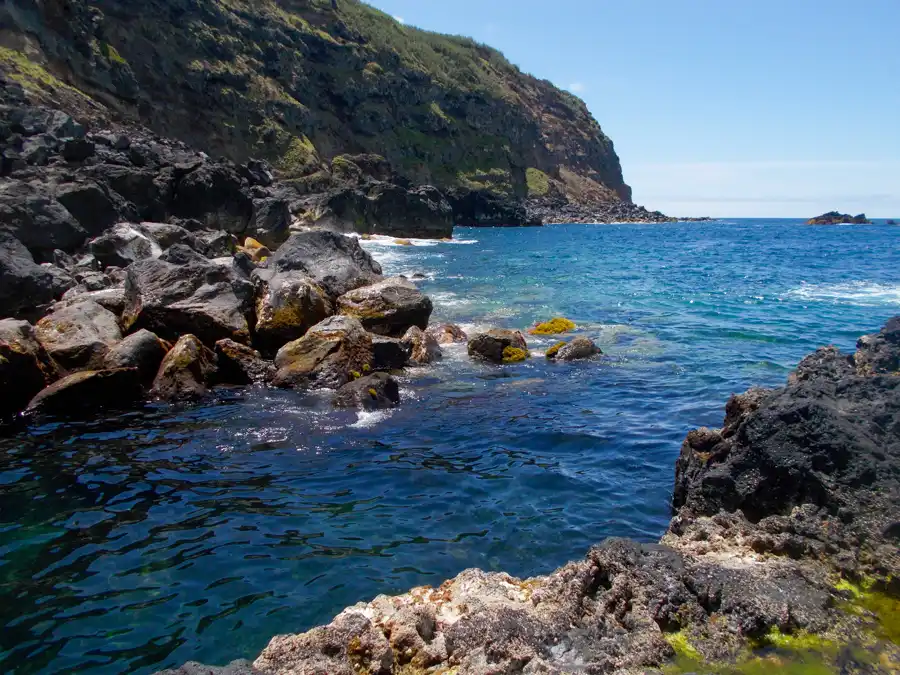
São Miguel is not just Furnas
Around half of the emergencies involving thermal waters on the island of São Miguel occur in the hydropole of Furnas, but thermalism on the island “is more than Furnas.” “There are also hot springs in Ribeira Grande and Sete Cidades. Many of these resources have been used for decades and centuries.”
In the Sete Cidades Volcano, there is a “very important” pole, the Ferraria.
Ferraria, in the opinion of INOVA’s Scientific Director, “has an incredible added value: it’s a thermal spa that has been the site of medical treatments. Unfortunately, that water is still not legally qualified, despite the attempts that have been made. It was very important because qualification as a legal mineral water, which heals, helps with illness, is an added value for these waters. It doesn’t exclude use in Well Being, but it adds value.”
“This will be one of the ways to add value to Ferraria’s water, as well as improving existing services. There is an excess of traffic and people in high season and there have already been various plans to resolve this: from conditioned access or a shuttle bus service in high season. As has been said, we don’t have too many visitors, we have too many visitors in some places and on some days of the year. This has to be made clear.”
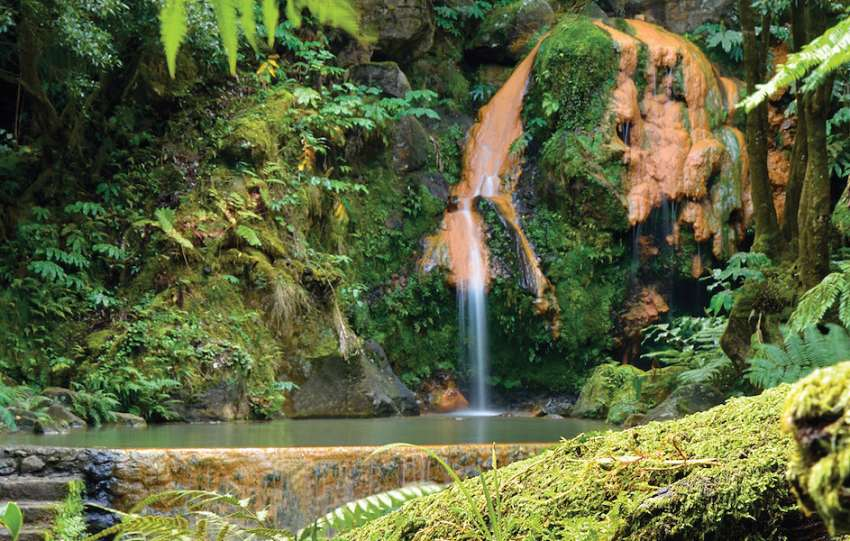
The Ribeira Grande spa
The potential at the Ribeira Grande spa is ” immense.” João Carlos Nunes gave four selected areas where the resource is already used or could be used. We have Caldeira Velha and Caldeiras da Ribeira Grande”.
João Carlos Nunes surprised many of those present when he said that in the area around the BEL factory, there is a borehole with a temperature of up to 50 degrees. If the legal requirements are met, this water could be used for bathing, or the heat from the water could be used for space heating and hot water. The resource is there; we just need to move forward,” he said.
In addition to this area, there is another where the Pico Vermelho Geothermal Power Plant is located. “In this area, there have been processes of exploitation, but the water has an excess of arsenic, making it more difficult to use directly. We can use it, as was done a few years ago, to reactivate the greenhouse complex owned by INOVA.”
There are two well-known areas in the Furnas area. In the Dona Beija area, said João Carlos Nunes, “there are other emergencies that could be used either in the context of balneology or in terms of bath therapy.”
In the Serra do Trigo area, “passers-by immediately see the existence of fumaroles, which proves that the resource is there. We need to work on that area to make the most of it. A lot of geological groundwork is lacking in that area.”
Furnas, he said, “is overloaded and needs to diversify its offer and not concentrate people in the thermal areas, of which there are few. The issue of traffic management also needs to be resolved. The issue can be solved by creating parking lots, since everything in Furnas is a relatively short walk away.”
Frederico Figueiredo is a journalist for Correio dos Açores-Natalino Viveiros, director
Translated to English as a community outreach program from the Portuguese Beyond Borders Institute (PBBI) and the Modern and Classical Languages and Literatures Department (MCLL) as part of Bruma Publication and ADMA (Azores-Diaspora Media Alliance) at California State University, Fresno, PBBI thanks Luso Financial for sponsoring NOVIDADES.

 Novidades - The Islands and the Diaspora