

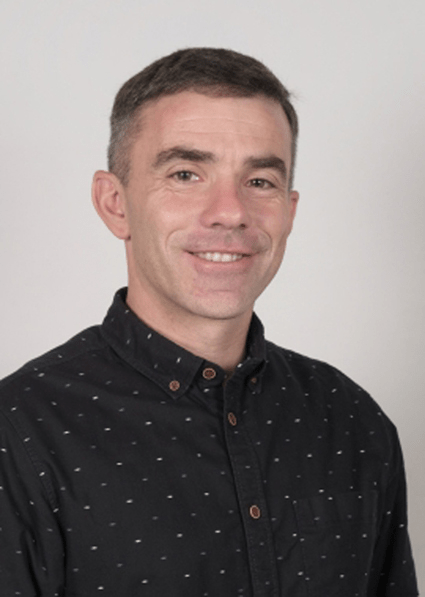
Marco Nuno Costa e Silva, President of the Guadalupe Parish Council since 2011, believes that the parish’s main challenge is combating desertification, especially when the disproportion between births and deaths is causing great concern on the island of Graciosa. The mayor identifies the tendency of young people to leave the island in search of better wages as one of the causes of this problem. He explains that the issue is not related to a lack of jobs but a significant manpower shortage, especially in the construction sector.
For the mayor, who is now finishing his last term in office, the solution lies in greater investment in encouraging and training young people to align their skills with the real needs of the island. In addition, he highlights the lack of regular maritime transport as one of the biggest obstacles to double insularity, which hinders the export of cattle, one of the parish’s main assets. The need to make the boat available weekly instead of the current fortnightly frequency is at stake.

Correio dos Açores – What do you think of the parish of Guadalupe?
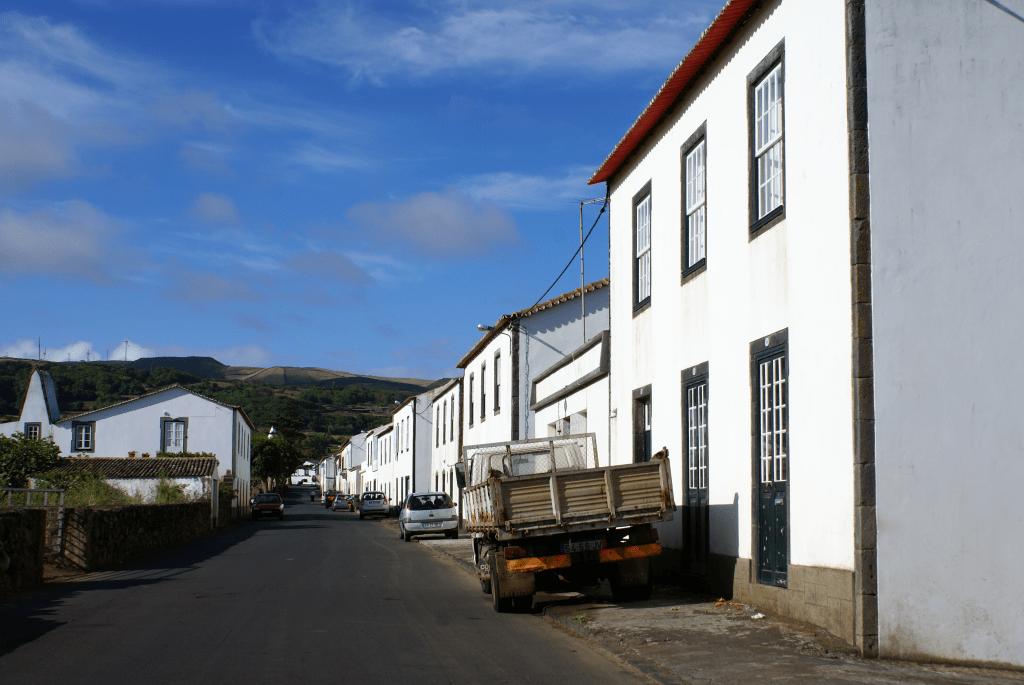
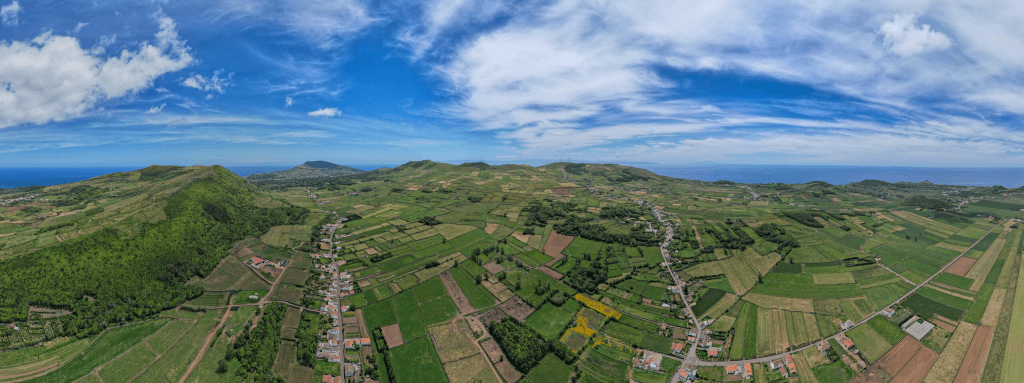
Marco Nuno Costa e Silva (President of Guadalupe Parish Council) – Guadalupe is the largest parish on the island in terms of area and the second largest in terms of population, with around 998 inhabitants, according to the latest censuses. It’s a parish that’s practically all geared towards agriculture and is considered the island’s granary; in the past, given the quality of the land, it was even known as the granary of the Azores.
Today, we have more cattle, with two of the largest dairies on the island. Many people are also dedicated to raising beef cows. In addition, we have the best garlic producers—our garlic is very famous in the region—and we are also known for our melon. Basically, we produce a bit of everything in terms of vegetables.
What are the main challenges, needs, and difficulties facing the parish?
The biggest challenge facing the parish, like the other three on the island – there are four of us in total – is combating desertification. Graciosa’s island has fewer inhabitants, and our parish is no exception. This is the first time the parish’s population has fallen below a thousand. This year alone, around 70 people have died on the island, while the number of births may not have even reached 10. The difference between births and deaths is enormous and has worsened, especially in the last two years. This problem is visible in the parish, especially because many houses are closed.
In your opinion, what are the reasons for the desertification of the parish?
One of the leading causes is the aging population. Many young people who leave to study don’t return because they find other opportunities outside the parish and the island—around 60% don’t return.
Fortunately, we have seen an increase in couples and families, both from the mainland and abroad, buying houses and trying to settle here. Many of these people come to enjoy nature or to retire. Another factor that has helped attract foreign residents is the quality of internet connection, which covers practically the entire island and allows many to work remotely.
What proportion of foreigners live in the parish?
Not many, around 5% of the population. That’s precisely the problem with the population; we have a lot of young people who have emigrated to America, a trend that used to be expected but is now coming back. Many foreigners have come here due to the creation of the surf club in São Mateus, also known as the parish of Praia. This led many people to see the island, like it, and, consequently, decide to stay there. It was an asset for the island and the parish of Guadalupe.
What needs to be done to keep young people in the parish?
A few years ago, and I’m also speaking from personal experience, there weren’t many jobs on offer. Nowadays, anyone who wants to work in carpentry, for example, has a job; anyone who wants to work as a bricklayer also has a job; anyone who wants to work in agriculture can find a job; anyone who wants to work in catering also has opportunities; and anyone who wants to work behind the counter in a bar can also find a job. However, people no longer want jobs with lower wages, and they often leave the island in search of higher wages.
But there is work both in the parish and on the island in general; what is lacking is labor, especially in construction, where it is increasingly difficult to find people to work.
I believe that in the context of the school, for example, it would be essential to create a team to study and explain the island’s needs. In other words, if young people go to school and train in these areas that are in short supply, they will be guaranteed a job. We had a big problem with mechanics, for example, but many young people went on to take this course, and today, most of the mechanics on the island are young. We’ve invested in this area, and the workshop owners themselves have tried to show the need to attract young people. Here, I can give another example: we had nine carpenters just over 10 years ago, and now there are three. In other words, some people emigrated, others retired, and others moved to the industrial area. Therefore, areas such as carpentry or plumbing are sectors that are significantly lacking on the island; what is needed is training and attracting young people to these professions.
Are the funds sufficient?
Fortunately, we’ve increased municipal support; all the councils receive 40,000 euros yearly, with 10,000 every three months. It was a significant increase and a great help to the parishes. It’s never enough, but at the moment, I can say that these increases have made it possible to run the parish. The Junta currently has seven employees, most of them in programs, and we’ve managed to keep the parish clean, both on the farm paths and in the towns, churches, and gardens. We’ve been able to do this thanks to our workforce, and without the funds we’ve been granted, all the investment we’ve made in the parish wouldn’t have been possible.
How big is tourism in the parish?
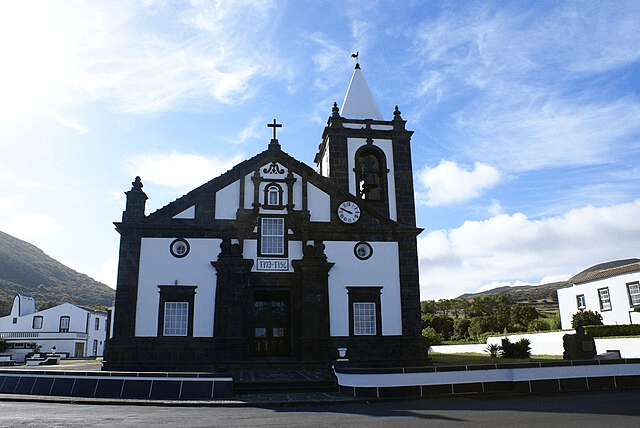
We have very little accommodation. Recently, a mill opened that has been completely adapted for local tourism and has been in great demand. We also have some older houses scattered around the parish that have been adapted for local tourism and are practically always full. In fact, we’re noticing an ever-increasing growth in tourism on the island in general and in our parish, especially in our more touristy areas.
Is the lack of housing one of the problems for young couples?
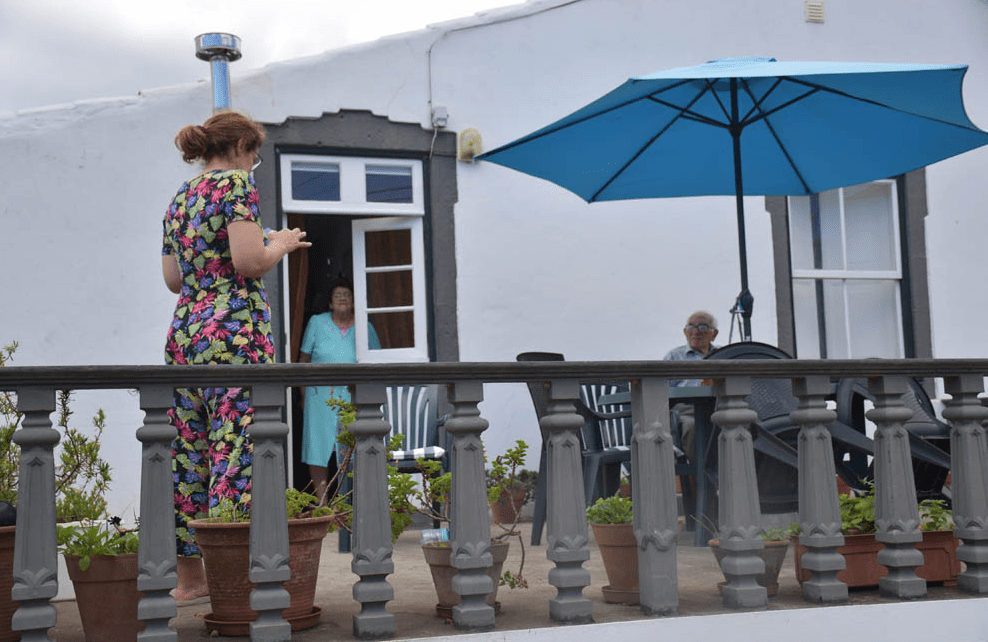
The parish has many houses, but they need to be restored. The Junta only has three houses, two of which are occupied and the other under construction, so it can also make them available to the population—usually couples or families in need.
We have also noticed some young couples buying houses and restoring old ones, sometimes inherited houses, which has made some young people stay on the island. In addition, our immigrants have also restored many houses. There was a time when the deterioration of housing was very serious, but at the moment, we are seeing a great recovery in this area.
Is there a lack of services or essential infrastructure?
At the moment, we don’t have a restaurant in the parish. We’ve already had three: Maiorca, for example, which has been closed for five years and is possibly going to open next summer; and, fortunately, we have Café Leão – Casa de Pasto, which will open now in November. We’ve been without any kind of restaurant or snack bar for a few months, which will help to fill this gap in the parish and on the island. For the rest, we have all the services; it’s just the catering that’s failing.
What are the most significant difficulties inherent in being a double island?
Maritime transportation is a problem. We have containerized cargo transport every 15 days, and it would be essential to be at least every 8. However, I have heard that they are studying this possibility. We are left with the Graciosense maritime transport, which comes to the island once a week, twice if it’s in summer. We also have the summer passenger boat line.
As far as air transport is concerned, we’ve seen a significant improvement. We have two direct flights a day in the winter and four in the summer, two to São Miguel and two to Terceira. In addition, we will have a direct flight to São Miguel in May, which is very good. We’ve noticed a monthly increase in the number of passengers, and this expansion of air connections benefits both the parish and the island, not just in transporting people but also in terms of the cargo they can bring.
On the other hand, I think that accessibility, especially maritime transport, has made it very difficult for the parish, especially when it comes to exporting livestock. We’re an island of 4,000 people, but we have almost twice as many cattle, and it’s been a problem with exports in this sector. The fact that the boat only comes every 15 days, and there can be delays, causes a lot of inconvenience in exporting cattle, one of the parish’s most significant assets. If there was a boat every 8 days, it would be gold on blue.
What actions have been taken to promote culture in the parish?
The parish has three towns that hold religious and secular festivals. It has a philharmonic band, a folklore group that has been around for over 40 years, a dance band, and our soccer club, Sporting Clube Guadalupe, in the Azores Series.
The Junta also sponsors summer concerts by the Philharmonic and the folklore group. It also supports our festivals in terms of resources and manpower. It organizes a Christmas and New Year’s concert at the beginning of January, where the Guadalupe choir, the folk group, the philharmonic, and the scouts represent the parish’s culture. Each group performs three or four songs in this concert dedicated to the people of the parish and the island, which has been a success, especially in a ‘dead’ period for cultural associations. This event also encourages those associations to work during those months so that they have something new to present when the time comes.
What is your assessment of what has been done, and what do you intend to see completed?
I’ve been President of the Junta since March 22, 2011, but unfortunately, I can no longer run for office. I’m in my 13th year as President because I took over as number two on the list for two years of my predecessor’s mandate, who passed away, and since then, I’ve run three more times.
The Junta’s objective has always been to do better than the previous year. Our work of choice was the Tomás Picanço Garden in the center of the parish. It consists of a garden, toilets, and a stage prepared not only for music bands but also for philharmonics. According to the conductors who come to play here, it’s the best stage on the island. It was a tribute to the late former President, who served the Junta for 29 years and did a lot for the parish.
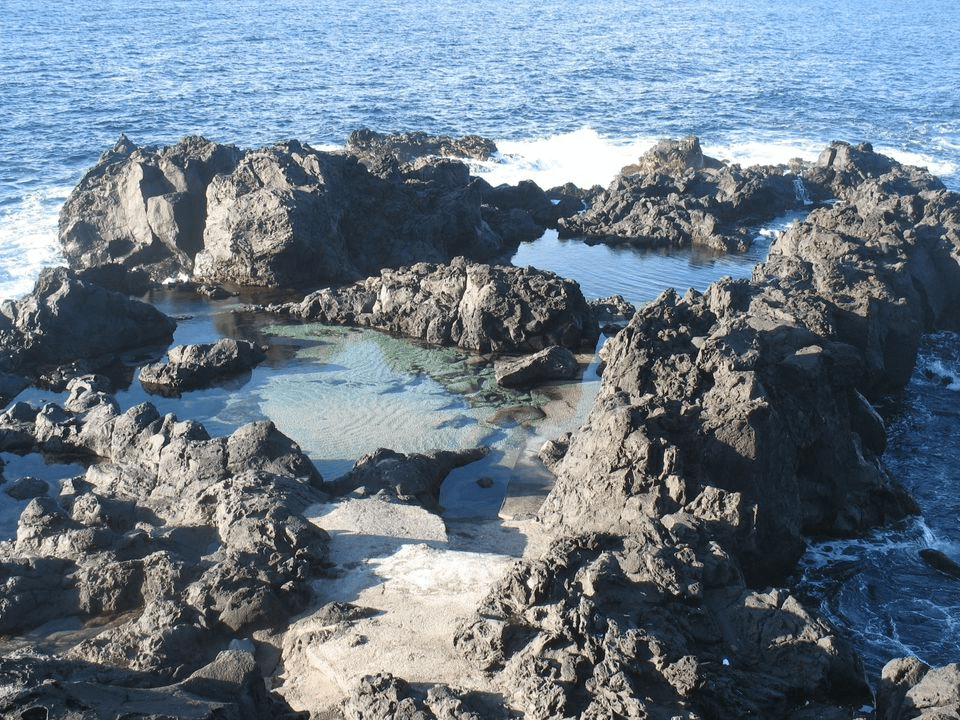
We’ve done work on the cemeteries and created some new cafés and restaurants. In addition, I intend to renovate the Poceirões area, which only two years ago was considered a bathing area. We’ve built a porch so that people can spend the day there, we’ve created a leisure area, and now we have a project where we’re going to apply for support from the Local Authority, the secretariat, and the councils to make toilets and other works so that, if you want to do something there, it will serve as a support.
We aim to complete these works before we leave, including creating an altar in honor of Our Lady in Carreira Aberta, where there is a procession on May 13, which leaves three churches and crosses there and then celebrates a mass. We also have some pending projects for maneuvering vans and transporting aggregates over 20 years old.
That’s a brief summary of what we’ve done in the last 13 years, but I consider the Tomás Picanço Garden to be the number one project. Apart from that, the Poceirões bathing area has yet to be completed.
Does the parish of Guadalupe have the potential to develop further?
Guadalupe has excellent potential for development and is possibly one of the greatest on the island. The parish has gone many years without any government investment, but more recently, it has been felt that, especially with the new government, there has been a lot of support for the parishes. For example, this government carried out the replacement of the roof of the Casa de Povo de Guadalupe, a project that had been awaited for more than 10 years.
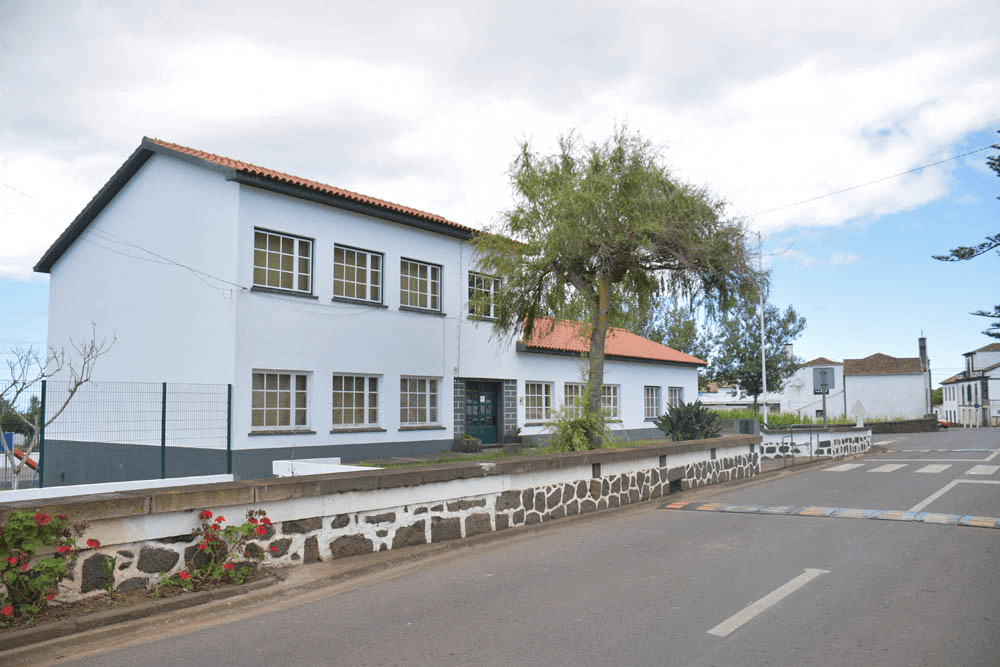
The Casa de Povo is the headquarters of the Guadalupe Parish Council, the Philharmonic, and the Folklore Group, and we have a bar and the RIAC store. It’s the lung of the parish, and the roof is already decaying. It was only recently replaced, as was the ceiling of the Church of Our Lady of Guadalupe. In addition, the redevelopment of Porto Afonso, which had been awaited for many years, is now ready, and Poceirões is now going into its second phase. The synthetic turf for the Guadalupe team has also been changed, which has been needed for some time. We’re in the process of replacing the water mains, and we hope they’ll replace the tarmac on the main road between Guadalupe and Santa Cruz. This is essential work in the parish.
Guadalupe is a lovely parish that has developed a lot but can still create more. Investment, not just from the local council but also from the government, is needed to do so.
Daniela Canha is a journalist for the newspaper Correio dos Açores-Natalino Viveiros, director.
Translated to English as a community outreach program from the Portuguese Beyond Borders Institute (PBBI) and the Modern and Classical Languages and Literatures Department (MCLL) as part of Bruma Publication and ADMA (Azores-Diaspora Media Alliance) at California State University, Fresno, PBBI thanks Luso Financial for sponsoring NOVIDADES.

 Novidades - The Islands and the Diaspora