

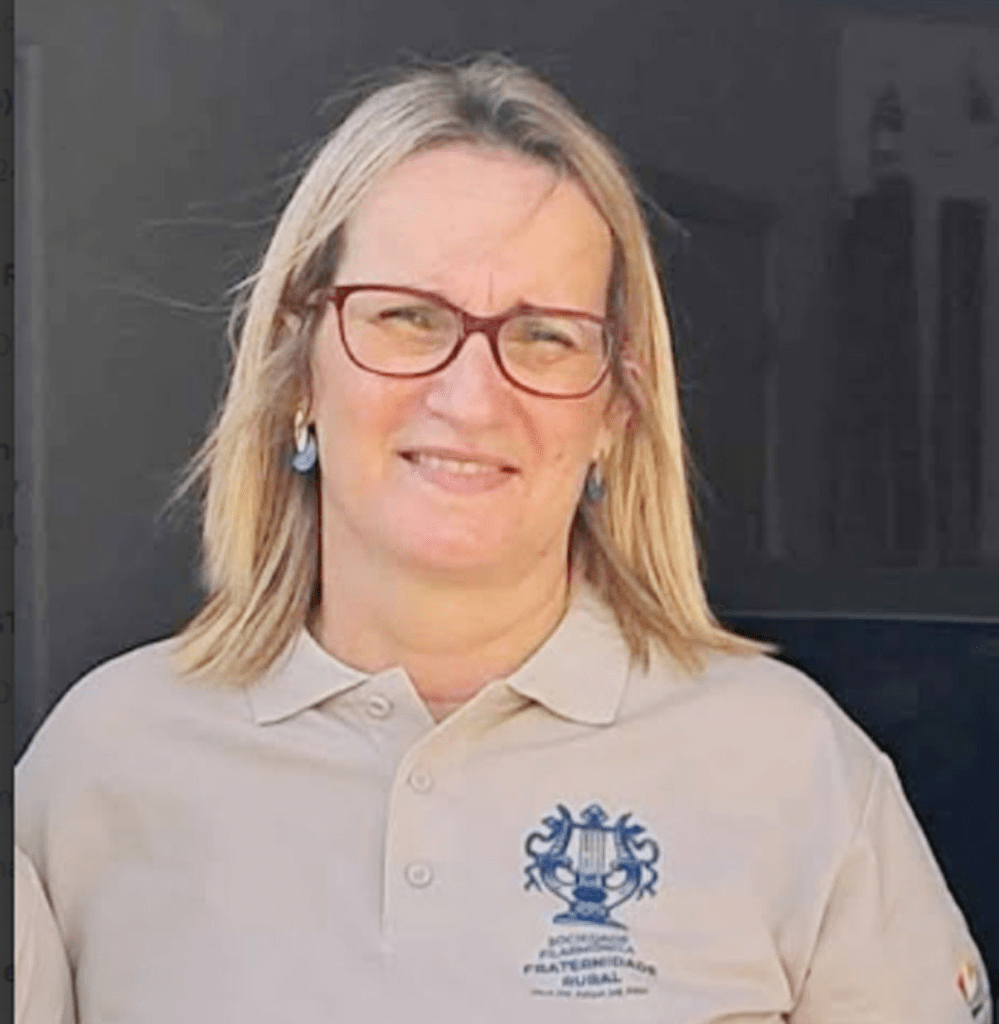
Correio dos Açores – The Rural Fraternal Philharmonic Society was founded in 1863. Tell us about the origins and history of this cultural association.
Graça Medeiros – (President) – The first music band in Água de Pau was inaugurated in January 1859 under the name “União” and comprised the most influential people in the town. The second, “Estímulo Artístico,” was founded on November 12, 1863, and was mostly made up of artists. It was later called the “Rural Fraternity” and has kept this name to this day. The third, the “Aliança”, founded by Luís Francisco do Couto, lasted from 1870 until 1876. Finally, the fourth band, “Amor da Pátria”, was created in 1883 by Father Inácio Vieira and is known to have been active for only a few years.
Here are some events linked to the history of the Fraternidade Rural:
In 1935, it was in great difficulty, on the verge of closing down, when Francisco Ferreira da Silva, a merchant and industrialist from the parish, by his own means, had the instruments repaired, sending them to Lisbon. Its banner until 1933 was white; from 1933 until 1964, it was red and embroidered by D. Rosalina Borges; from 1964 until 1983, it was green and embroidered by the Bom Pastor sisters; from 1983 until 2006, it was red and embroidered by the Maria Imaculada sisters from Vila Franca do Campo. On January 1, 2007, a new banner was inaugurated, embroidered by Maria Graça Ferraz Botelho Domingos. Since 1983, the band has carried the Flag of Autonomy in its performances and played the respective autonomous anthem for the first time in 1981.
In terms of festivals, this philharmonic participates in processions and coronations of the Divine Holy Spirit, both inside and outside the parish; in the grand festivities of Senhor Santo Cristo dos Milagres, in the Marches of São João da Vila Franca; of Santo António, in Santa Cruz; in festivals; in inaugurations of the parish council, the town hall and the regional government.
In 1990, it made its first trip to Santa Maria, with an average of 35 musicians; in May 2001, with a great effort from the Board, it was possible to take it on tour to Canada and America, which was an excellent event for Água de Pau; in 2005 it went to Lisbon to take part in the “maniFesta” in Trancoso, and in May 2009, it went to Santa Maria to play at the festivities in honor of the Lord Santo Cristo dos Milagres; and in 2007 it released its first CD of songs. On July 29, 2007, the day Água de Pau was elevated to town status, he carried the Água de Pau town coat of arms for the first time. On August 19, 2007, the philharmonic’s headquarters were inaugurated, with a new main entrance with access from the square and a new boardroom. Also in 2017, it went to America to take part in the festivities of Our Lady of Mount Carmel (in New Bedford), and to New York.
It should be noted that this band is the oldest institution in the municipality of Lagoa and one of the oldest philharmonic bands in the Azores, which is an excellent source of pride for the people of Água de Pau. It is also worth noting that it is currently made up of 55 members, aged between 9 and 75, and has been directed by Maestro Aquiles Preto.
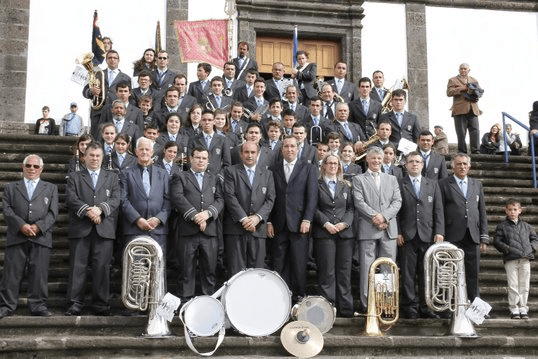
Is youth participation significant? What motivates them to join the philharmonic?
Yes, because there has been a lot of interest in our music school. Their curiosity to learn music motivates them to attend, meet new people and people from other philharmonics, and occupy their free time.
What does it mean to you to be the first female president of this band’s board?
Being the first woman to take over the presidency of this institution represents a significant achievement for me, not just on a personal level, but a breaking down of historical and cultural barriers. This reflects the ability to overcome challenges and prejudices associated with the role of women in leadership positions. It also symbolizes an opportunity to inspire others to follow similar paths, showing that leadership is genderless and that diversity, especially in positions of power, is fundamental to the advancement of every organization.
How important is it to preserve philharmonics?
Philharmonics are crucial in preserving a community’s cultural identity and traditions. At a time when many traditions are disappearing or undergoing transformation, they represent a link between the past and the present, acting as guardians of music and community practices that often transcend generations.
For the Azorean community, philharmonics are more than just musical groups, they are spaces for socializing, learning and artistic expression. In fact, they offer people, especially young people, the opportunity to develop musical skills and social participation and foster belonging and local pride. In addition, festivals, parades, and concerts are organized to strengthen the social fabric and keep a community’s collective memory alive, contributing to its cohesion and identity.
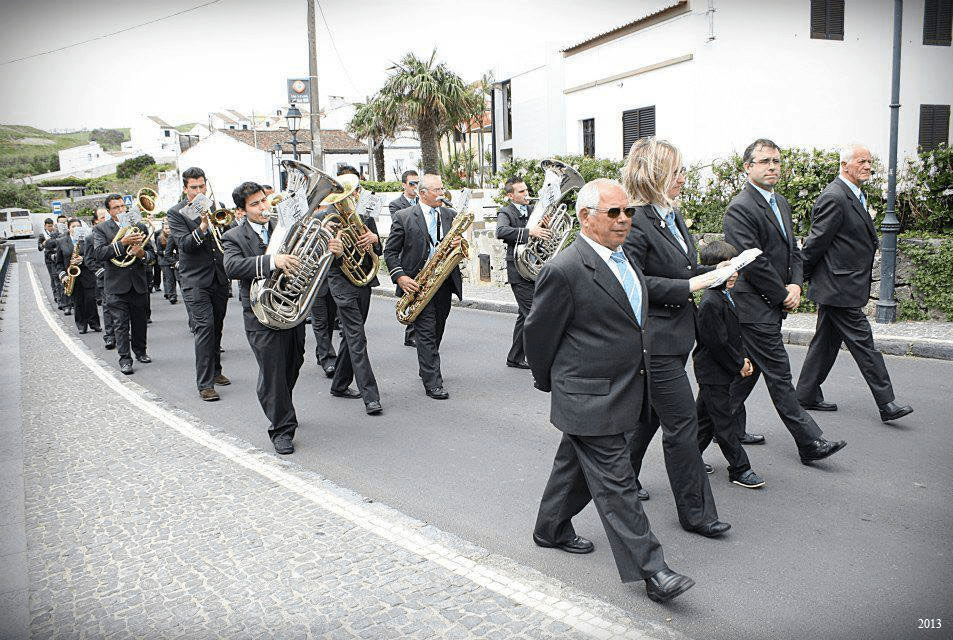
Do you consider this philharmonic a school of social, cultural, and artistic values for the children and young people of Água de Pau?
Philharmonics and other cultural associations represent a valuable platform for integral growth for young people. This growth goes far beyond music, helping them develop as responsible, creative individuals committed to their community. In effect, this creates a sense of identity and cultural continuity that is essential for preserving local roots and histories.
A philharmonic that functions as a school of social, cultural, and artistic values is an institution of great relevance in the integral formation of children and young people; it doesn’t just teach music but prepares them to be responsible, creative, collaborative citizens who are aware of their cultural identity and their role in the community.
What are the biggest challenges and difficulties facing this philharmonic band?
Despite the challenges, philharmonic bands and other cultural associations are crucial in training young people and preserving cultural traditions. In this sense, overcoming difficulties requires creative and flexible management and continuous support from the community and cultural authorities through collaboration and innovation, ensuring that young people can guarantee the philharmonic’s future.
We have the support of the Lagoa Town Council, Água de Pau Parish Council, and other organizations.
Is there a particular moment or story you’d like to share?
Yes, when the Philharmonic turned 150 and paid tribute to me, our band took a trip to New York, which became a personal dream come true.

What are your goals for the future?
We hope to keep the musicians and the children in the music school, that we make more trips, and that young people join this institution even more.
As a primary objective, we will hold our first exchange in Lisbon in 2025, the year this musical society was founded.
Would you like to leave a message as part of the celebrations of 161 years of existence?
Congratulations to everyone who has been part of this history, to the former musicians, the conductors and the board, to our new conductor Aquiles Preto, who has strengthened and won over our musicians, to our new board and to our musicians.
Our Philharmonic is a reflection of the past and a beacon that illuminates the future, showing that tradition and innovation can go hand in hand!
 Neuza Almeida is a journalist for the newspaper Correio dos Açores-Natalino Viveiros, director.

Translated to English as a community outreach program from the Portuguese Beyond Borders Institute (PBBI) and the Modern and Classical Languages and Literatures Department (MCLL) as part of Bruma Publication and ADMA (Azores-Diaspora Media Alliance) at California State University, Fresno, PBBI thanks Luso Financial for sponsoring NOVIDADES.

 Novidades - The Islands and the Diaspora