

Antero de Quental was one of the most critical figures in Portugal in the 19th century, both politically, socially, and culturally. Even today, his words echo in the minds of many people who wish to continue the poet’s thirst to drink from the holy chalice of philosophy. It is not difficult to draw a line between the words of the illustrious Micaelense and the actions of one of his fellow countrywomen, who was born years later and came to mark the country with her Botequim and sharp interventions. Imbued with the spirit of questioning that characterizes all students in Portuguese Athens, Antero promoted hundreds of gatherings where everything and its opposite was discussed in search of the lost light to be found in the coming 20th century.
The more pessimistic will say that the 70s generation failed and that the fire they tried to start was extinguished by the bullet Antero fired from that park bench next to the lost hope. I don’t think that’s entirely true. However, reverberations from those times still echo in our streets and assemblies today. Like the rest of the country, the Azores are witnessing the rise of a political and economic class that marches with absolutist tics, talking about Miguel and Salazar behind closed doors and talking about Trump behind open doors without fear of reprisal.
Many musty gentlemen and some ladies sit at the tables of practically all Portuguese parties and contribute to the destruction of the country’s collective conscience and, in our specific case, of the archipelago.
Antero de Quental once presented his theories on the causes of the peninsular peoples’ decadence. I present to you some of the situations that result from our region’s total decadence.
The Legislative Assembly of the Autonomous Region of the Azores, where I worked for many years and know very well, has been transformed from 2020 onwards. The arrival of a new way of not doing politics was an axe to the work and the way of being of those who tried to do it. Suppose Luís Garcia has behaved with much more dignity than Aguiar Branco in Lisbon. In that case, the truth is that the president’s efforts are not enough to contain the shameful statements that are being made by deputies, whether in aside formats or even into the microphone.
There’s no point in wasting the time of anyone who reads me with long dissertations on the poverty of spirit and grammar and the moral bankruptcy of some of the depressing speeches and moments on almost every bench in the regional parliament. The decadence has reached people who have held office in that chamber for decades. It has spread like a virus and lowered standards. The statements here increasingly lack context, characterization, and theoretical justification. Opinions are exchanged, praising colleagues and insulting the opposing club. Rarely do we find a statement that is indeed political, in the genuine sense of the word, which ends up being the mirror of a society divided and enslaved to the dictatorship of egocentrism by the shackles of the digital. There would also be a lot to say about the consequences, but you only have to watch one plenary session to understand the seriousness of what is happening.
Another recent example is the statements made by Bolieiro, who preferred to omit truths to justify that only half of the 150 million needed by the Azores is coming, clearly showing the national coalition’s solidarity with the Azores. Bolieiro used selective memory and “forgot” to mention that the Regional Finance Law, approved during the PS governments of Guterres and Carlos César, took the region out of bankruptcy in which the PSD left the Azores in 1996, having increased transfers to the Azores, considering in its calculation formula the fact that the region has 9 islands and that it was Passos Coelho, in a second revision, which decreased transfers to the Autonomous Region of the Azores.
How do we change this? Firstly, by voting. By voting for serious, principled people who believe in science and professionals. By voting for those who will try to unite and not further divide a society that is already divided into classes but threatens to become one of the castes. But we must go further, encouraging competent people to take up politics dignifiedly and keeping careerists away. We must stimulate critical mass with local institutions, prolific bookshops, hard-working associations, and a robust education system. We need to work closely with the people and build bridges between all the islanders we are, who have been demolished by the hatred and thirst for power of a musty right wing. The future depends, in the first instance, on us. And if we seem to be decaying, we need courage and resilience because there is still much to do.
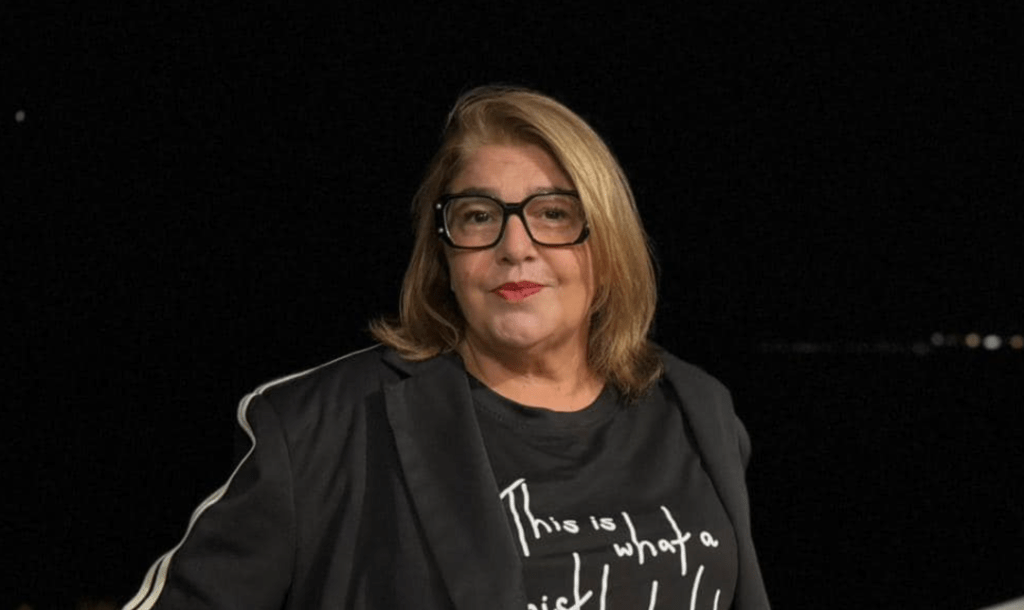
Alexandra Manes publishes regularly in Azorean newspapers. She is originally from the island of Flores and currently makes her home in Angra do Heroísmo, Terceira, Azores.
NOVIDADES will feature occasional opinion pieces from various leading thinkers and writers from the Azores to give the diaspora and those interested in the current Azores a sense of the significant opinions on some of the archipelago’s issues.
Translated to English as a community outreach program from the Portuguese Beyond Borders Institute (PBBI) and the Modern and Classical Languages and Literatures Department (MCLL)
 Novidades - The Islands and the Diaspora