

The budget for the upcoming year of 2025 is being discussed in the Azorean Parliament. Although the Diaspora is not directly involved with the politics of the Autonomous Region and Novidades (the islands and the diaspora) doesn’t do a wide political coverage of the Azores, focusing much more on human interest stories, we will feature a few comprehensive stories, such as this one from the Correio dos Açores to give our readers a sense of the issues that affect the Azores.
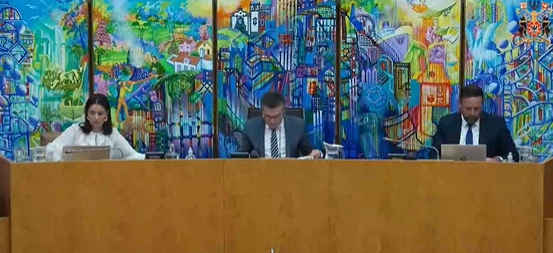
The Secretary for Agriculture and Food, António Ventura, revealed yesterday afternoon, during the debates on the Plan and Budget for 2025 in the Regional Legislative Assembly, that agricultural production shipped, processed, or to be processed amounted to more than 458 million euros in 2023, “the highest figure in the last 10 years”.
He said that the Azores are “increasingly an agricultural region. This is a great advantage in today’s turbulent world.”

According to António Ventura, the Plan and Budget 2025 “is committed to progressively becoming more autonomous Azoreans by creating wealth through regional agri-food production.”
He left a “thank you to farmers for their commitment, resilience, productivity of agricultural goods, environmental maintenance and conservation of animal and plant biodiversity.”
He assured the commitment in 2025 “to pay Community aid without cuts, which is why POSEI is growing by 19%. Aid announced equals aid paid out.”
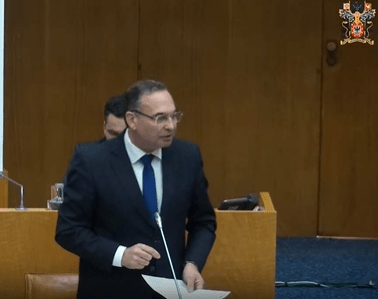
He revealed that 14.6 million euros have been earmarked for next year to support investment in agricultural holdings for the green, digital, and technological transition and for the installation of young full-time and part-time farmers.
The government is investing more than 30 million euros in agricultural access roads, which local communities increasingly use for tourism and leisure. The plan includes a specific action for Pico and another for São Miguel.
He guaranteed that the government would continue implementing the Strategic Plans for dairy and beef cattle farming, viticulture, horticulture, floriculture, fruit farming, beekeeping, and organic farming.
“We will continue with measures in precision agriculture, circular agriculture, carbon farming, biotechnology and we will raise awareness of zero food waste,” he said.
CHEGA MP Francisco Lima yesterday confronted the Regional Secretary for Agriculture about the investments planned for agricultural roads, which “are a disgrace” on practically every island in the Azores.
“When are you going to pay the support owed to meat producers?” Francisco Lima asked, addressing the Secretary for Agriculture.
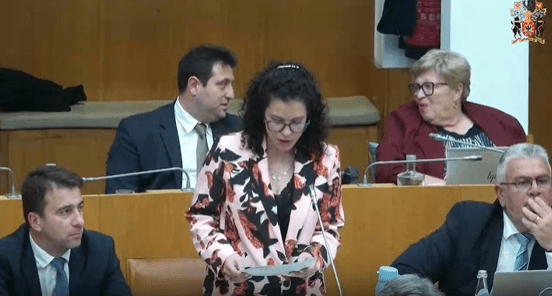
PS: Plan for regenerative regenerative
The Socialist Party of the Azores announced yesterday, during the debates in Parliament, that it will present today a set of proposed amendments to “transform and strengthen” the region’s agricultural sector, namely to promote regenerative agriculture, rejuvenate the farming sector, and guarantee water security for Azorean agriculture.
The strategic plan for regenerative agriculture will be essential for restoring soils, protecting natural resources, and mitigating the effects of climate change. The technical and financial support program to encourage the establishment of young farmers aims to guarantee modern, resilient agriculture prepared for climate challenges and market demands.
Concerning water security, “the measure comes as a response to the growing need to guarantee water supplies for farming in the Azores, especially in the face of the challenges posed by drought and climate change, as has been the case this year.”
Patrícia Miranda questioned, “the inaction of the Regional Government and the delay in implementing measures, such as the promised milk price guarantee fund, stating that the Executive argues that, to act, it is necessary to know how much it costs to produce a liter of milk.”
“After 1,460 days in government, you still don’t have that answer?” he asked.
Aquaculture operators with compensation
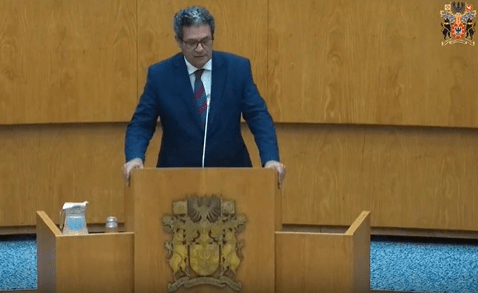
The Regional Secretary for the Sea and Fisheries, Mário Rui Pinho, said that in 2025, the Regional Government will continue implementing policies to “get to know and value the Azorean Sea.”
The 2025 Plan and Budget allocate 45 million euros to the Sea and Fisheries sector, of which 28 million euros are for the “development of the Azores Sea Cluster, which includes the construction of the Azores Technology Experimentation Center and the definition of the Azores Technology Free Zone.”
Mário Rui Pinho considered 2025 a “decisive year for defining the region’s strategy to the economy of the sea.”
He highlighted “the provision of an incentive system for the fishing sector financed by the PRR, aimed at financing the renewal of the fleet in terms of energy efficiency, the implementation of digital procedures in port infrastructures and the provision of equipment for the collection of waste from fishing activity,” he added.
He valued “a vast system of incentives for the already available sector, including, in particular, the compensation scheme for operators in the fisheries and aquaculture sector for the additional production costs resulting from Russia’s aggression against Ukraine.”
Health security defended
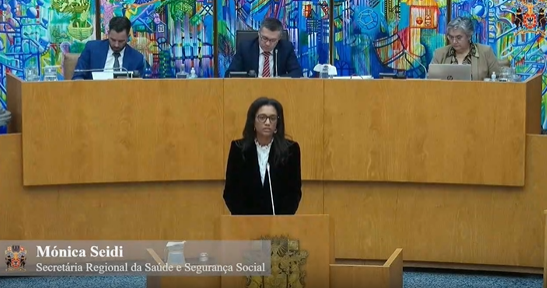
The Regional Secretary for Health, Mónica Seidi, insisted yesterday on her conviction, during the debates on the 2025 Plan and Budget in the Regional Legislative Assembly, that it is dangerous to reopen services and carry out work in a hospital unit simultaneously.
She explained that these works “jeopardize the safety of users and health professionals” in response to the opposition, which defended the immediate start of works at the Divino Espírito Santo Hospital instead of building the Modular Hospital.
“You can be sure that this government will not go ahead with the opening of a service that does not safely comply with the conditions and that jeopardizes the provision of care to our users,” stressed Mónica Seidi.
According to PSD/A MP Délia Melo, this position is corroborated by health technicians.
“When they say that it would be enough to clean the building and put all the patients inside, that’s a lack of technical knowledge and disrespect for patients and health professionals. End of quote, the Order of Nurses,” she said.
Yesterday morning, the opposition parties again called for recovery work to begin on the HDES transformer station following the fire on May 4. Some believed the government should have invested in reopening the hospital’s Emergency Service “instead of spending millions of euros on a modular hospital that will always be temporary.”
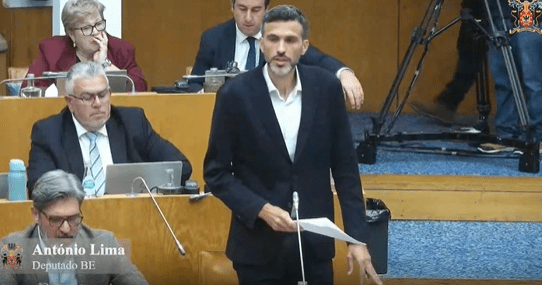
“If half, or the equivalent of half, of the resources invested and the effort put into the modular hospital had been applied to the ‘old’ HDES, it would certainly be fully operational today,” says António Lima, from BE/A.
José Toste, a PS/Azores MP, also questions the government’s choice to build a modular hospital. He said, “26 million euros, six months and a poorly planned modular hospital later; the HDES still doesn’t have a hospital emergency room that can be considered as such and doesn’t have the number of block rooms it had before the fire,” he said.
José Pacheco, from CHEGA/A, joined the protests and questioned the Azores government: “I want to know very quickly when the work is going to start, because it’s urgent that we refurbish that hospital.”
With all the criticism of the government’s choice, CDS/PP MP Catarina Cabeceiras asked the PS/A a question. “The Socialist Party has never made up its mind. Is it for or against the modular hospital? You would have done that if you were the government, right?”
During her speech, the Regional Secretary for Health and Social Security, Mónica Seidi, guaranteed that the Digital Hospital “will be a reality for users and professionals in the sector” by 2025.
For her part, MP Hélia Cardoso asked the Regional Government when it would implement the Health Voucher, proposed by CHEGA and approved by the Regional Assembly, to address the difficulties in meeting the Guaranteed Maximum Response Time for diagnostic tests and specialty consultations.
Education between praise and criticism
The Regional Secretariat for Education, Culture and Sport’s Investment Plan for 2025 is 61 million euros, six million more than the plan presented and approved in 2024 and 24 million more than the last plan offered by the PS.
Sofia Ribeiro states, “The commitment is to continue improving the success of every Azorean student, to continue the growing preservation and dissemination of culture in the Azores and to continue promoting healthy habits through physical activity and sports.”
She stressed that the largest slice of the Education Investment Plan, 16 million euros, will again be spent on Social Action.
The Regional Secretary revealed that “by 2026, school textbooks will be free for all Azorean students”.
“In the latest national exams, in 10 subjects, the region’s average is higher than the national average, including in Portuguese and Mathematics A,” she also pointed out.
In contrast, the PS/Azores criticized “the Regional Government’s lack of vision and ambition in the areas of education, culture, and sport, highlighting the negative impacts of government choices on the lives of the Azoreans.”
The Socialists highlighted “the lack of human resources in schools, the delays in digital textbooks and the absence of a clear strategy, reflecting ‘the lack of prioritization of measures to combat poverty and promote inclusion through education.’
In the voice of Deputy José Pacheco, CHEGA was “concerned about the state of degradation of the Azorean school park.”
In Correio dos Açores–Natalino Viveiros, director

Translated to English as a community outreach program from the Portuguese Beyond Borders Institute (PBBI) and the Modern and Classical Languages and Literatures Department (MCLL) as part of Bruma Publication and ADMA (Azores-Diaspora Media Alliance) at California State University, Fresno, PBBI thanks Luso Financial for sponsoring NOVIDADES.

 Novidades - The Islands and the Diaspora