

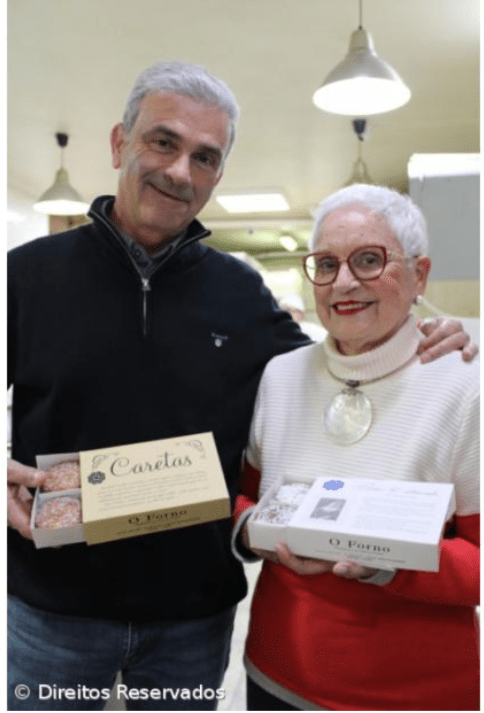
Ana Maria Pimentel Pereira da Costa was born in Angra do Heroísmo, in the parish of Sé, into a family with a well-established reputation for traditional convent and bourgeois sweets. A true Azorean with four sides and a very happy childhood.
“I attended the Liceu Nacional de Angra do Heroísmo, still in the Convento de São Francisco, where I completed the old seventh year of the science section. I would have liked to have taken a higher education course related to the arts. With the qualifications I had, I tutored high school students in mathematics until I got married. After I got married, I went to live at the Santa Margarida military training camp because my husband was in the military. I lived in Lisbon and São Miguel. With two children of my own, I went to Angola, where I spent April 25th crying, clutching the radio. Freedom at last! When I returned from Luanda, very young and with my head full of projects, I opened a ready-to-wear boutique – the first in Angra. It was called Triques, and it had national and foreign clothing, which at the time was a rarity,” said the businesswoman.
As she is known in Angra, Ana Maria guarantees that she does a lot of research into sweets, trying to establish the relationship between regional sweets and others from different regions.
In what socio-cultural context did the O Forno pastry shop emerge?
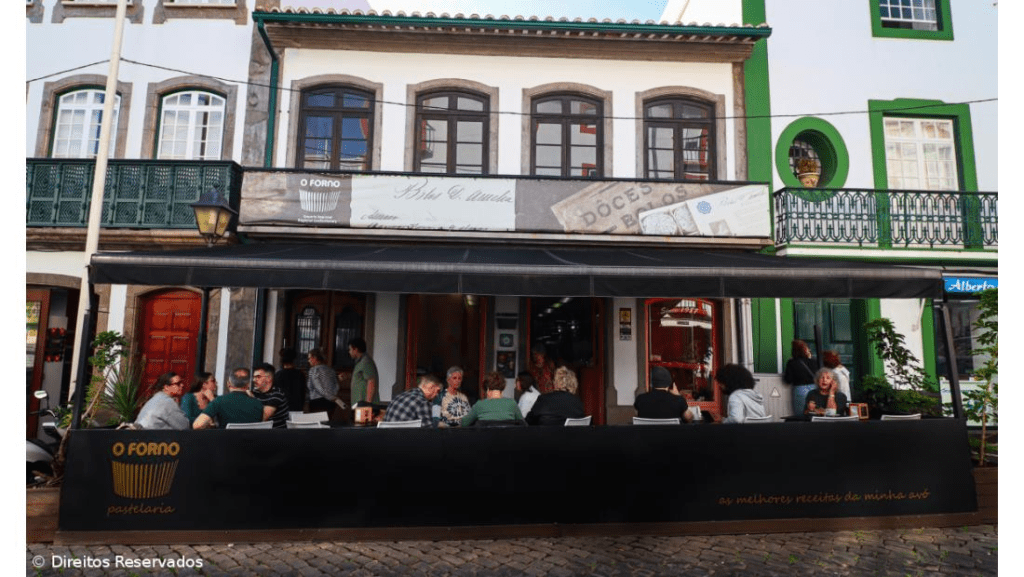
After the 1980 earthquake, new spaces sprang up in Angra for those who wanted a different kind of business. How about opening a hot-bread boutique, which was the fashion at the time? That’s how “O Forno” was born, producing various types of bread, brioche cakes, and puff pastries. A baker and a pastry chef came from Lisbon to start the project and train our staff.
How has the pastry shop survived over the decades?
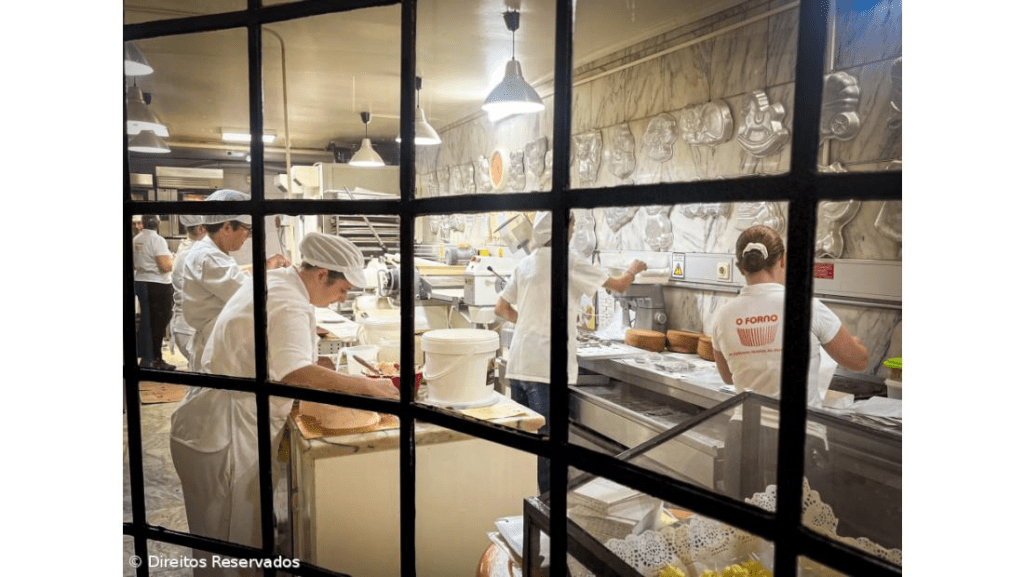
O Forno opened its doors to the public in June 1987 and was a great success. It was a new way of presenting the products of a pastry shop, which, like today, had its own production in full view of the customer. While maintaining the original layout, some changes were necessary to comply with the HACCP and Occupational Health, Safety, and Hygiene programs, which are essential for food quality and safety.
What were the most difficult moments for the company?
The most difficult moment was when I got divorced and was left with the “child in my arms.” With a lot of help from my son and the knowledge I’d acquired throughout my youth, I used it to give the oven wings. My father had a pastry shop—A LUSA—which is still remembered today for its exquisite service and high-quality confectionery.
What is the secret to the longevity of “O Forno”?
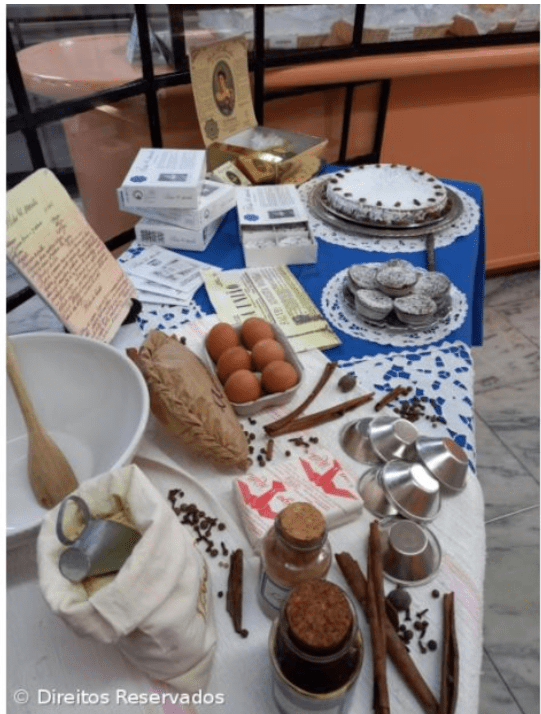
The secret is to maintain the quality of the products, never changing the original recipes, never replacing butter with margarine or one less egg. Although it wasn’t easy to know the exact weight of 10 kings of cinnamon, a handful of the turtledove, or a shield of yeast, it was through experiment after experiment that we arrived at the shape, taste, and smell that I remembered!
They proudly hold the banner of cooking in full view of the customer. Does that make it difficult to recruit human resources/manpower? Or is it not an obstacle?
The fact that we have on-site cooking is not an obstacle to hiring staff. I think applicants take a certain pride in belonging to our bakery because of its name and being part of a professionally trained team, knowing in advance the public that awaits them. I’m very lucky with my employees because, without them, we wouldn’t be able to reach the level of quality we’re proud of.
What types of products do you make?
In addition to the products already mentioned when we opened O Forno, we present a wide range of exquisite regional sweets and festive cakes decorated with a magazine look. We also produce handmade cookies without preservatives, pies, pastries, and other savory snacks.
Which regional sweets do you make?
We make the famous Dona Amélia cakes, now an ex-libris of Terceira’s sweets, following the original handwritten recipe kept secret from generation to generation. Although they have existed under this name since 1901, when King Carlos and Queen Amélia visited the island. Amélia to this island, I can be proud to have given these cakes the status they deserve. It has the Azorean artisanal designation of origin awarded by the CRAA, now the CADA.
We also produce the “forgotten” Conde da Praia puddings, obtaining the original recipe from a descendant. Both are steeped in history. In addition to these sweets, Caretas, my dear mother’s specialty, is also a tourist favorite. They all have their own elegant packaging with the history of the cake. The three sweets above have the Marca Açores seal—Certified by Nature, which, in a way, helps their marketing.
There are other sweets, which according to history are from Terceira – the Spanish tiles, the sorcerers, the Africans, the cameos, the rocks, the dark covilhetes, and convent sweets – torresmos do céu, pingos de torcha, papos de anjo, cornucópias de ovos (different from the ones from Alcobaça), rebuçados de ovos (different from the ones from Portalegre), hóstias de amêndoa, toucinho do céu. We also produce coconut puddings, almond puddings, bean puddings, rolão puddings, and spoon sweets to order.
What do visitors think of the D. Amélia cake, and what other sweets from Terceira Island are popular with tourists?
As far as our visitors’ opinion of D. Amélia sweets is concerned, they first find it strange and then love the exquisite taste and exotic smell, which is so different from convent sweets. They were created in the bourgeois houses of our city, just like other sweets that visitors appreciate.
Our sweets are very urban. At a rural level, we only saw fried food at Carnival, rice pudding, thick porridge, batter and alfenim during popular festivities.
What sales figures can you give us, and what are the best-selling products?
Sales are seasonal and related to the festivities on the calendar. We worked hard to present customers with original products for the different seasons.
But D. Amélia cakes are sold all year round, in our bakery, in gourmet stores selling Azorean products inside and outside the Azores, and in restaurants, served by the slice in the large version.
What dreams do you still have for this company, which, despite being family-run, is a true example of resilience and survival?
I’m currently in partnership with my son, and I have a grandson who is a great help when it comes to accounting and management. There’s a lot to do behind a counter filled with fine confectionery! Younger people will certainly have new ideas, but I’d like them to continue with our confectionery tradition. “Confectionery is an art that we must preserve!”
From Made in the Azores (Marca Açores) in Açoriano Oreintal-Paula Gouveia, director
Translated to English as a community outreach program from the Portuguese Beyond Borders Institute (PBBI) and the Modern and Classical Languages and Literatures Department (MCLL) as part of Bruma Publication and ADMA (Azores-Diaspora Media Alliance) at California State University, Fresno, PBBI thanks Luso Financial for sponsoring NOVIDADES.
 Novidades - The Islands and the Diaspora