

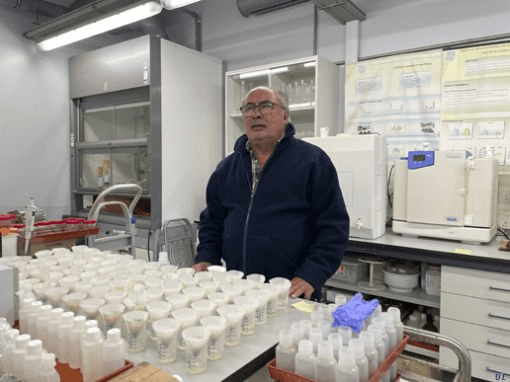
Last year, the University of the Azores created a viticulture and wine tourism technical course, but no Azorean students took it up. What can justify this outcome in a land where viticulture has been growing?
This is the second year that the University of the Azores, through its School of Technology and Administration, has offered this course. Last year, we had four candidates from Guinea-Bissau and Cape Verde. In the recent past, we have provided Technological Specialization Courses (CETs) in areas ranging from Renewable Energies, Accounting, Pharmacy Auxiliary Technicians, Agriculture, Food Quality, Environmental Quality, Meat Cutting and Technology, Dairy Industries, Wood and Furniture Restoration, Management, etc. A case in point was the Meat Cutting and Technology course, which took place when the slaughterhouse cutting rooms were being set up. Imagine that not one candidate applied for the course in two attempts to open it. The low demand for courses in the area of Agriculture is so widespread in Europe that, within the scope of the RRP, the University of the Azores is part of a Consortium that aims to modernize the teaching of agricultural sciences.

What prompted you to open this course? What added value would it have for the Azores and Terceira Island?
The opening of this course followed contacts with the Rectorate of Professor João Luis Gaspar and the Regional Government of the Azores. Considering the new dynamics in the regional viticulture scene in general and on Terceira Island in particular, we thought it would be a good training offer for many young people, but this didn’t happen.
Although the course has yet to open this year, more than two dozen enrolments have come from Guinea and Angola. What explains this phenomenon?
At a national level, demand for this type of education from young people from some PALOP countries has been growing. However, the difficulties they encounter in obtaining their visa and the documents they need to come and attend the course is no easy task. The President of the School of Technology and Administration has asked that the enrolled students report on the situation by the last day of November. As you may understand, if the course opens in January, it won’t be easy to reschedule the course’s planning, as there are work-related practices, such as pruning, which must be taught beforehand.

Despite the lack of local interest, is there potential to attract new students from other countries to the Azorean academy?
Of course, there is. We will do everything we can to make the course a reality and, with this edition, to change mentalities so that in the future,e our young people can join this noble activity, agriculture in general and viticulture in particular.
Are there other technical courses not being taken at the University of the Azores?
At the Angra Campus, in recent years, the School of Technology and Administration has offered a course in Agriculture and Livestock and another in Agroindustries, which have had little take-up. At the moment, at the request of the Angra do Heroísmo Chamber of Commerce and Industry, we are preparing a course in Accounting and Business Advice, which we will do everything we can to open next year.
Translated to English as a community outreach program from the Portuguese Beyond Borders Institute (PBBI) and the Modern and Classical Languages and Literatures Department (MCLL) as part of Bruma Publication and ADMA (Azores-Diaspora Media Alliance) at California State University, Fresno, PBBI thanks Luso Financial for sponsoring NOVIDADES.


 Novidades - The Islands and the Diaspora