

Founded in 1996 in the parish of Candelária, on the island of São Miguel, Azores, the family business “Quintal dos Açores” was born to make the most of the land’s surpluses.
Fernando Sousa was 14 years old when light arrived in the parish of Candelária on the island of São Miguel. He grew up when the sun dictated the timetable, and in the backyards grew the sustenance that the land and the weather decided to give. He was the grandson of farmers, the son of shopkeepers, and the father of an idea now his trademark, something that lit up his mind without needing electricity.
“The truth is that I didn’t know anything about the world,” confesses Fernando Sousa. “We didn’t have access to the information we have today. We didn’t get newspapers and there was no television.” There was, however, ingenuity and the need to make the most of every gift from the land. Used to helping out in the family’s small grocery store, Fernando Sousa remembers how even the coffee and olive jars were used repeatedly to preserve and carry all kinds of groceries, from flour to liquids. But it was in another use for these containers that Fernando Sousa recognized an opportunity.
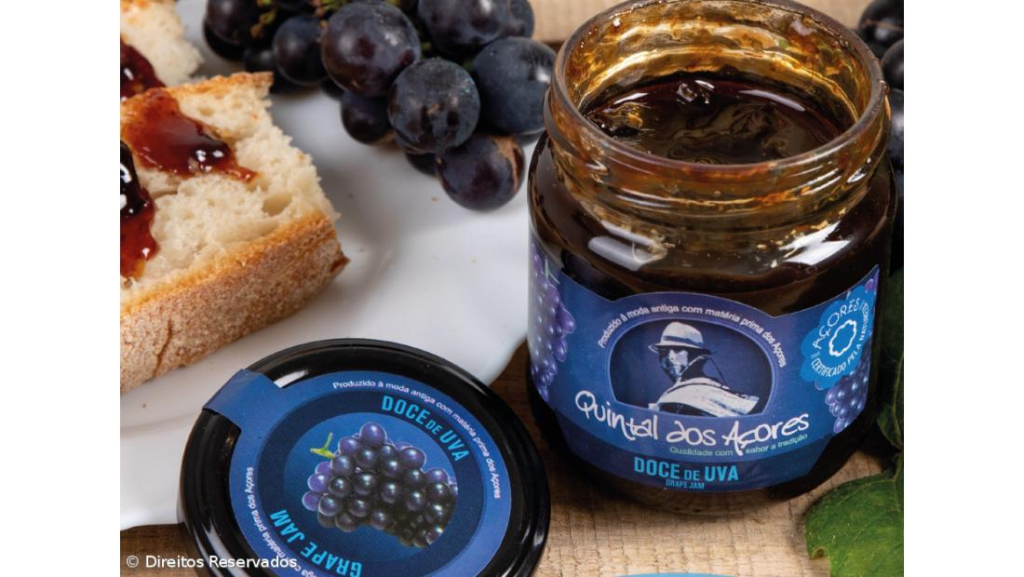
For many years, he watched his mother make all kinds of sweets, jams, pulps, and pepper paste to make the most of the land’s surplus. He remembers helping to put them into reused jars that they then sold in the grocery store. Each new customer confirmed his conviction that he had the potential to form an industry capable of taking advantage of these agricultural surpluses, transforming them, and creating value.
Fernando Sousa says that April and its Carnation Revolution made the idea flourish, with entry into the European Union being the big turning point. “When I started hearing calls for investment for young people, I took the opportunity to realize what had been on my mind all those years. I took a ballpoint pen, put my idea on paper, and it was approved,” he says.
The company started in 1996, with the support of his wife when they were still “newlyweds,” as he describes it.
“I don’t call it a dream, it was a goal. I wanted to contribute not only to the regional economy but also, and above all, to agriculture,” he says, adding that the name itself, ‘Quintal dos Açores,’ describes his desire to invest in the primary sector, a passion inherited from his grandparents, as the basis for the secondary industry and the lever for the tertiary sector, a legacy from his parents.
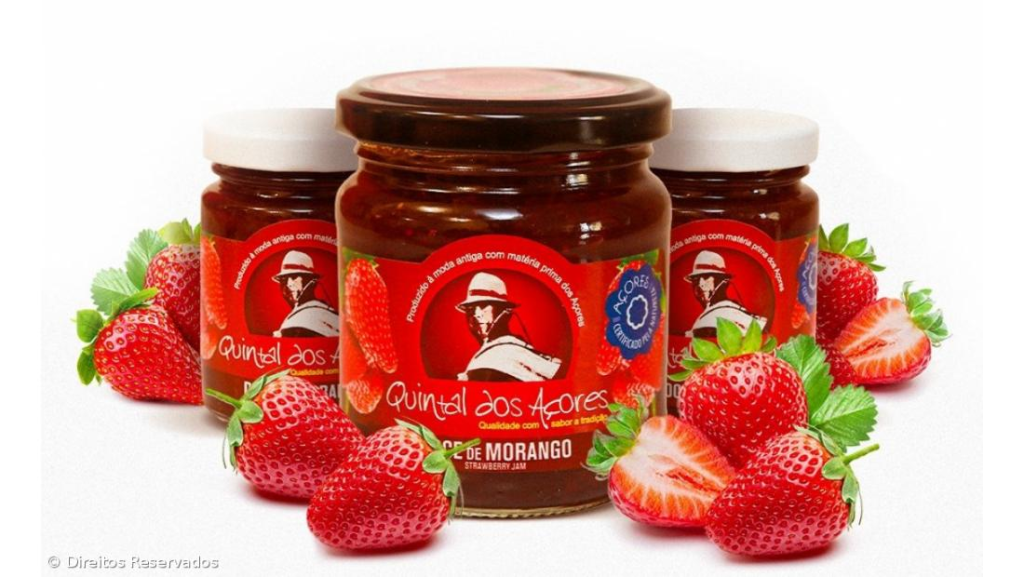
Today, he produces and sells jams, jellies, marmalades, peppers, tanneries, and regional spices based on recipes that have been in the family for many years. “We do 3 in 1: produce, process and market. If I hadn’t invested in these three sectors, I would always have been dependent on just one and the business would have been much more vulnerable,” he says.
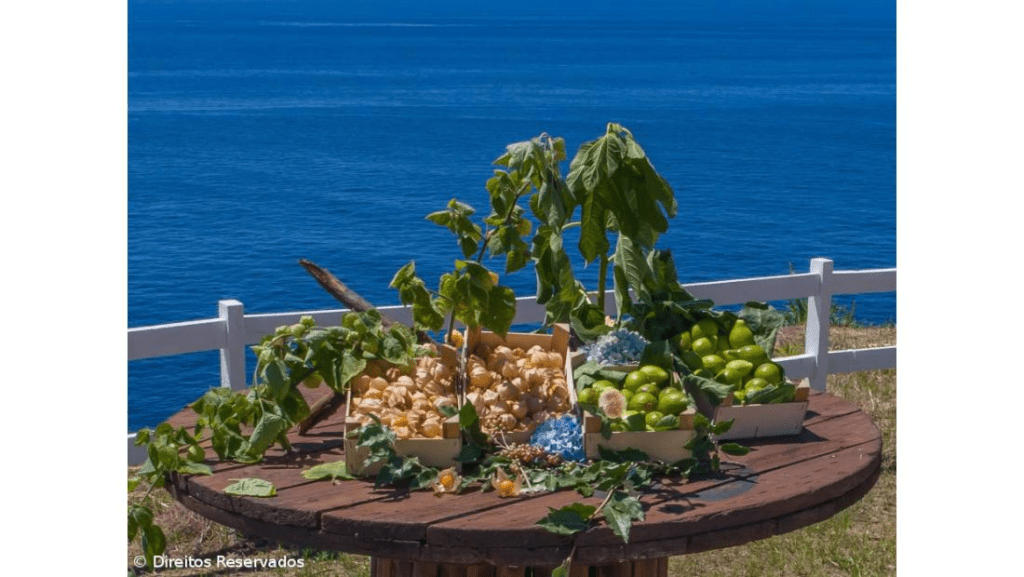
He recognizes the difficulties experienced in the various sectors that the company embraces, starting with primary production, which he says is suffering above all from the impact of climate change. “We need to be prepared and know how to make the best use of the land so that it can be profitable,” warns Fernando Sousa. “We don’t do intensive cultivation, we give the land a rest. In this respect, we do as we used to. We rotate the land, we also have animals that produce manure that fertilizes the land. We make a point of taking advantage of all the organic matter,” he explains. “One day we’ll realize that we need to change our attitude if we want to preserve what we have,” he says.
Another aspect that worries Fernando Sousa is the waste of packaging, a key point in how products are marketed. “There’s a lot of talk about plastic, but it goes beyond that. Glass uses up energy, paper means cutting down trees, so bulk is a good solution,” he sums up, applying the old lessons from his childhood that he continues to practice daily.
Although almost thirty years have passed since he was trained, Fernando Sousa guarantees that there is still a lot to do. “We’re just getting started,” he stresses, revealing plans to open new facilities soon. These will help compensate for the lack of manpower by automating processes and improving productivity. Despite the acknowledged difficulties in the licensing process, he is now just waiting for the final approvals to move forward.
The businessman guarantees that he will stick to his initial vision and calls on government bodies to have a complementary vision when defining support strategies for each sector.
“Generally speaking, only around 50% of the agricultural product is used to sell fresh. If everything else is processed, it not only generates value but also produces something with a longer shelf life, which opens the door to export. That’s how you achieve profitability. There’s no point in supporting or subsidizing agriculture if we don’t also think about the processing sector,” he argues.
Fernando Sousa continues to cultivate this backyard with a renewed sense of mission. “I believe that, slowly, things will take their course,” he assures us, glimpsing that not-so-distant light that dispenses with heavy wires or cables and feeds the imagination.
From Made in the Azores, in Açoriano Oriental-Paula Gouveia, director
Translated to English as a community outreach program from the Portuguese Beyond Borders Institute (PBBI) and the Modern and Classical Languages and Literatures Department (MCLL) as part of Bruma Publication and ADMA (Azores-Diaspora Media Alliance) at California State University, Fresno, PBBI thanks Luso Financial for sponsoring NOVIDADES.

 Novidades - The Islands and the Diaspora