

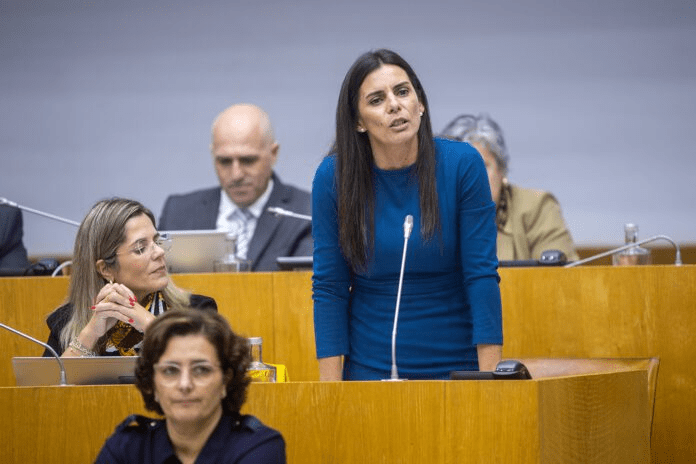
The Parliamentary Group of the Socialist Party (GPPS) pointed out today that, according to the latest report from the National Statistics Institute (INE), the Azores continue to be the poorest and most unequal region in the country, despite a slight drop in poverty and inequality indicators compared to last year.
According to Marta Matos, Vice President of the PS/Azores Parliamentary Group, the region’s at-risk-of-poverty rate is 24.2%, well above the national average of 16.6%. Social inequality, as measured by the Gini Coefficient, is the highest in the country (33.8%), reflecting the increase in income disparity in the Azores.
In addition, the region’s severe material deprivation rate, at 8.2%, is almost double the national average, which stands at 4.3%.
“Contrary to the national picture, the Azores have still not recovered 2020 levels in two key indicators: the at-risk-of-poverty rate in the region, which was 21.9% in 2020, and is still 24.2% in 2023, while in the country it went from 18.4% to 16.6%,” said Marta Matos.
In turn, “social inequality, as measured by the Gini Coefficient, stood at 33% in the Azores in 2020, and was still above that figure in 2023, at 33.8%. In the country, this indicator fell from 33% to 31.9% in the same period,” she added.
The Vice-Chairwoman of the GPPS stressed the seriousness of the situation and the regional government’s lack of concrete measures.
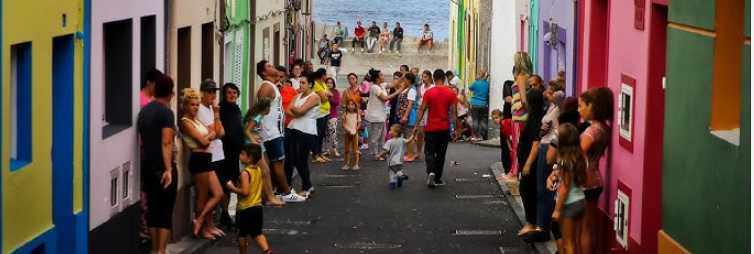
“These numbers reflect a government with no strategy or vision for fighting poverty. After four years, the coalition government has still not presented an effective plan, while it has dismantled the Regional Strategy to Combat Poverty and Social Exclusion, developed by the PS to run until 2028,” she stressed.
She also pointed out that the much-heralded Regional Plan for Social Inclusion and Citizenship (PRISC), scheduled for 2024-2028, is still unknown.
“It was announced in February 2024 that the public discussion would take place soon, but we’re already in December and nothing is known about this plan. At this rate, we won’t have a plan until 2025, leaving the Azoreans without any political guidance in the social area for almost three and a half years,” he said.
“With six years of implementation, it would be reasonable to expect some positive results and an effective catching up with the rest of the country, especially if there was a consistent and continuous approach,” she said.
For the parliamentarian, this data reveals the failure of a government that prefers one-off measures, cuts in social benefits, and short-term political alliances. For example, “prioritizing access to crèches only for children whose parents work is ignoring the reality of those who need it most.
“The government has to stop using the ‘heavy inheritance’ excuse and start taking responsibility for what it doesn’t do. The Azoreans deserve effective responses and a government that prioritizes their needs,” concluded Marta Matos, highlighting ”the importance of an integrated strategy, like the one left by the Socialist government, to break the cycles of poverty and promote social inclusion.”
in Tribuna das Ilhas, Faial Island, Azores
Translated to English as a community outreach program from the Portuguese Beyond Borders Institute (PBBI) and the Modern and Classical Languages and Literatures Department (MCLL) as part of Bruma Publication and ADMA (Azores-Diaspora Media Alliance) at California State University, Fresno, PBBI thanks Luso Financial for sponsoring NOVIDADES.

 Novidades - The Islands and the Diaspora