


São Jorge’s coffee has long earned the title of being the only coffee in Europe. It was introduced to the island two centuries ago and was particularly successful in the fajãs of Almas, São João, and Vimes.
It gained even more prominence from the latter, thanks to the couple Alzira and Manuel Nunes. Like many people from Jorgens, Alzira Nunes’ ancestors also had coffee plantations to make coffee for their own consumption.
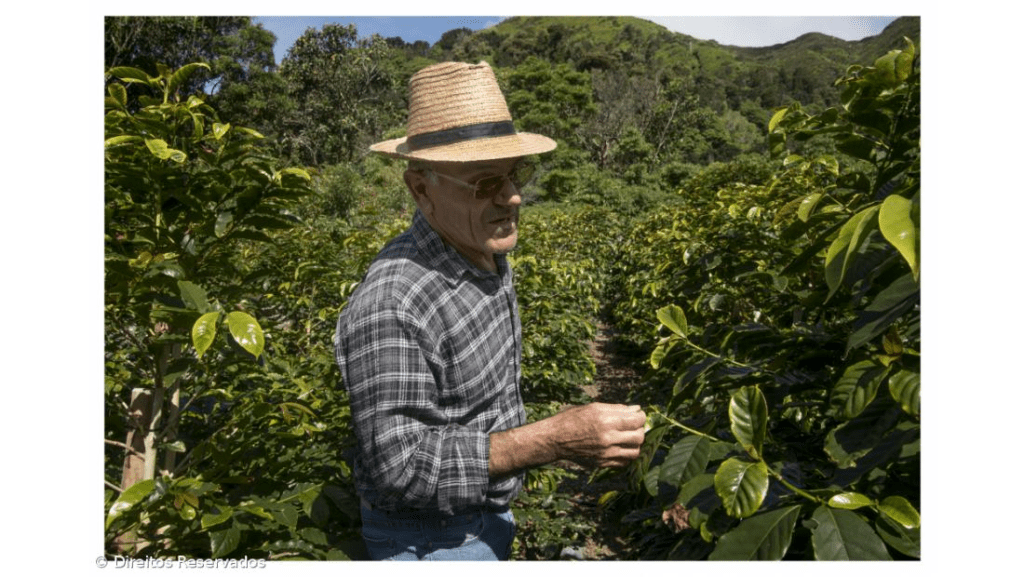
“We bought land in Fajã dos Vimes to build our house and they already had several coffee trees, which we continued to look after,” recalls Alzira Nunes.
In 1997, they built Café Nunes on the fajã and, as they had enough stock, they decided to sell their coffee to customers. “At first, we had our own and other brands for sale because we weren’t sure what the acceptance would be. However, when we asked tourists which one they wanted, they told us it was ours.”
They reinforced the land area with coffee trees through purchase but also through an inheritance left to them by Alzira Nunes. They named it Café de São Jorge and registered it as Café da Fajã dos Vimes.
They now only sell their own coffee, and “some people come to São Jorge on purpose to drink our coffee. Just a few weeks ago, we had a customer who told us he was on another island and came to São Jorge in the morning to drink our coffee and left in the afternoon.”
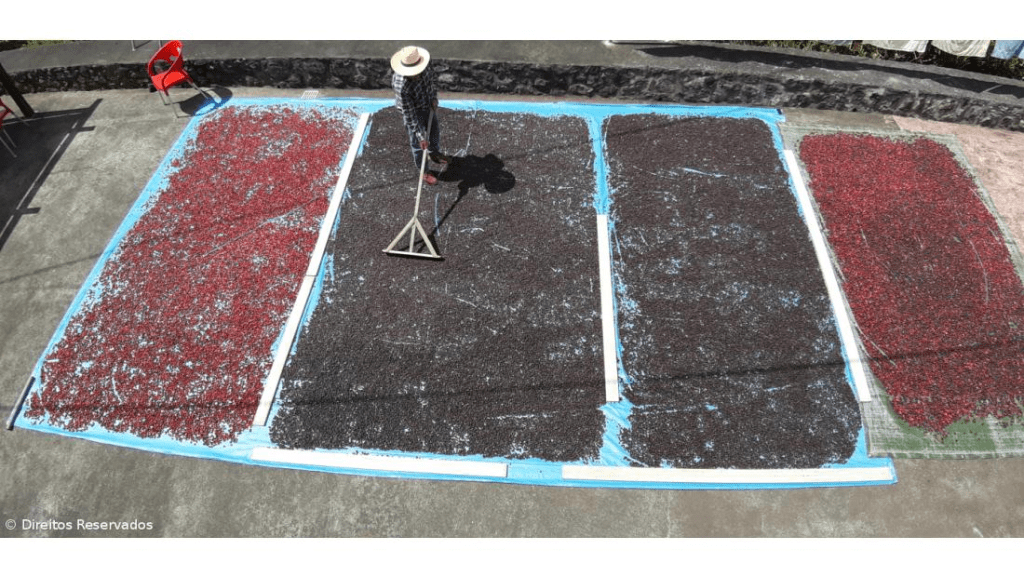
The production is small and does not allow for sales elsewhere. “The raw coffee is then dried, peeled and sorted,” explains daughter Dina Nunes.
Of the more than 1,000 kilos of red Arabica coffee beans picked each year, only around 350 kilos are ready for consumption.
Although they have opted not to have an organic product certificate for the time being, they are proud of the type of production they do. “The fertilizers all come from the composting we do and it’s all chemical-free,” says Alzira Nunes, who adds happily: ”It’s coffee from the Biosphere Reserve.”
Delta wanted to buy the Nunes family’s coffee, but the deal failed. “They were in São Jorge and wanted to see the coffee,” says the daughter.

Then, Delta itself “carried out a chemical analysis of the coffee beans. The climate of the fajãs is responsible for its characteristics. “It has less caffeine than normal because of our global location,” says Dina Nunes. It’s also here that it absorbs the aroma of the loquats and incense flowers that flank the coffee trees.
Although the couple’s two children have their own jobs, they share this enthusiasm and help out in any way they can.
Being successful with the café in São Jorge was something that had never crossed Alzira and Manuel Nunes’ minds, but it has been that way for almost 30 years… and they hope it continues.

From Made in the Azores-in Açoriano Oriental-Paula Gouveia, director
Translated to English as a community outreach program from the Portuguese Beyond Borders Institute (PBBI) and the Modern and Classical Languages and Literatures Department (MCLL) as part of Bruma Publication and ADMA (Azores-Diaspora Media Alliance) at California State University, Fresno, PBBI thanks Luso Financial for sponsoring NOVIDADES.

 Novidades - The Islands and the Diaspora