


It’s a time for celebrations, appreciating and taking stock of the recent past and wishing that everything, or at least something, will be better in the future, which in this case will be short-lived; the wishes are only that the New Year will be prosperous, happy, good…
I have long since ceased to be enchanted by these scenes of celebration and renewal that take place these days, particularly in the Christian world, and which the commercial calendar shamelessly parasitizes to the marrow of its bones. This doesn’t mean I’m indifferent and gets stuck in; this is one of the other dates throughout the year when I try to be with my family and friends, although I don’t put as much emphasis on this as I do on other dates in the calendar. Every day is a good day to be with friends and family; it’s good on any occasion for no other reason than what brings us together, the satisfaction of being together and sharing memories, but also living in the present and dreaming of the future, because without dreams there’s no way forward.
Sometimes, I think this disenchantment is related to my aging, but when I revisit the past, I realize I was never much of a party person. I have been, and I go, but I have never derived, nor do I derive, any great satisfaction from festive atmospheres.
While it’s true that I’ve never been very fond of the festivities of the Catholic and commercial calendars, I don’t think that the disenchantment that has been settling into my being is not due to age, or at least not alone because there is no shortage of reasons to feel disappointed with the paths taken by so-called civilized societies, to which I am linked by geography, but which have long since ceased to represent what I feel and what I think about progress and civilization. The examples of the lack of humanity in these societies are visible, and only those who don’t want to or can’t free themselves from the blindness that propaganda induces don’t see and feel them.
The simplest and most immediate example of the barbarism we are witnessing in real-time is the complicity in the genocide underway in Palestine, not only in Gaza-Palestine but throughout the Palestinian territory. If, in the case of other genocidal acts in human history, we can excuse ourselves with an “I didn’t know,” in this case, there is nothing to justify indifference to such barbarity, which is passively or actively supported by most countries. There are a few exceptions, but in the eyes of the civilized world, they are nothing more than terrorist states.
In the new Syria, as in Libya, slave markets have already opened up, in this case for sex slaves. I haven’t heard of any feminist movements rising up against this affront to human rights, nor have I heard of any demonstrations of intent and struggle against the dismissal, by the new, democratic Syrian leaders, of all the female judges who held the magistracy in the old, oppressive Syria, not to mention the compulsory wearing of the Islamic headscarf in the new Syria, which until now has been an individual choice. It’s not easy, or is it? To understand this duplicity of action and protest by so-called women’s movements.
The UN’s inoperativeness and ineffectiveness speak volumes about its uselessness, or perhaps its submissive usefulness to the dark powers that dominate and determine our destinies, and no, I’m not referring to governments and those who represent them.
The examples I have mentioned are more or less distant, but also because of the information intoxication of the “reference” media, which may justify some citizens’ detachment and passive acceptance. It is no longer acceptable for journalists and politicians to whitewash the facts by omission and manipulation, and to legitimize barbarism with narratives that independent investigations have already deconstructed.
With a different dimension, but still with a common root, the imbecility promoted by the Portuguese government and carried out by the PSP Portuguese Police) while safeguarding the respect the corporation deserves because not all officers and agents identify with that way of acting. Still, as I said, the “security” operation carried out in the Martim Moniz area is symptomatic of a certain way of doing politics that results from prejudice, in this case, even discrimination. This unfortunate case is not unique in that it has had the media visibility that others, because they happen out of the spotlight, don’t have and that are carried out in the peripheries where the poor live, whether racialized or not. National commentators have already said, written, and dissected much, and I have nothing new to add.
Toward the end of the text, I would like to address two other issues that seem to have nothing to do with what has been said above and are deeply connected, and I believe some critical reflection is necessary.
The emergence of a middle class of significance and importance occurred in the second half of the 20th century. However, history begins much earlier and was sustained by what today tends to be annihilated, namely access to public services (health, education, and social protection), job security, and an income that allowed them to live with some dignity while still being workers, and they were aware of this. They lost this awareness to the extent that theories of personal fulfillment took precedence over collective fulfillment, and they began to be offered not better living conditions or more income but access to low-cost products and goods that allowed them to imitate the truly rich – some call this the democratization of consumption. I would say that this is nothing more than a fantasy that will make us compete and consume more and more. In other words, as long as we feed this idea that the market allows us to boast a model of life that only a few could have until then, which is nothing more than an illusion, we will continue to compete and forget about the need to transform a social, political and economic model that is going to destroy us.
For example, the second issue I wanted to address before closing the text is the energy transition, particularly towards electric mobility. We all agree that there is a pressing need to change the current economic paradigm responsible for threatening climate change, but let’s look at the case of electric mobility based on the use, albeit transitory, of a scarce mineral, lithium, for the manufacture of private cars.
The costs and emissions over the lifetime of an electric car for private use do not justify this investment, if anything the bet would be on its use in public transport, thus ensuring that a greater number of people benefit from this alternative to electric mobility and the environmental impacts would be less.
No matter where they come from, electric car manufacturers adapt to market cycles. If the dominant social concern is to reduce the use of fossil fuels to combat global warming and climate change, the system’s response is to provide a solution that eludes the essentials. Lithium is scarce, its extraction causes irreversible environmental impacts, in other words, we are faced with yet another fallacy constructed in the name of a greater good: the defense of the environment.
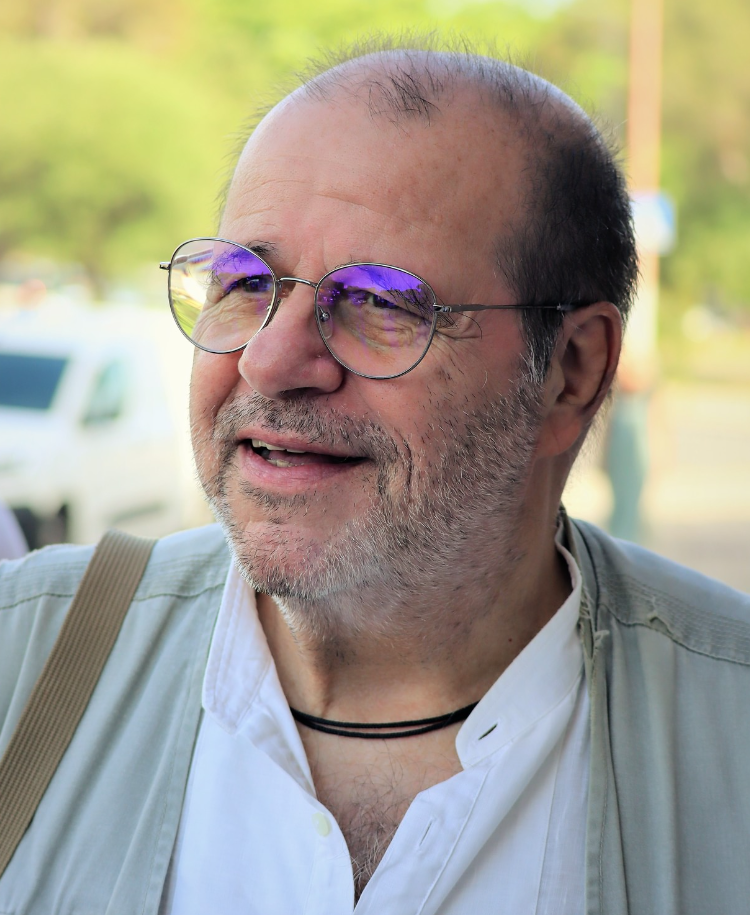
Aníbal Pires is a retired educator, political activist, poet, and contributing writer for several Azorean newspapers and media outlets. He lives on the island of São Miguel. The pictures in the article are also by Aníbal Pires.
NOVIDADES will feature occasional opinion pieces from various leading thinkers and writers from the Azores to give the diaspora and those interested in the current Azores a sense of the significant opinions on some of the archipelago’s issues.
Translated to English as a community outreach program from the Portuguese Beyond Borders Institute (PBBI) and the Modern and Classical Languages and Literatures Department (MCLL).
 Novidades - The Islands and the Diaspora