

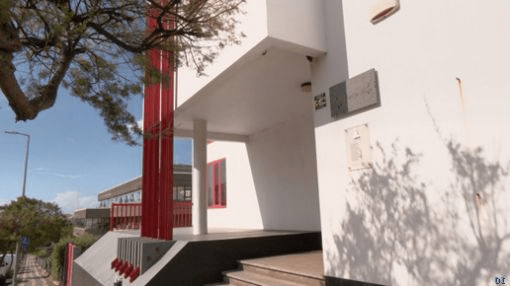
The current Board of Directors will propose the extinction of the RCA-Rádio Clube de Angra (radio station) to the General Assembly, which will take place in February 2025 – according to a Press Release sent to our newspaper.
“The Board of Rádio Clube de Angra sees no alternative but to propose to the General Assembly of members – which will have to take place between the end of January and the beginning of February 2025 – the extinction of the Association, in order to avoid going down the road of accumulating debts, as has happened in the past,” reads the text.
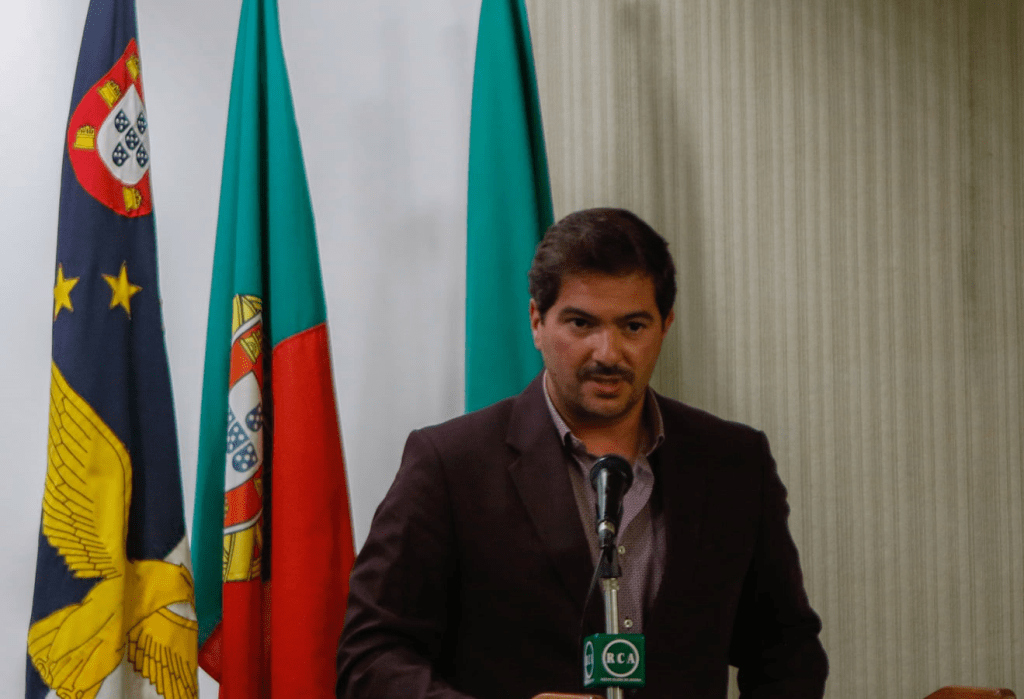
In the note signed by President Pedro Ferreira, it is stated that “the Board of Rádio Clube de Angra has been trying its best to keep ‘A Voz da Terceira’ alive, but neither the members nor Terceira’s civil society has been concerned about the survival of this institution.”
“Rádio Clube de Angra was born 78 years ago from the free and committed movement of society; after all these years and all the social changes that have taken place, the institution no longer seems to be essential to Terceira Island and the Azores and, therefore, as with everything in life, it will be time to declare its end, avoiding dramatic situations such as those the institution has already experienced with long months of unpaid wages, unpaid bills to suppliers and debts to public entities which, as we know, if they exist, are the first step towards completely blocking its operation.” This is how the situation is explained.
Stressing that this is an unwelcome “gift” at this time of year, the text adds, however, that “the facts prove to the fullest the impossibility of continuing to manage an institution which, as a result of contemporary political and bureaucratic choices, has more and more expenses and less and less income.”
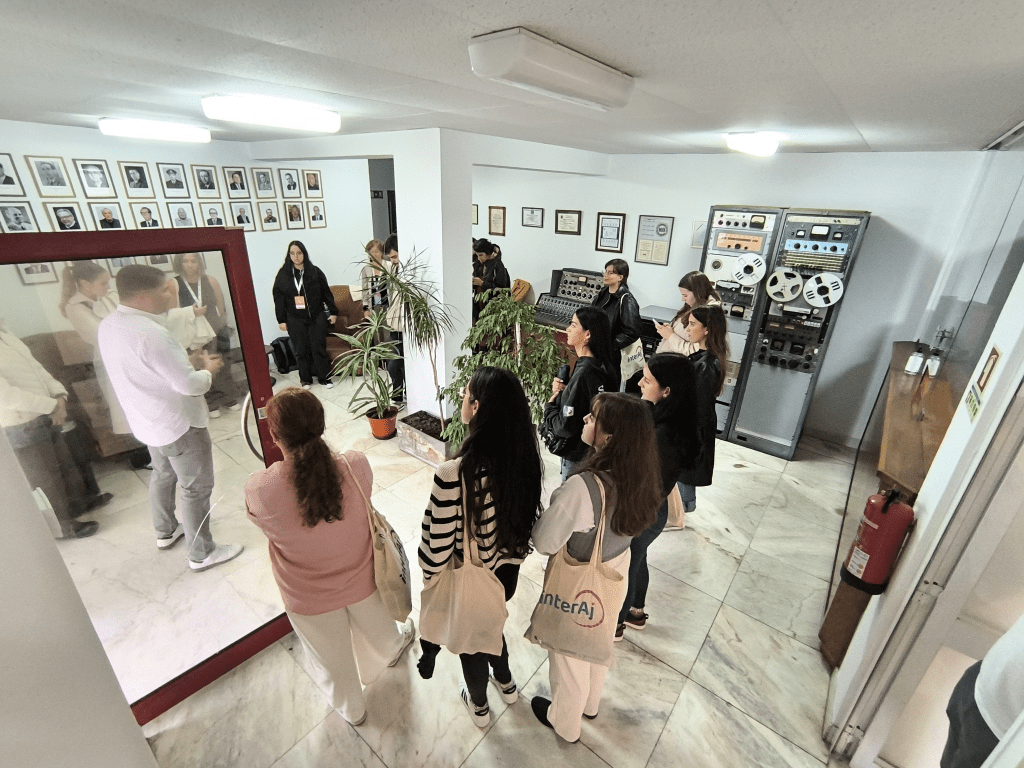
The Board of Directors also complains about the low level of participation by members, noting that “at the last General Assembly of Rádio Clube de Angra, in February 2024, one of the items on the Agenda was a debate on all the difficulties already experienced by the institution and the consideration of its possible closure”. As it turned out, “with the honorable exception of half a dozen members other than those usually present at the highest body of ‘Voz da Terceira’, there weren’t even two dozen members present (out of 451 active members)”.
“A year later, despite all the efforts made by the Board of Directors, the events organized in an attempt to raise funds, the services provided in special broadcasts and the continued coverage of unique events on the local, regional and national radio spectrum (such as broadcasts of bullfights, rallies, popular festivities and carnival, among others), there is no money to pay bills; worse, there is no money to pay wages,” says the Board of Directors.
“Therefore, in addition to holding elections for the governing bodies of Rádio Clube de Angra – which will have to be held at the next General Meeting – and in view of the lack of interest shown in the institution, the Board of Directors will request the inclusion of an item on the Agenda of such a magna meeting, putting the extinction of Rádio Clube de Angra – ‘A Voz da Terceira’ – on the table!”, reads the Press Release.
FINANCIAL PROBLEMS
According to the Board of Directors, the RCA’s financial situation has been under control for 25 years. However, “Rádio Clube de Angra – a non-profit public utility institution on the verge of its 78th anniversary – is once again experiencing deep financial difficulties”.
“With very high fixed maintenance costs, with more and more charges (such as the new payment of related rights fees), with fewer and fewer employees available to contribute to the life of the broadcasting station, with a total detachment from the members and with a lack of concern on the part of Terceira’s civil society towards the Institution, December 2024 will be marked by the net impossibility of paying salaries to the only 4 employees and the other bills and contributions,” the Press Release sent us laments.
With income coming mainly from “contracts for the provision of services in the area of commercial advertising”, the problems in this area are associated with the fact that income has been “significantly reduced, by choice of the local business fabric itself”.
On the other hand, “public support (from the Regional Government) is scarce and slow to be paid out, as can be seen in 2024, when no payment was made under the application submitted and approved to PROMEDIA – the Regional Program to Support Private Media in the Region.”
The RCA hopes that the extraordinary support that the Autonomous Region has approved “can be received with the utmost urgency” to settle the accounts and payments for December 2024”, which is nearing its end.

OLD ACQUAINTANCE AND A STAPLE IN TERCEIRA ISLAND AND THE CENTRAL ISLANDS OF THE ARCHIPELAGO
The RCA is heir to amateur voice and music broadcasting experiments in Angra do Heroísmo in the 1930s. After World War II interrupted these experiments, the “Sociedade de Amadores de Telegrafia Sem Fios, to build a Broadcasting Station,” was founded in October 1946.
This initiative was seen by local society as an opportunity for cultural and civic promotion, and the license was granted in April 1947. An association of TSF amateurs was thus formed for an unlimited time to build an amateur broadcasting station in the city of Angra do Heroísmo, promoting broadcasting on all the islands of the Azores, fostering national and international knowledge of the Azorean lands and carrying out welfare work, especially for the benefit of its members.
The RCA’s work was considered important during catastrophic events such as the Capelinhos Volcano (1957) and the São Jorge seismic crisis (1964). The same service was provided during the 1980 earthquake that destroyed Angra do Heroísmo, a large part of the island of Terceira, and affected the islands of São Jorge and Graciosa.
RCA was also the first radio station in the Azores to broadcast a religious ceremony in 1952, broadcasting the Mass from the Cathedral of Angra do Heroísmo, still broadcasting it every week.
It has been an Honorary Member of the Order of Benevolence since 1973 and a “collective person of public utility” since 1982. Its current headquarters were inaugurated in 1987.
As a non-profit organization, the RCA was not nationalized in the 1975 processes that led to the nationalization of broadcasters.
In Diário Insular-José Lourenço, director
Translated to English as a community outreach program from the Portuguese Beyond Borders Institute (PBBI) and the Modern and Classical Languages and Literatures Department (MCLL) as part of Bruma Publication and ADMA (Azores-Diaspora Media Alliance) at California State University, Fresno, PBBI thanks Luso Financial for sponsoring NOVIDADES.

 Novidades - The Islands and the Diaspora