

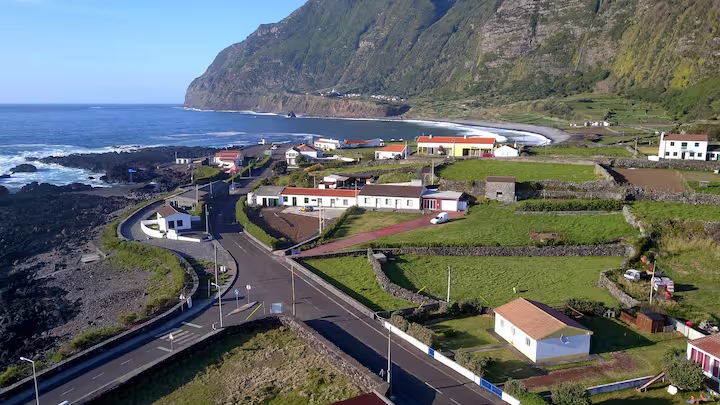
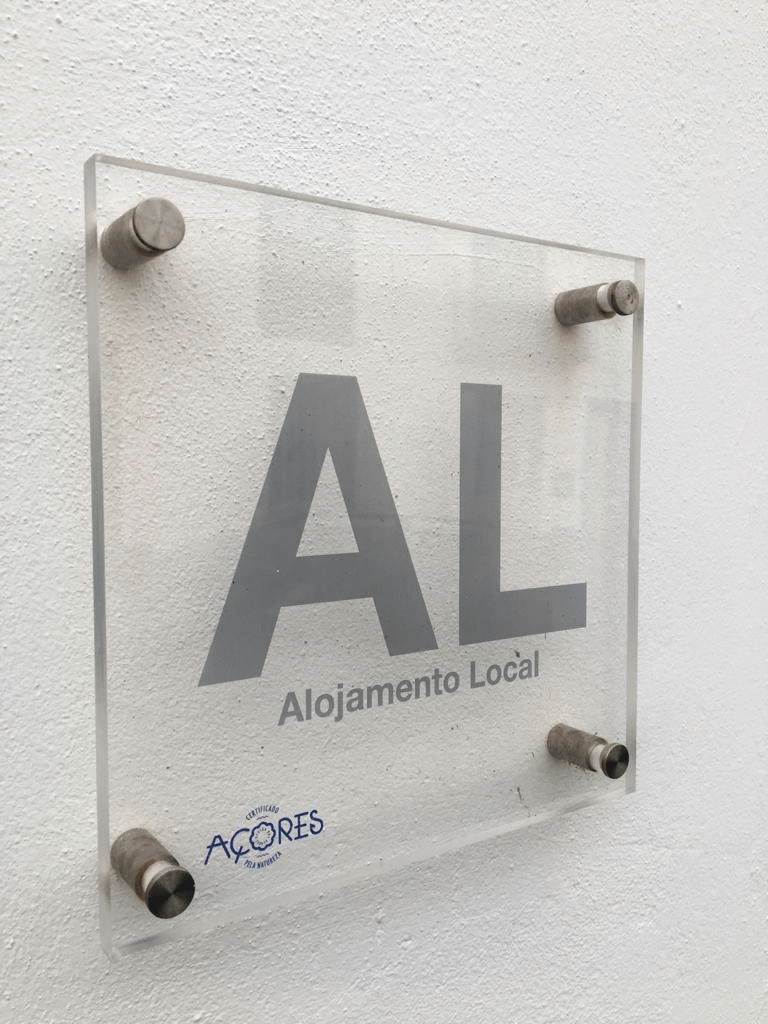
In a statement, the Local Accommodation Association (ALA) said that “2024 was a year in which the Local Accommodation (LA) sector faced several important challenges and many other achievements”.
At the beginning of the year, the ALA promoted the 2nd Meeting of Local Accommodation in the Azores, which took place in Angra do Heroísmo, where the President of the ALA said that LA creates “value, entrepreneurs, sustainability, rehabilitation, personality, and unforgettable memories for our visitors.”
João Pinheiro refuted claims that LA is the cause of housing problems and said that the destruction of LA would not solve the housing problem: “On the contrary, we are jeopardizing the economic growth that we so desperately want and the settlement of people that we want for the Autonomous Region of the Azores.”

The President of the Local Accommodation Association also argued that “this is not the right time” to create a tourist tax in São Miguel, adding that the Association of Municipalities of the Autonomous Region of the Azores (AMRAA) should “talk to the partners, to get input and so that there are no constraints.”
The ALA believes that the tourist tax is a tax applied to mass tourism and that there are “all the conditions for us to have a specific tourist tax for the Azores and not to import just any tax” and that if it did exist, the tax should be “charged on entry to the Azores and not on accommodation.”
João Pinheiro also expressed dissatisfaction with VisitAzores’ promotion of the Azores since the main promotion is done by local accommodation owners. Moreover, a large proportion of the promotion focuses on the high season, with little on the low season.
Another of the sector’s main achievements was obtaining a guarantee from the Azorean government that the Extraordinary Local Accommodation Contribution (CEAL), included at the national level in the Mais Habitação Program, would not be applied to the region.
After a whole process of “fighting” against the application of CEAL in the Azores, it was possible to decide whether or not to apply this Contribution, which depended on the Legislative Assembly of the Autonomous Region of the Azores (ALRAA).
This process culminated in the ALRAA approving the exemption of all Azorean territory from the CEAL application.
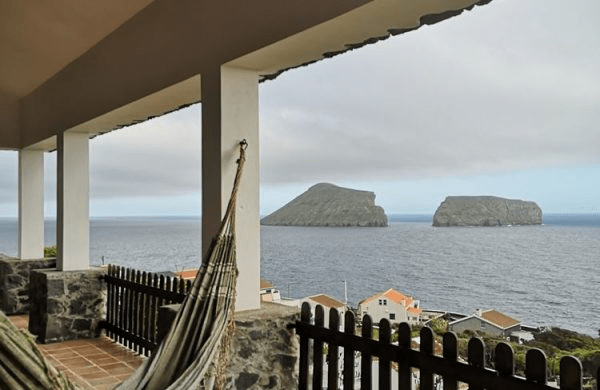
At the end of the 2nd Meeting of Local Accommodation in the Azores, the ALA saw its fears confirmed in the face of Ryanair’s decision, previously announced and put into practice, to reduce the number of flights to the Azores.
In fact, after an initial reduction in December 2023, January 2024 confirmed the downward trend in the number of overnight stays compared to January of the previous year.
Thus, in the first month of 2024, the number of overnight stays fell by 4.4%, and according to the Azores Regional Statistics Service, “65.6% of active local accommodation establishments reported that they had no movement of guests”.
Faced with this reality and the forecasts for the next two months, the ALA once again warned of the urgent need for action by the Government of the Azores and VisitAzores, significantly increasing the promotion of the archipelago abroad, to generate more tourist flows to the Azores and thus try to minimize the losses.
In April, ALA saw the Azorean parliament approve the exemption from the Extraordinary Local Accommodation Contribution (CEAL) in the Azores and welcomed this approval.
At the time, the ALA said in a statement that the local accommodation sector in the Azores would thus be exempt from a tax which, “if applied to the region, would mean a cost of €20 per square meter”, meaning that in practice, “a 100-square-meter ‘apartment’ development would pay around €2,000 and, in the case of a 500-square-meter ‘guesthouse’ development, it would have to pay close to €10,000.
The approval of this exemption represented “the culmination of a long process in which the ALA has been involved since the first news broke of the government’s intention to apply a tax to LA.”
From then on, the ALA began to raise awareness of the injustices caused by the possible application of the CEAL to the Azores and met with the various political players to make them aware of this issue.
It is worth remembering that ALA also promoted a study, bringing together a team of professionals, which decoded all the aspects of this issue and outlined possible solutions, with an amendment to the State Budget being the most appropriate way to start resolving this issue, which did happen.

At the same time as this issue, the ALA “made efforts to ensure that the Tourist Tax that the São Miguel municipalities decided they wanted to implement was at least postponed, since this would be the most considered decision, taking into account that it was necessary to prepare the whole process in good time and listen to all those involved.”
However, the ALA has always maintained that “there is no need for a tourist tax which, in itself, will be detrimental to the island’s municipalities.”
The President of the ALA recalled that the tourist tax concept was created for “urban centers that were already mass-marketed, such as Venice or Barcelona,” which is not the case in the Azores, nor is there any tendency to do so.
Also in April, the Association of Municipalities of São Miguel Island postponed the application of this tax, a decision that the ALA welcomed.
At the end of the year, even against the wishes of the ALA, its members, and all the entrepreneurs in the AL, the AMISM decided to implement the Tourist Tax on January 1st.
The ALA, which maintains its position against the implementation of this tax, regretted AMISM’s decision, as its implementation is yet another bureaucratic process imposed on already weakened micro-entrepreneurs, who will have to deal with the collection of the tax, with all the red tape that this will entail.
Despite all the reasons and difficulties pointed out over the year, the arguments of LA entrepreneurs “ended up being ignored by the São Miguel municipalities.” There is also the fact that the regulations were published late, as were the training sessions on applying this tax, which were also held “late and at bad times” and where many doubts remained unanswered.
For the ALA, the hasty implementation of this tax shows clear signs of a lack of alignment between the municipalities since it will only go ahead in three cities (Ponta Delgada, Ribeira Grande, and Lagoa), despite an initial agreement with the São Miguel Island Municipalities Association (AMISM) to implement it simultaneously in all municipalities, avoiding unfair competition between municipalities.
If it had only been implemented in 2026, instead of being applied “hastily” at the beginning of 2025, there would have been time to prepare for the publication of regulations in all municipalities, review and correct errors in existing laws, as well as define clear rules adapted to the reality of the Autonomous Region of the Azores, which, unfortunately, is not going to happen.
In 2024, the ALA, which “continued to grow and increase the number of members, signed several extremely important partnerships for entrepreneurs who can benefit from them by becoming members of this Association.”
This was the case with the partnership signed with Dr. Elias Pereira’s law firm, which guarantees ALA’s legal advice in “decoding” the different pieces of legislation that regulate the LA sector. ALA members can also benefit from legal support in various areas related to the industry as long as they have paid their dues.
In addition to the existing ones, partnerships were also signed between ALA and MR Lodge Management, which guarantee exclusive discounts for its members on various types of products, ranging from towels to robes, all manufactured in Portugal; between ALA and Triunfarquipélago, which will allow members to enjoy discounts on the provision of HACCP services, pest control and licensing of establishments; between ALA and Turn Electric, which will allow members to have a free technical visit to prepare a quote and discounts on the supply of charging points for electric vehicles; between ALA and BestGift, which allows members to enjoy direct discounts on this company’s website; between ALA and Branco & Carreiro, creating an open line by phone or email to clarify accounting doubts for members.
ALA also held a series of “Webinars” to present various partners, such as CTT, Tranquilidade, and AvaiBook.
Intending to share knowledge and discuss issues relevant to the AL sector, ALA has also set up WhatsApp channels to facilitate communication between members and speed up the communication of information or clarifications by ALA to them.
It should also be remembered that the AL of the Azores surpassed the mark of 1.28 million overnight stays by the end of August, a growth of 14.9% compared to the same period in 2023.
For the ALA, this milestone reflects the solidity and continued development of the sector, driven by tourists from abroad, who contributed 997,600 overnight stays (an increase of 16.4% compared to 2023), while domestic tourists accounted for 287,000 overnight stays (a rise of 9.8%).
“This performance also represents a sustainable recovery and growing demand for the Azores destination, by both domestic and international tourists.”
This has, therefore, been a “very busy and hard-working year, which we have carried out motivated by the certainty that we will continue to improve and promote each and every one of our members in defense of a sector that is increasingly important for the Azorean economy and for creating and maintaining jobs,” the statement reads.
“As an association, we also want to continue to grow and, to this end, we are counting on new members to join us, because together we will be stronger and we will be able to defend our sector of activity even better and with greater capacity,” the ALA said.
“The ALA would also like to take this opportunity to wish all its members, in particular, and entrepreneurs in the LA sector, in general, an excellent 2025,” it concludes.
In Diário dso Açores – Osvaldo Cabral, director
Translated to English as a community outreach program from the Portuguese Beyond Borders Institute (PBBI) and the Modern and Classical Languages and Literatures Department (MCLL) as part of Bruma Publication and ADMA (Azores-Diaspora Media Alliance) at California State University, Fresno, PBBI thanks Luso Financial for sponsoring NOVIDADES.

 Novidades - The Islands and the Diaspora