

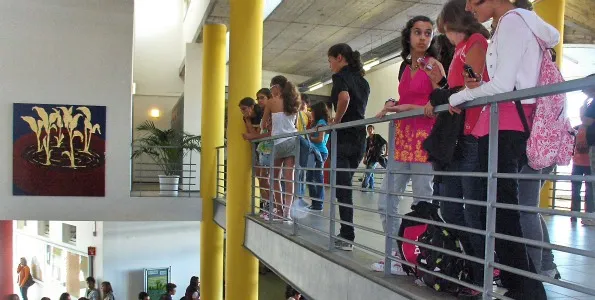
The document “Estratégia Educação Açores 20230” (Azores Education Strategy 20230), from the Regional Secretariat for Education, Culture, and Sport in the Azores, states that in the 2030/2031 school year, around 902 teachers will be over retirement age, meaning that “we could be talking about 18.43% of teachers currently working in schools leaving”. The situation is even more dramatic on the mainland: according to a study by Nova SBE, requested by the Ministry of Education at the end of 2021, around 40% of the 120,000 teachers teaching in 2018/2019 are expected to retire.
Notwithstanding the relevance of the estimate of the number of teachers who will leave the regional education system due to retirement, an analysis is made of the outlook for the number of students. Although the demographic downturn has caused a drop in the number of school pupils (-20.8%), the relative number of teacher retirements exceeds this drop in many recruitment groups nationally and in the region.
In the Azores, in the 2023/2024 school year, 15.82% of teachers are over 60 years old, and only 3.06% are under 40. The highest percentage of teachers teaching in the region’s schools (43.19%) is between 40 and 49 years old.
In addition to the number of teachers leaving the regional education system, there has been a decline in the number of young people enrolled in degrees that prepare them for teaching. This number is not enough to meet the future needs of the system.
According to NOVA SBE’s diagnostic study of teaching needs from 2021 to 2030, 1567 new teachers graduated last year and future recruitment needs point to an average of 3,425 per year.
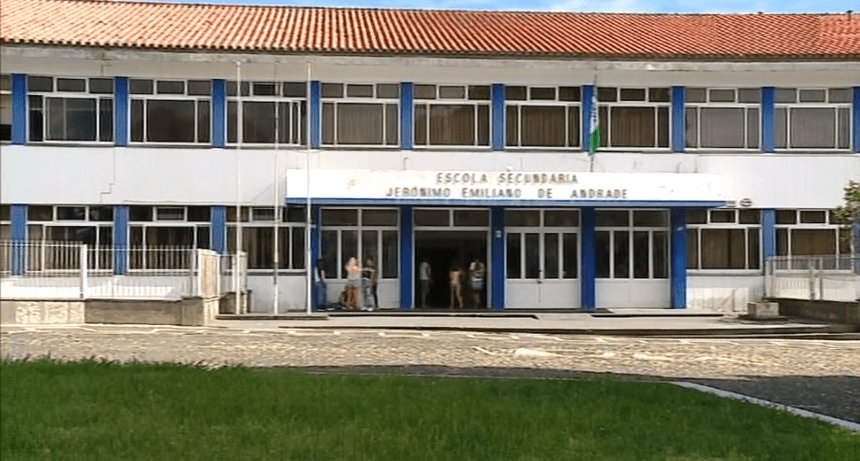
Looking at the average for OECD countries, 8.3% of students who enter higher education enroll in an education course; in Portugal, only 3.5%.
In OECD countries, only 12% of primary school teachers are under 30, and 11% in secondary schools. Only 1% of primary and secondary school teachers in Portugal are under 30, and 2% are in secondary education.
When we look at the master’s degrees that qualify teachers in Portugal, most are concentrated in large urban centers. A 2020 National Education Council (CNE) study states that Lisbon has 33 master’s degrees, Porto 25 and Coimbra 15. In the Azores, only one master’s degree conferred a teaching qualification in 2020 and 2021, a situation that was reversed in 2022 with the signing of a protocol between the Government of the Azores and the University of the Azores for the teaching of five more initial training courses for teachers.
The CNE also shows that the number of students enrolled in these courses is more significant in higher education institutions on the coast. Lisbon has 1150 students, Porto 814, and Coimbra 372. In the Azores, only 32 students were enrolled on the master’s degree mentioned in the previous paragraph.
The data shows a record level of discontent in Portugal compared to other European countries. Portugal tops the European table, with almost 90% of education professionals experiencing “quite a lot” or “a lot” of stress at work. The Commission says it is “even more worrying” that in Portugal, the proportion of teachers who say they suffer from stress at work is double the EU average. According to the study, the explanations for teacher burnout focus on administrative tasks, meeting superiors’ demands, or responsibility for student success. Exhaustion and burnout are common consequences of teaching.
Another of the factors cited for teacher dissatisfaction is the salary earned at the end of each month. Still, Portugal doesn’t have the worst results in international studies on teachers’ salaries. According to the OECD43, Portugal is in the middle of the table, led by Luxembourg, Germany, and Canada. Between 2005 and 2020, in OECD countries, the salaries of primary and secondary school teachers with 15 years of experience increased by 2% and 3%. In Portugal, they fell by 6%.
in Diário dos Açores, Osvaldo Cabral, director
Translated to English as a community outreach program from the Portuguese Beyond Borders Institute (PBBI) and the Modern and Classical Languages and Literatures Department (MCLL) as part of Bruma Publication and ADMA (Azores-Diaspora Media Alliance) at California State University, Fresno, PBBI thanks Luso Financial for sponsoring NOVIDADES.

 Novidades - The Islands and the Diaspora