

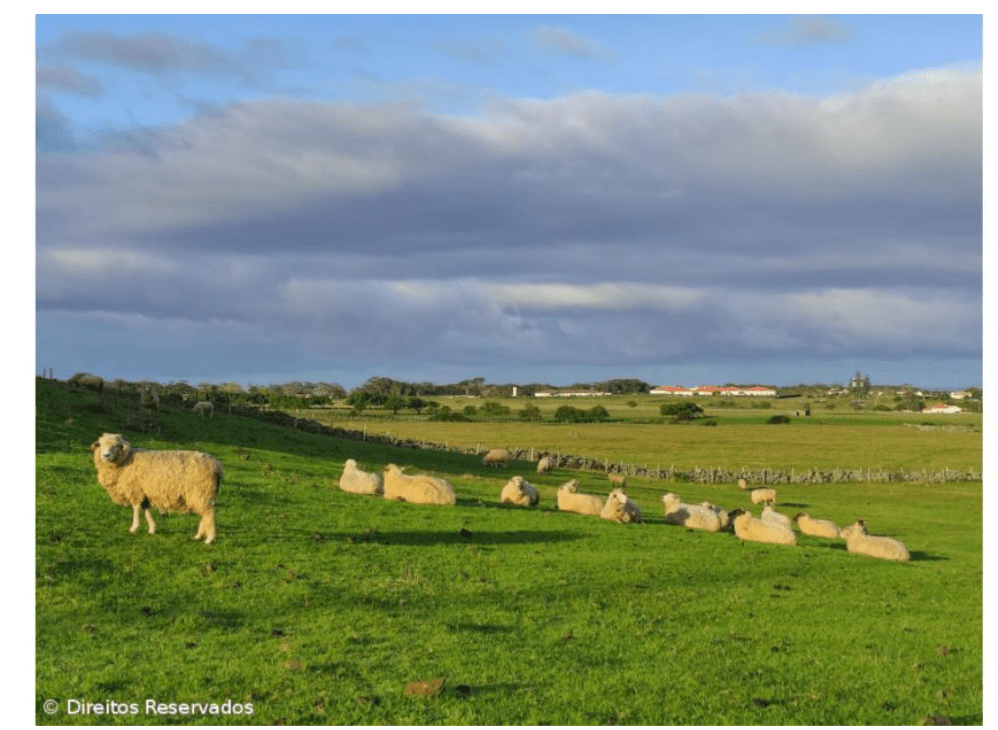
The president of ARCOA – Association of Sheep and Goat Breeders of the Azores praises the growth of the activity and announces that the 1st Congress of Sheep and Goat Breeding in the Azores will be held on January 24 and 25, 2025, in Santa Maria Island, Azores.
How did you start your career at ARCOA?
It was in 1986. It was the heyday of the association, which was set up to develop sheep farming in the Azores. About ten years later, there was a phase in which people began to lose interest in the activity, mainly because there were so many dog attacks. From 5,000 sheep, we were reduced to around 500. At the time, we commented that it might not be worth continuing, but I suggested we focus on the island and become the Santa Maria Sheep and Goat Association. So we did, and over time, we developed the project, breeding animals, some imported from the mainland. New producers who joined the association began to be interested, and we kept growing. At some point, when we saw that we already had a considerable number of members, we decided to reorient the scope of the association towards the Azores archipelago. Initially, in the 1980s, the association was only for sheep, but now it also includes goats. At the moment, we have 70 members spread over several islands. As well as Santa Maria, we have members in Terceira, Faial, Pico, and São Miguel.
What products do these farms produce today?
There’s Santa Maria lamb, which is our meat par excellence. It already has the Marca Açores certificate, and we’re working towards getting the IGP (Protected Geographical Identification) certificate. We would like the process quicker, but these things take time. In the meantime, about five years ago, a pilot project was set up for dairy sheep to set up a cheese factory here. Santa Maria was the only island in the Azores that didn’t have a cheese factory. Nowadays we make sheep’s cheese, but production is seasonal. That’s why we also have cow’s milk, which complements it and keeps the cheese factory open. For example, we don’t have sheep’s milk, but we are producing raw and pasteurized cow’s milk.

What are the main difficulties you’ve experienced at the head of the association?
As we’re a small island, no matter how many animals are exchanged between producers, guaranteeing their continuation is always difficult. We must always import breeding animals to maintain good genetics and ensure good quality meat. The Department of Agriculture has helped us in this regard. If it weren’t for the support of our government, it would be unthinkable, although support is becoming increasingly difficult. Things take time; there’s too much bureaucracy. This was a year of tremendous drought, which made the difficulties even worse, but fortunately, we had help from the Secretariat, namely with importing a fiber container for the sheep. We are now mobilizing efforts to get hay from the mainland. Our idea is never for the Regional Government to pay for the animals. The help we’re asking for is in transportation because this is more expensive than the animals themselves. That’s the problem with living on islands.
What do you feel proud of over the years you’ve worked for the association?
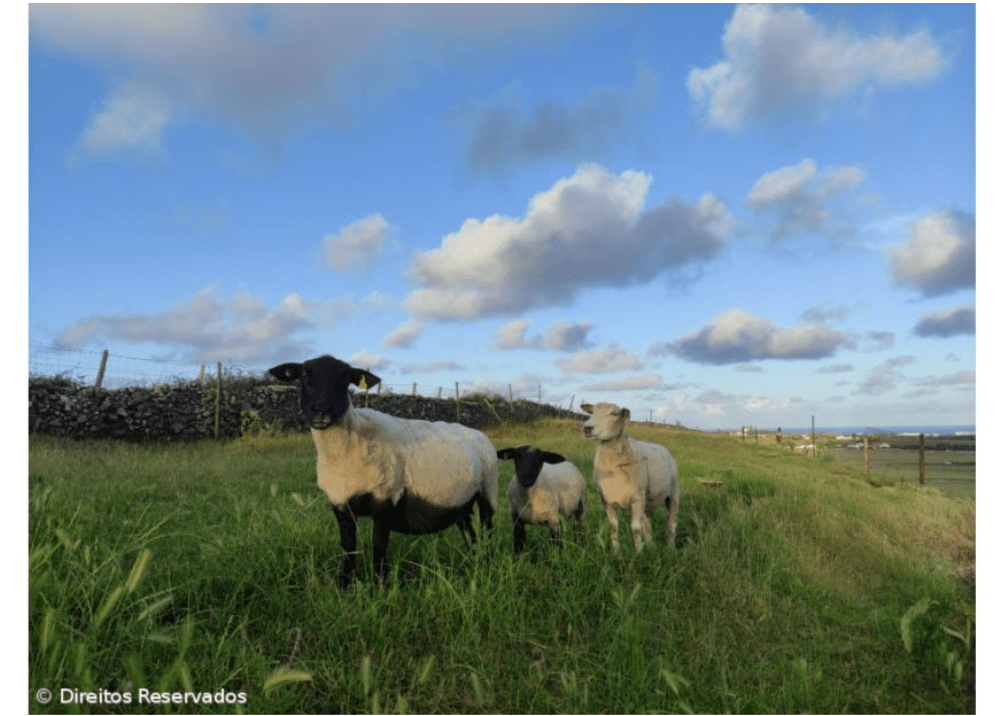
I’m proud of my work because it’s hard and often isn’t even recognized, but that’s part of it. What really pleases me and makes me feel that I will leave a legacy is seeing the island today populated with small flocks of sheep. A few years ago, there were hardly any sheep on Santa Maria, and now, as we drive around the island, we see them grazing. Seeing young people taking up this activity is even more gratifying. As we initially discussed, this would have been unthinkable a few years ago. Now, the dog situation is more under control, and attacks are becoming less frequent. But whether we like it or not, sheep and goats are still the cow’s poor relation. They carry much more weight in the region; there’s no escaping that. Another thing that makes me very proud is being the head of this cheese-making project. Several experiments had already been carried out in Santa Maria, but putting a block of cheese on the market was never possible. Today, we have sheep’s cheese, mixed cow’s and sheep’s cheese, pasteurized and raw cow’s cheese, cow’s curd cheese, and sheep’s curd cheese. These are products that we work on and that I’m delighted to have on the market. They’re the result of a lot of work and a lot of effort, but it pays off.
What motivates you to keep going?
Undoubtedly, my love of animals. You have to like what you do, and I like what I do. I like the animals and talking to the producers about what can be done. We always want more but work with what we have and keep going. The path is made by walking.
What plans do you have for the future?
We intend to bring more people together, both on the islands where we already have members and on the others, and understand their problems. We want to be represented on all the Azorean islands. The PGI certification for lamb from the island of Santa Maria is also one of our goals, which I’m confident we’ll be able to achieve. That doesn’t prevent us from having PGI lamb on the other islands at a later date. Each island must always have its own certification because the meat is different from one to the next since the conditions in which the animals are raised vary, from the grass they eat to the climate they are subjected to. Now things are flowing, we also want to consolidate the cheese factory, which has been a success. We will continue to work to develop sheep and goat farming in the Azores.
From Marca Açores (Made in the Azores) in Açoriano Oriental, Paula Medeiros, director
Translated to English as a community outreach program from the Portuguese Beyond Borders Institute (PBBI) and the Modern and Classical Languages and Literatures Department (MCLL) as part of Bruma Publication and ADMA (Azores-Diaspora Media Alliance) at California State University, Fresno, PBBI thanks Luso Financial for sponsoring NOVIDADES.

 Novidades - The Islands and the Diaspora