

1. 2025 is a year of uncertainty. Still, there is reason to hope that humanity will overcome misunderstandings, conflicts, and wars that do not build healthy coexistence between peoples, much less the well-being and development to which everyone is entitled. Far from situations of conflict, destruction, and death, we live here, realizing the suffering of peoples and nations whose sovereignty and culture are threatened, attacked by hegemonic interests and reprehensible nationalisms that expand surreptitiously, even among us, without any challenge. In his New Year’s message, the Representative of the Republic (RR) addressed the causes of this political ideology, saying: “It is essential, in any case, that those in power have the democratic humility to listen to the echoes of discontent coming from society and that, recognizing their shortcomings, they offer a credible response to those who feel the temptation to seek out more strongly populist movements. Political movements that, presenting a dichotomous view of the world, divided between ‘us’ and ‘them’, limit themselves to offering simplistic solutions to problems that are in reality highly complex.” Thinking that Ambassador Pedro Catarino was consistent in his condemnation of populism, he backs down, accepting and considering these movements to be justified by “compromises that are strictly necessary to guarantee political stability and the continuity of government action.” In other words: Chega, despite his “dichotomous view of the world” and “simplistic solutions,” is a good partner because he guarantees the greater good, which is the governability of the region!… The vision of the Representative of the Republic seems to me to be correct in recognizing the need for changes in governance to make “a more dynamic civil society, a more entrepreneurial business fabric, and with the support of coherent and stable public policies,” “gradually build a better future,” “a fairer and more supportive Region, reducing inequalities and the risk of poverty, improving the quality of social responses, and increasing the disposable income of workers and entrepreneurs.” The criticism and messages to the autonomous institutions are explicit and forceful, because, to paraphrase RR’s message, they make explicit the “echoes of discontent coming from society”. Let’s hope that “those in power have the democratic humility to listen” and change situations that make life difficult for many Azoreans and do not promote harmonious development.
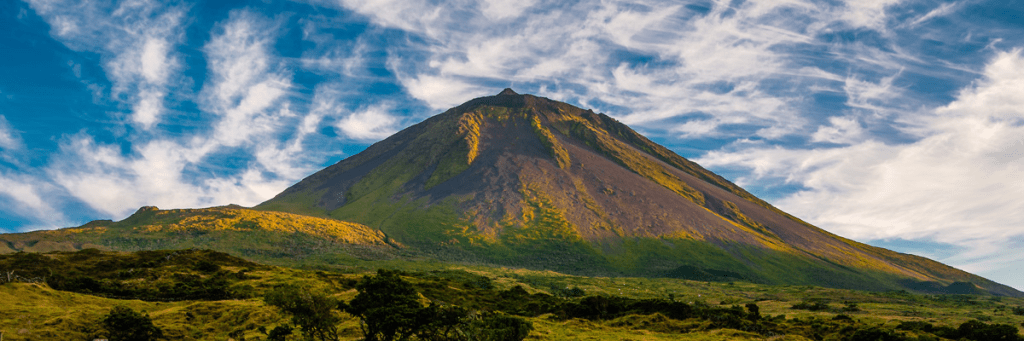
2. Pico residents hoped the government would announce the study’s results on the feasibility and sustainability of extending the runway at Pico Airport. The deadline was the end of last year, and the document was delivered on time. It is hoped that the proposed solution is the one we want. Otherwise, a conflict will be created between the authors of the study and the people of Pico themselves, who have been enlightened and defended by members of the Pico Airport Group (GAPIX) who are committed to this cause which, over time, has seen manifest political contradictions, revealing electioneering intentions, which are unacceptable because they always depend on capitalist interests. The transport sector has long been a battleground for Azoreans on all the islands. Whether it’s the lack of accessible ports or boats. In the 50s and 60s, the issue was discussed in the press much at the time due to the serious mobility difficulties faced by the Azoreans of the Central Group. The yachts from Pico, which traveled all year round between the islands of Terceira, Graciosa, São Jorge, Pico, and Faial, transporting goods, people, and goods that the “Insulana” and “Carregadores Açorianos” ships couldn’t carry. The same thing happened with the “Parece” yachts in their connection with Santa Maria. With the beginning of Autonomy, the situation improved significantly in the transportation of goods and, for a few years, in ferry trips. J.M. Bolieiro’s government, taking advantage of the interruption dictated by Vasco Cordeiro during the pandemic, canceled this type of transport, contradicting its own electoral program. The justification given was that it was a very expensive operation. But if that was the case, then the fares for vehicles and passengers should be increased, and the number of trips should be reduced to a single ship. But no. São Miguel was isolated from the other islands and the choice was made to fly, with the much-trumpeted “Azores tariff”. And who benefited? SATA and the “rent a cars”. How much does it cost each year? I don’t know because it’s neither asked nor publicized. Regarding inter-island ferry connections, the Azores should follow the example of the archipelagos of Madeira, the Canary Islands, and the Greek Islands. In this and other sectors, everything has already been invented,d and the mistakes that are always made are immediately corrected by the public and private sectors. Keeping everything as it is, condemning the inhabitants of São Miguel to air transport alone, is an imposition that makes no sense, is reductive and unfair. I hope that 2025 in these and other matters, “those in power will have the democratic humility to listen” so that the region is not just an archipelago of nine scattered islands.
01/01/25 José Gabriel Ávila Journalist c.p. 239 A
José Gabriel Ávila is a retired journalist Azorean who lives on the island of Pico. He collaborates regularly with various Azorean newspapers and maintains a very active blog. https://escritemdia.blogspot.com/
NOVIDADES will feature occasional opinion pieces from various leading thinkers and writers from the Azores to give the diaspora and those interested in the current Azores a sense of the significant opinions on some of the archipelago’s issues.
Translated to English as a community outreach program from the Portuguese Beyond Borders Institute (PBBI) and the Modern and Classical Languages and Literatures Department (MCLL).
 Novidades - The Islands and the Diaspora