

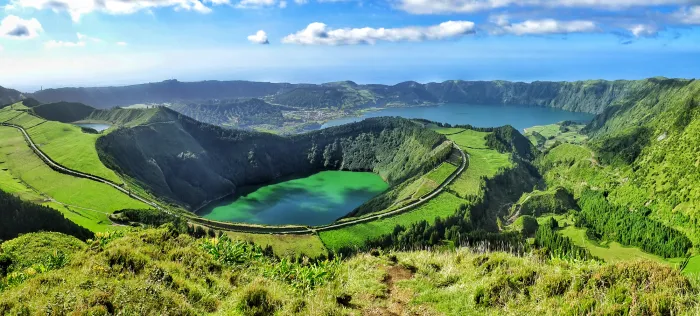
Global warming is significantly altering lake ecosystems around the world. This study concluded that the lagoons of the Azores, so important to the population as water reserves, are at a point of no return. This is the conclusion of a group of regional, national, and international investigations, mainly from Spanish universities and institutes. These investigations point to measures for the recovery of the lagoons, which, given the circumstances, can never be completed.
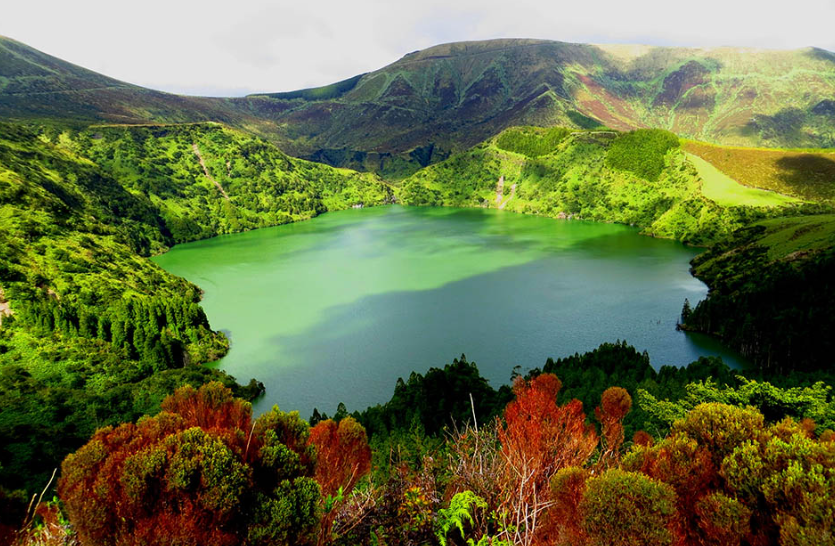
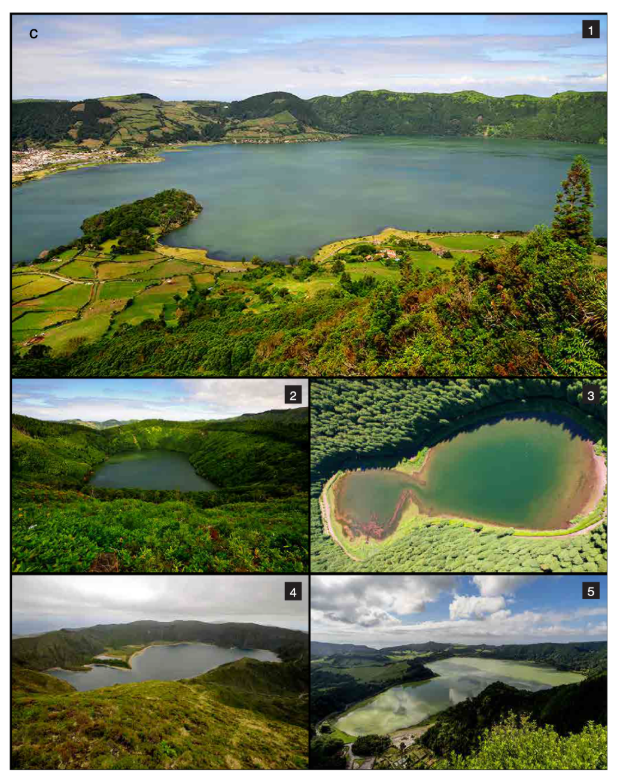
The temperature rise caused by climate change is endangering the lake ecosystems of the Azores archipelago. These lakes, which are important to the population because they are water reserves, contribute to the regulation of water supply, to tourist and leisure activities, and are essential for preserving the biodiversity of the islands, are losing part of their biodiversity and their ability to provide these ecosystem services, as reported by the National Museum of Natural Sciences.
The researchers consider it “probable” that the changes they have detected in the archipelago’s lakes also occur in other lake ecosystems worldwide.
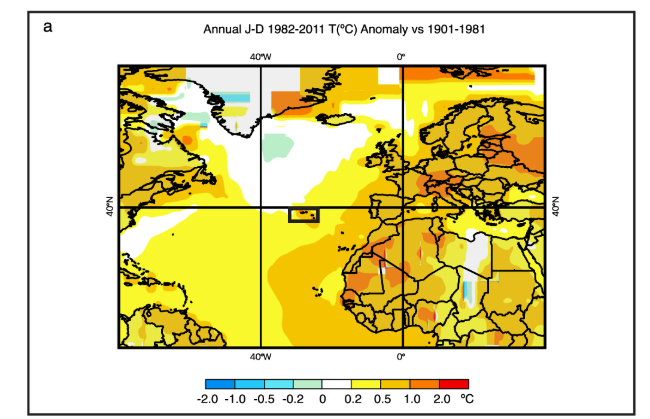
This is confirmed by the study on the island of São Miguel, where they found that the number of diatom species – single-celled algae at the base of the food chain – was reduced by 27% in all the country’s lakes. The study was conducted in São Miguel in 1982 when the temperature in the northern hemisphere increased by 0.35º Celsius compared to the average for the 20th century. The researchers consider it “probable” that the changes they detected in the archipelago’s lakes also occur in other lake ecosystems worldwide.
The Biodiversity of diatoms decreases.
There were decreases in diatom biodiversity in the past, but they occurred in specific lakes that recovered quickly; now, the loss of species is happening throughout the island of São Miguel. “The most serious aspect of this data is not the reduction of almost 30% of diatom species in one lake, but a decrease that we have seen occurring on a regional scale throughout the island, which indicates that homogenization is taking place,” warned Miguel Matias, a researcher at the National Museum of Natural Sciences.
“Thanks to the sedimentary records we have, which in some lakes date back between four and five thousand years, we know that these declines in diatom diversity occurred in specific lakes due to environmental disturbances, but not on an entire island, as is happening. Now, in addition, they were specific declines from which the ecosystem recovered easily,” continues the researcher.
According to the work, there are around 20,000 different species of diatom, and it serves as a reference for understanding the environmental conditions of an ecosystem and for studying the climatic changes that have occurred throughout Earth’s history.
In 1982, a limit was crossed, a point of no return, which homogenized the lakes at a regional level, resulting in a decrease in their ecosystem services.
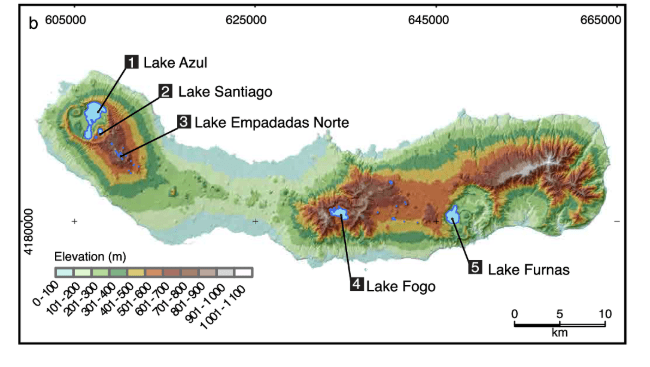
Homogenization
“In the Azores we have already seen changes in the communities of these algae since man began to expand across the archipelago and with this study we have seen that in 1982 a limit was crossed, a point of no return, which homogenized the lakes at regional level, which implies a decrease in their ecosystem services,” explained researcher Sergi Pla-Rabés, from the Autonomous University of Barcelona and CREAF.
CREAF is a public research center with more than 30 years of history. Today, there are a hundred national and international projects active with those planting solutions to the most important environmental aspects of the 21st century: the loss of biodiversity, the impacts of climate change and the necessary adaptation measures, nutrient imbalances and their relationship with food security, sustainable water management, fires, or the involvement and awareness of the city in nature conservation, among others.
In 1982, biodiversity decreased when the temperature in the northern hemisphere increased by 0.35ºC compared to the 20th-century average. Ecosystems were simplified according to research published in the journal ‘Nature Communications Earth & Environment (1); the set of anthropogenic disturbances to the ecosystem has caused the development of phytoplankton made up of smaller algae and cyanobacteria, often accumulated on the surface, which prevent sunlight from penetrating deeper areas of the body of water.
“By reducing the availability of light, the habitat available to benthic diatoms and the number of species is reduced, profoundly simplifying the ecosystem,” comments Vítor Gonçalves from the University of the Azores. “Our hypothesis is that this homogenization that we documented on the island of São Miguel is occurring in lake ecosystems in island areas and possibly in isolated lake regions in the northern hemisphere and on the planet,” says Sergi Pla-Rabés.
Ecosystem restoration
With this data, it is essential to increase the ecological restoration processes to increase environmental diversity throughout the island of São Miguel. “Ecosystem degradation is not something that can be completely reversed, we can’t expect to return to the environmental situation that existed in the past, as if there were no human populations on the islands,” warned researcher Pedro Raposeiro, also from the University of the Azores.
The team’s proposal for increasing the complexity of the ecosystems, thus guaranteeing the maintenance of the ecosystem services needed by the island’s population, is to reduce the local pressures that can be controlled. “We think it’s necessary to concentrate efforts on points of the island so that livestock farms or infrastructures are kept out of the lake basins. Ultimately, it’s about practicing ecological restoration that takes into account the economic and social situation of those who live on the island,” concluded University of the Azores researcher Vítor Gonçalves
Researchers from the Autonomous University of Barcelona (UAB), CREAF, the National Museum of Natural Sciences (MNCN-CSIC), Geosciences Barcelona (GEO3BCN-CSIC), the Blanes Center for Advanced Studies (CEAB-CSIC) and the Universities of the Azores, Évora, Corunha and Barcelona collaborated in this process.
In Correio dos Açores-Natalino Viveiros, director
Translated to English as a community outreach program from the Portuguese Beyond Borders Institute (PBBI) and the Modern and Classical Languages and Literatures Department (MCLL) as part of Bruma Publication and ADMA (Azores-Diaspora Media Alliance) at California State University, Fresno, PBBI thanks Luso Financial for sponsoring NOVIDADES.

 Novidades - The Islands and the Diaspora