

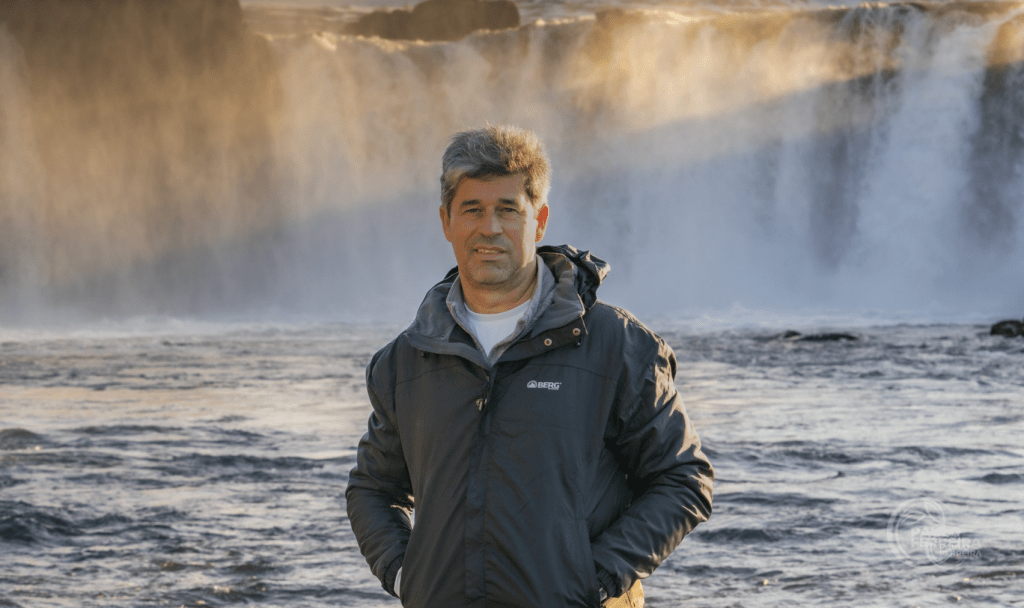
Paulo Ferreira, author of the documentaries “Açores, um novo desígnio” and the episodes “Naturalmente Flores” and “Naturalmente Graciosa,” feels like “a son of each island he visits.” The episodes about Flores and Graciosa had huge television audiences, and this year, he will premiere the episode about the island of São Jorge. The aim is to film on all the islands because “the natural beauty of the Azores is different from the rest of the world.”
Correio dos Açores – What work have you been doing in the region?
Paulo Ferreira (director) – The two documentaries I’ve made, one about Flores and the other about Graciosa, have been part of an ongoing process. Previously, I carried out a first project on four islands, a preview of the potential I could explore on each island in the archipelago. This project, called “Azores, a new design,” is available on social media. It was the first approach to the archipelago.
After getting to know these islands, I thought it would be good to create a documentary series, which is being broadcast by SIC – the documentary about Flores was also shown by RTP Açores. From this documentary series, I first produced the documentary about Flores, an island very dear to me. It’s a very natural island, and since I work in various parts of the world and know other places, I fell in love with its unspoiled nature. Much of the island still retains this characteristic of preservation.
I then made a documentary about the island of Graciosa, part of a series of documentaries I intend to complete. This island also fascinated me because, although it is small in terms of size, it is large in terms of its diversity and natural uniqueness, both in terms of fauna and flora. There are unique species, which will probably give rise to another documentary about the island.
I’m currently working on a documentary about São Jorge Island. I’m in the editing phase, and I hope to have it finished so it can be released on Earth Day, April 22, on the island of São Jorge.
And what was it like shooting this latest project on the island of São Jorge?
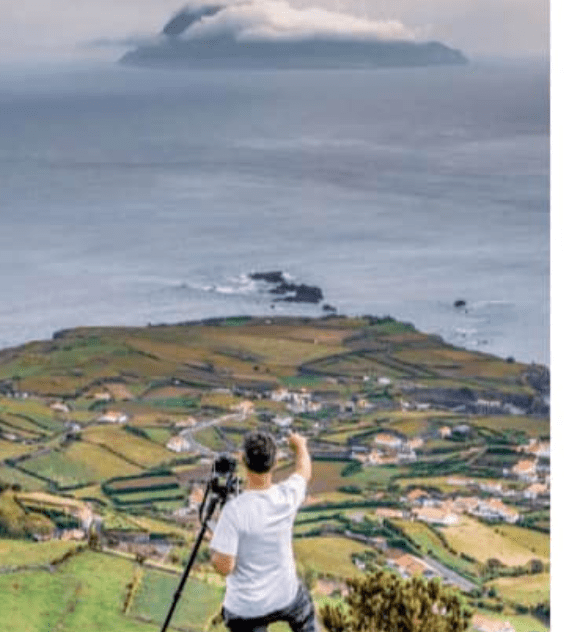
Each island has surprised me because when you visit as a tourist, you don’t really know each one’s potential or particularities. This is very present in the culture and the people, in the human interaction on these islands. It’s been an excellent experience because I’ve met some fantastic people and heard and experienced some amazing stories that, who knows, one day, I’ll publish in a book. São Jorge Island is very long, large, and narrow, so it presents many adversities geographically. It is also very different between its territory’s northern and southern parts.
You intend to record episodes on all the islands, correct?
Yes, this year, I’m going to collect more images. I was already on the island of Pico two years ago and am returning this year to finish the documentary. Next year, I will probably produce a documentary about the island of Pico.
What has been the feedback from the public? How have these documentaries been received?
Regarding television audiences, the documentaries have surpassed some of the usual audiences for BBC and National Geographic programs, which are usually shown before Jornal da Tarde. These are programs with millionaire budgets, and I, with a much smaller budget, have managed to do a great job. We’re talking about a 12 to 15 thousand euros production cost for each documentary. This is a Portuguese documentary; we weren’t used to seeing nature documentaries made in Portugal of this quality.
The acceptance from people, especially Azoreans, has also been good. As I mentioned, I’ve had contact with many people from different departments linked to science and nature. I’ve been very well received, and I feel like a son of each island. I can tell you a story: last year, while collecting images of the isle of São Jorge, a curious situation happened at Fajã do Sanguinhal – a practically abandoned fajã. I was collecting images there, and when I returned, I came across a Tupperware with hot soup, a loaf of bread, and a piece of fruit.
What potential do you see in the Azores for making documentaries of this kind?
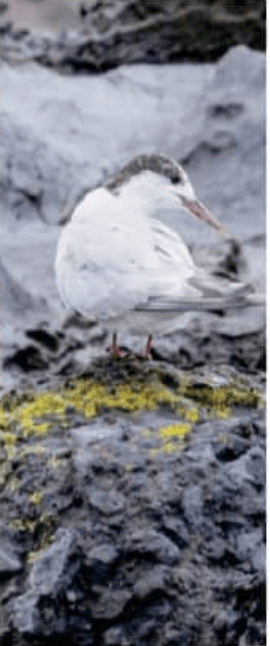
I would like to see the most natural places, with native fauna and flora preserved. For example, on the island of Graciosa, there are unique species, such as birds, that I would like to make a documentary about. Plants and birds are restricted to certain islanders, and it would be important for these species to be protected in the future. Treating the islands like a garden can attract many tourists and make everything look beautiful, but this can cause a loss of the contentment and soul of the archipelago. The natural beauty of the Azores is distinct from the rest of the world.
José Henrique Andrade is a journalist for the newspaper Correio dos Açores-Natalino Viveiros, director.
Translated to English as a community outreach program from the Portuguese Beyond Borders Institute (PBBI) and the Modern and Classical Languages and Literatures Department (MCLL) as part of Bruma Publication and ADMA (Azores-Diaspora Media Alliance) at California State University, Fresno, PBBI thanks Luso Financial for sponsoring NOVIDADES.

 Novidades - The Islands and the Diaspora