

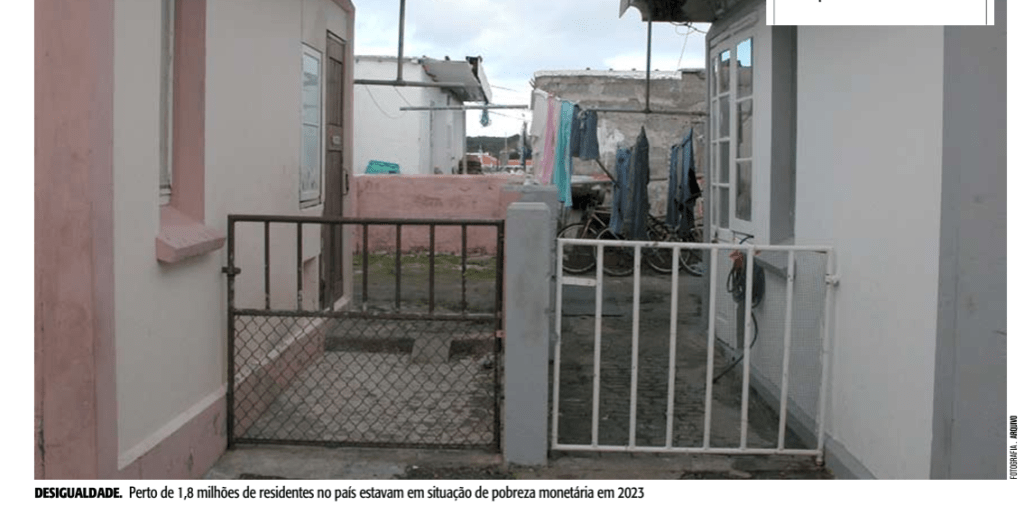
A study by the Francisco Manuel dos Santos Foundation places the Azores, in 2023, as the region of the country with the greatest asymmetry in income distribution, with 33.8%, around 1.9% above the national average, and also with the most serious poverty indicators.
The most unequal region on the mainland is Greater Lisbon, with a Gini coefficient of 32.9%, according to the same report published on Monday.
The Gini coefficient is an indicator of inequality in income distribution.
According to the study carried out by researcher Carlos Farinha Rodrigues, a professor at ISEG and an expert in the field of inequality, in 2022, Portugal will emerge as the fourth most unequal country in the European Union, with a Gini coefficient of 33.7%, 4.1% more than the European figure.
“The economic effects of the impact of the pandemic and rising prices in Portugal have led to a sharp deterioration in Portugal’s relative position. In 2019, the year before the main effects of the pandemic, the Gini coefficient was 31.2%, 1.2 percentage points higher than the EU average. Portugal then ranked eighth among the most unequal countries,” it said.
“In 2023, the Gini coefficient fell by 1.8 percentage points to 31.9%. This result reflects a recovery in inequality compared to the increase in 2022, but it was still insufficient to restore the values that existed before the crisis (31.2% in 2019),” adds the study.
In 2023, the average income per equivalent adult in Portugal recorded a nominal increase of 4.1%, from 1197 euros per month to 1246 euros, but “taking into account the inflation rate recorded (4.3%), the average household income, in real terms, remained practically unchanged”.
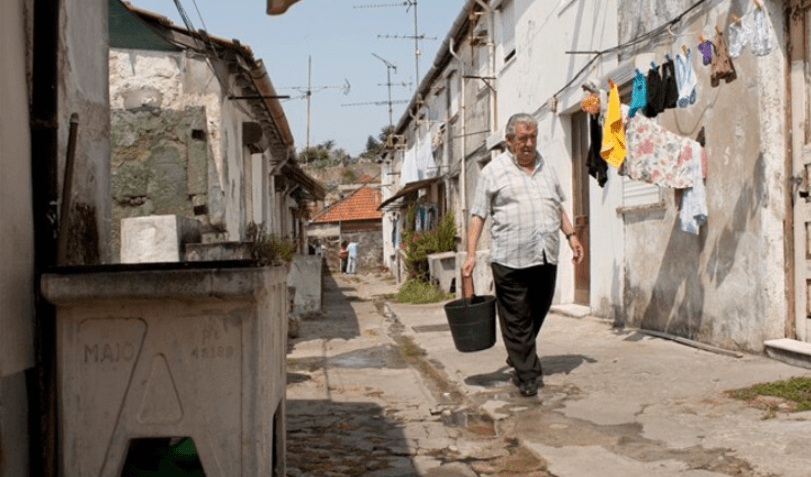
Azores and Madeira are the poorest.
The study points out that the most recent data from the INE (National Statistics Institute) shows a drop in poverty and inequality in the country after a rise in 2022.
In 2023, around 1.8 million residents were in monetary poverty, with a monthly equivalent income of less than 632 euros.
“The autonomous regions of the Azores and Madeira remain the poorest in the country, with poverty rates of 24.2% and 19.1% respectively. It should be noted, however, that in both regions there was a decrease in poverty levels compared to 2022, which was particularly significant in the Autonomous Region of Madeira (5.7 percentage points less),” it says.
Last year, 2.1 million people (19.7% of Portuguese) were in poverty or social exclusion.
“This indicator also shows strong regional asymmetries. The lowest rate of poverty or social exclusion is in the Greater Lisbon region (16.5%). The mainland region with the highest value is the Setúbal Peninsula, with a poverty and social exclusion rate of 21.8%. The archipelagos of the Azores and Madeira, despite the decreases seen in 2024, have the highest values in this indicator,” specifies the work published by the Francisco Manuel dos Santos Foundation.
in Diário Insular-José Lourenço-director
Translated to English as a community outreach program from the Portuguese Beyond Borders Institute (PBBI) and the Modern and Classical Languages and Literatures Department (MCLL) as part of Bruma Publication and ADMA (Azores-Diaspora Media Alliance) at California State University, Fresno, PBBI thanks Luso Financial for sponsoring NOVIDADES.

 Novidades - The Islands and the Diaspora