

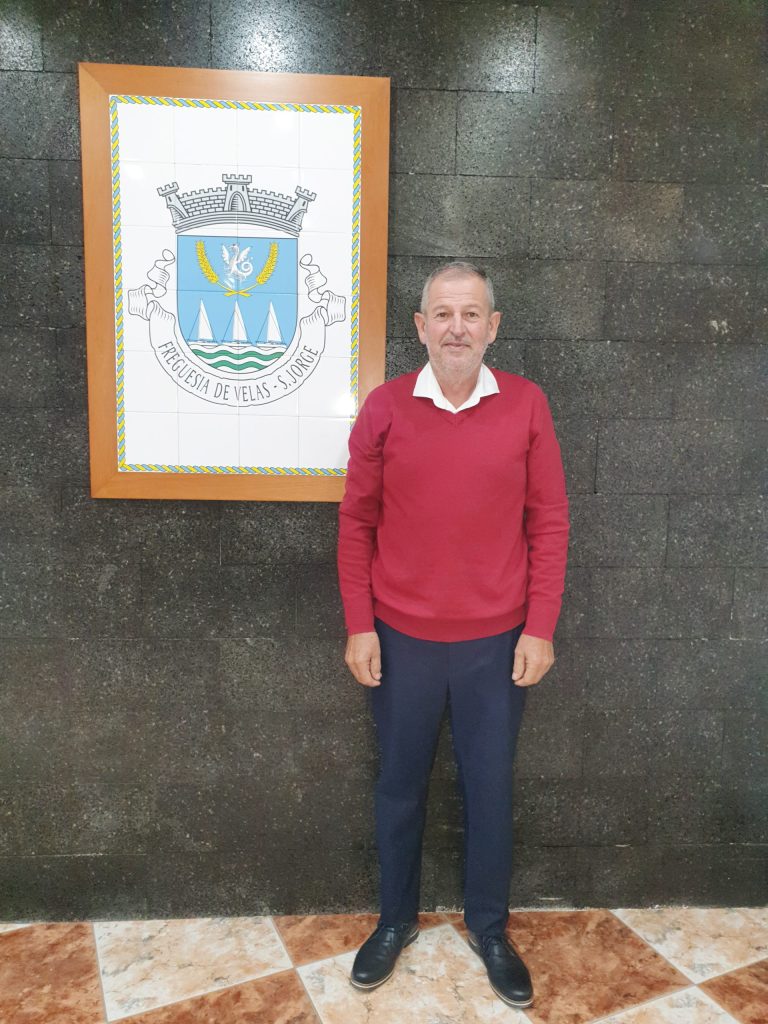
Hélio Rosa has been President of the Parish Council of Velas on the island of São Jorge since 2013. A few months into his last term, the president says that constant work and the carrying out of necessary projects have been the reasons for his success and consecutive re-elections. Traditional festivities, sports, and the cheese industry highlight the dynamism of the parish of Velas. Despite the “feeling of accomplishment,” Hélio Rosa points to the problems of the aging local population and the difficulty in retaining young people due to the lack of qualified jobs.
Correio dos Açores – When did your mandate begin?
Hélio Rosa, President of the Parish Council of Velas de São Jorge) – I began my mandate in 2013. I’m in my third term, which means running for re-election is impossible. The maximum is three terms, and this one is ending.
It’s been a good experience. I’ve never been on a list before. It’s been pleasant because we’ve done a good job for the parish, and that’s a great honor.
What do you think of how Velas is doing?
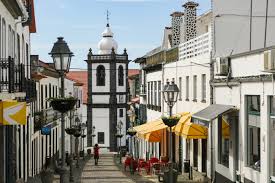
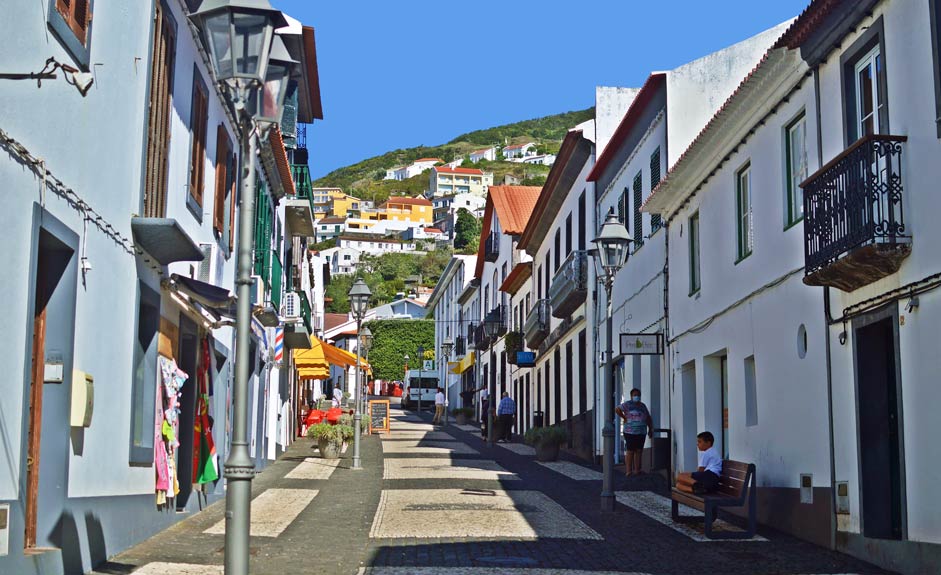
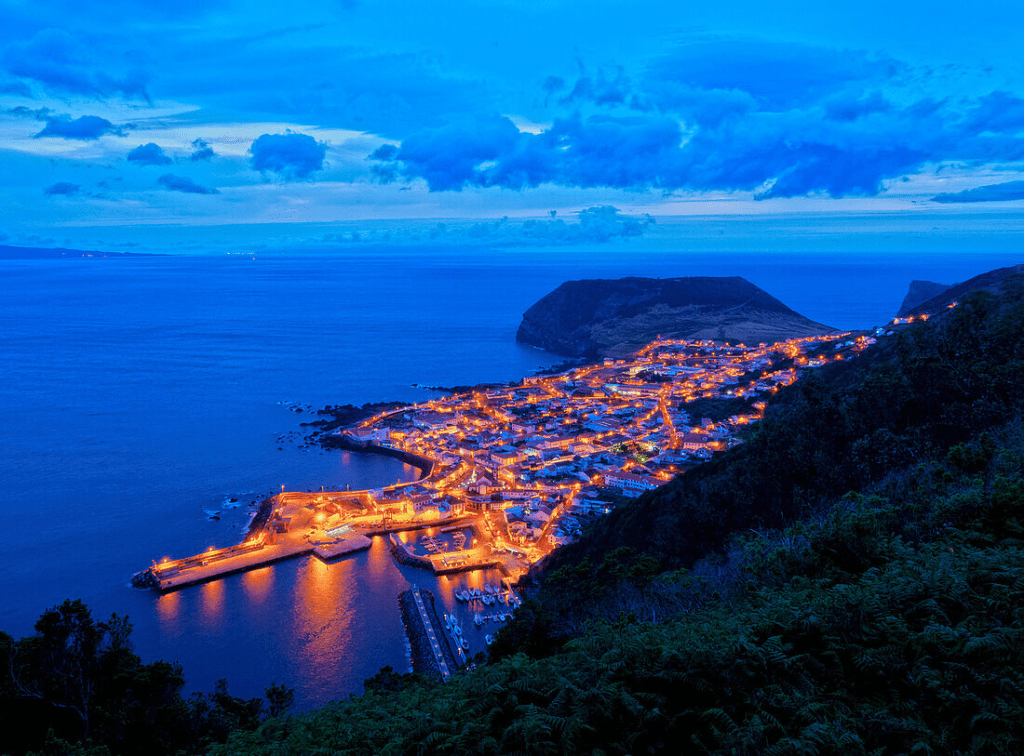
The parish of Velas is the most populous parish in the municipality, with around 1771 inhabitants. It is rich in institutions and comprises two distinct areas: the urban area of Velas and the rural area, which includes Beira.
Beira is one of the main areas of development because it is home to the União de Cooperativas and the Cooperativa da Beira. It’s where the famous São Jorge cheese is made, a place that receives many tourists, and one of the biggest companies on our island, which employs many people.
We have various institutions. We have two soccer clubs in the parish: Marítimo Velense and Grupo Desportivo Velense. We also have a scout group, a judo club, and a naval club – sport brings a lot of movement to Velas. We have two societies, both active with philharmonics and music schools. We have four empires in Velas, active during the Holy Spirit season.
In Beira, we have another soccer club, a folklore group, the Grupo Etnográfico da Beira, which has a long career and is internationally known; the Confraria de Queijos de São Jorge; and a Casa do Povo in the village of Beira. I would also add that there is a medical clinic in this town.
I can say that we are indeed a large parish with plenty of activities.
What are the main challenges, needs, and difficulties facing the parish? What are the problems inherent in being a double island?
As with all parish councils in the country, our parish council’s biggest difficulty is undoubtedly money. There aren’t many funds for the work a parish council has to do. The councils have to focus on the people and the parish. We have to meet the needs of the locals, and in that sense, our work is a little forgotten.
For our conditions, the Velas Parish Council has done a wonderful job. During our years in office, we’ve restored walls, built houses, restored four houses, restored a warehouse, and built two more, completed work on the cemetery, and built a leisure park in Terreiro da Macela—a beautiful park with a spectacular view.
Carrying out these works with the money we have isn’t very easy… it’s really complicated.
What is the biggest problem facing the parish? Does it lack any kind of infrastructure?
The parish is well-equipped in terms of infrastructure at the moment. The council and the government have made a commitment to this. The societies all have new and very good headquarters, and even the clubs have been supported. In terms of infrastructure, we’re doing well.
What is the most developed sector in the parish of Velas?
The fishing area remains “the garden of Velas,” but the most developed sector is agriculture and livestock. The development of this sector is represented in the Union of Cooperatives, as well as the other cooperatives beyond those in Beira, because there are cooperatives in Lourais and Topo. This sector employs many people and is one of our island’s greatest assets.
Have you seen an increase in tourism in recent years? And does the parish have local accommodations and hotels?
Tourism has developed greatly and is perhaps one of the biggest sources of income for the parish and the island. Most local accommodations, hotels, and guest houses are in Velas. In Beira, it’s not like that; we have two or three local lodgings.

What is the extent of poverty in Velas? How has this phenomenon evolved?
There are always a few cases of poverty, but they are occasional. The truth is that there is poverty everywhere, but in Velas, there are no cases of extreme poverty. Nowadays, there is no shortage of work for anyone who wants to work. The Junta is an institution that works closely with people; we are always available to solve any problem. For example, four houses can be rented out to people in need.
Is drug use a concern in Velas?
That’s a problem we see everywhere nowadays, but there are no alarming cases in the parish.
According to the latest CENSUS, the parish’s population has decreased recently. In 1960, it had 2173 inhabitants. Although between 2001 and 2011, it increased from 1929 to 1985 inhabitants, it now has 1771 inhabitants. In your opinion, why is this?
This is a general picture of the whole region. We have an increasingly elderly population; most young people go away to study, and most don’t return. Young people from the parish don’t return because the possibilities and job opportunities for graduates here aren’t the same as in a big city.
How can we attract young people to stay in the parish?
The way to keep young people in the parish would be to create jobs. The reality is that a young man who goes abroad to study starts working there, spends his money, and spends a large part of his life abroad. He will certainly not return to his hometown and will be subjected to earning the minimum wage.
There are no jobs for graduates here. In São Miguel or Terceira, for example, many secretaries and other places employ these people. Here, there are very few of them. The smaller islands are subject to this… unfortunately, it’s the law of life.
What are the conditions for supporting the elderly population in the parish? Are there specific activities or services to improve the quality of life of the elderly? Are there enough nursing homes?
We are very well served in terms of support for the elderly and nursing homes. We have the João Inácio de Sousa Retirement Home, a great institution with around a hundred users, beautiful facilities, and very good conditions. The patients are very well looked after. Velas is very well served.
Obviously, there’s never enough; there’s always a waiting list. However, it’s not such a long list, as some people like to keep their elderly at home and receive the proper support from Social Security.
Going back a little, you said there is never enough money to run a parish. What would be the most viable solution for financially supporting parishes?
The question of support for parishes will never be easy. Nowadays, the government is committed to giving more support to parishes, and our municipality has also been offering much more support to parishes – which was not the case before, making our lives easier. All money is little and Local Government should be supported more. The Velas Parish Council plays a lot with protocols. We do protocols with the council or the government, which is the easiest way to do something for the parish and get some money into it.
What are the conditions of the schools?
The school in Velas was built from scratch six or seven years ago, and it’s a beautiful building (and it’s the same in Calheta). In terms of schools, we’re doing very well. Both schools are new and in excellent condition. The Topo school is a few years older but also in good condition. We should also mention the quality and good condition of the gymnasiums at these schools.
What is the condition of the roads? What about the farm tracks?
Some roads need repairing. The municipality has helped us restore the farm tracks. The government has fixed some streets; for example, they are working on the transversal.
We don’t have any roads in a state where I can say they’re terrible, but some need repairing. The road in the worst condition is the transversal, but work is already underway there. Most of our streets are asphalted; there are practically none on dirt, except one agricultural road or another.
What cultural activities does the parish promote?
The Town Hall has a busy cultural agenda. Sometimes, it even coincides with our festivals. We celebrate the Holy Spirit a lot, for example, in Beira we have two empires and in Velas we have four. There are lots of Holy Spirit festivals taking place in all the parishes in the municipality. The time of the Holy Spirit is very busy when food is given to everyone, and it’s a festival that we celebrate with great enthusiasm. We’re perhaps the island that experiences the Holy Spirit the most.
Then, the summer festivities begin. All the parishes have their own parish festivals, and the municipality has its own agenda. I don’t like to interfere too much in these festivities, but there are times when it’s not possible because there are events in two or three places simultaneously, and, with our small population, it gets a bit overwhelming. The parish council also has its own festivals. We hold a St. John’s festival, which we proposed and have done since the beginning of our mandate. We make the Christmas crib, which is visited and displayed from the day of the windows until the day of the Kings.
We collaborate with all the institutions in the parish to keep our traditions alive. We help set up arraias, for example, for the Holy Spirit festival, both in Beira and Velas; we collaborate with the philharmonics, which also have their festivities to keep these traditions alive. That’s what the Junta is here for, to help its institutions keep the traditions and cultural dynamics of the parish of Velas alive.
What are the main tourist attractions in the parish?
Velas has two excellent bathing areas: Poça dos Frades and Preguiça. The Union of Cooperatives is another much-needed and much-visited tourist attraction. We have the hills, several hermitages, and several museums, such as the Cunha da Silveira Museum, which contains a large collection and is visited a lot. We have many tourist and leisure areas, which are very clean and organized.
What kind of sectors does the parish have the potential to develop?
Velas is home to the largest number of establishments. We can grow in every way. Velas has a lot going for it, but we still don’t have enough. We could grow in hotels – I think they will build another hotel or two – in restaurants and commerce. I think the parish and the municipality have the potential to grow in various sectors.
What projects will you implement by the end of your term?
When we ran for office, we set ourselves several objectives, including improving the parish’s roads and walls. I can tell you that we’ve done a lot of work for a parish council. We’ve brought water to our mill, which we will continue to do. We’ll be able to complete all the various projects we’ve applied for by the end of the term, which we’re proud of and gives us a sense of accomplishment. Our motto during these three terms has been to wake up every day to work for the best of our parish.
What moment do you highlight in these 12 years as Parish Junta Presidente?
We’ve done a whole term of office equally. We’ve done a lot of work over three terms. As I said, we built the terreiro da Macela (a huge project), we built a cattle pen, we built four new houses – they were already old and dilapidated, but we demolished them and built them all – we helped the church to restore a home by providing the labor, we fixed and built walls in front of the Cooperative Union. It was all work carried out through protocols with the government, but if we talk about values, the support isn’t very significant. They cost us a lot, but they were necessary work and have now been completed. We also fixed up our headquarters: we installed aluminum doors, windows, a balcony, and a gate. We’ve got our headquarters looking good. In these mandates, there is no “we did this and then we stopped” moment. We’ve carried out all our work during that time. We did and continue to do a good job until the last day. We set out to do that and what people expect from us when they vote. The electoral results of our mandates were always very significant because people believed in us and hoped to see work done.
José Henrique Andrade us a journalist for Correio dos Açore-Natalino Viveiros, director
Translated to English as a community outreach program from the Portuguese Beyond Borders Institute (PBBI) and the Modern and Classical Languages and Literatures Department (MCLL) as part of Bruma Publication and ADMA (Azores-Diaspora Media Alliance) at California State University, Fresno, PBBI thanks Luso Financial for sponsoring NOVIDADES.

 Novidades - The Islands and the Diaspora